5 Serious Health Problems Your Nails Could Be Trying to Warn You About!
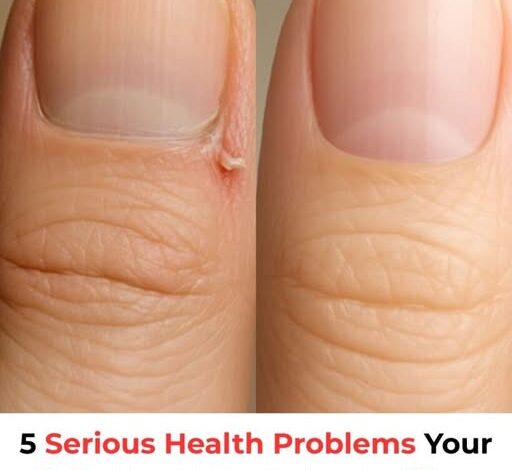
While most of us view our nails as little more than a canvas for cosmetic expression or a tool for daily tasks, the medical community recognizes them as a critical window into the internal state of the human body. The fingernail is a complex structure made of keratin—the same protein found in hair and skin—and it grows directly from the nail matrix, which is highly sensitive to changes in blood flow, nutrition, and systemic inflammation. Consequently, shifts in the color, texture, or structural integrity of your nails are rarely just “surface issues”; they are often the first biological indicators of systemic imbalances or serious underlying pathology. By understanding the semiotics of our hands, we can identify early warning signs of conditions ranging from simple vitamin deficiencies to life-threatening malignancies.
1. The Anemic Palate: Pale or White Nails
When a healthy nail is pressed, it briefly turns white and then immediately flushes pink as blood flow returns. If your nails remain consistently pale or nearly white without pressure, it suggests a significant reduction in the red blood cells or hemoglobin levels in your body. This condition, commonly known as anemia, prevents your tissues from receiving adequate oxygenation.
However, the medical implications can run deeper. When the entire nail bed appears white with a thin, dark rim at the tip—a condition known as Terry’s nails—it can be a herald for serious liver dysfunction, such as cirrhosis or hepatitis. Because the liver is responsible for synthesizing many of the proteins that sustain our bodily tissues, its failure often manifests as a “washed out” appearance in the extremities. If pale nails are accompanied by chronic fatigue, shortness of breath, or a yellowish tint to the skin (jaundice), a comprehensive blood panel and liver function test are imperative.
2. Respiratory and Microbial Signals: Yellow, Thickened Nails
Yellowing of the nails is perhaps the most common diagnostic sign, and its causes range from the benign to the critical. In the majority of cases, yellow, thickened, and brittle nails are the result of a fungal infection (onychomycosis). These infections thrive in the keratin of the nail and can be difficult to eradicate without prescription-strength topical or oral treatments.
However, there is a rarer and more concerning clinical manifestation known as Yellow Nail Syndrome. In this condition, the nails turn a distinct shade of gold or yellow-green and virtually stop growing. This is often an external sign of compromised lymphatic drainage or chronic respiratory issues. Patients with chronic bronchitis, pleural effusion (fluid around the lungs), or other pulmonary distress often exhibit these nail changes. The lack of proper oxygen exchange in the lungs and impaired lymph flow prevents the nail from receiving the nutrients it needs to grow, resulting in the characteristic thick, yellow appearance.
3. Koilonychia: The Scoop of Iron Deficiency
Nails that curve upward at the edges, creating a concave shape capable of holding a drop of water, are a phenomenon known as spoon-shaped nails, or koilonychia. This structural anomaly is a classic clinical sign of iron deficiency anemia. When the body lacks sufficient iron, it cannot produce enough hemoglobin, leading to a softening of the nail plate. Under the constant pressure of daily use, the center of the soft nail sags while the edges flare upward.
Beyond simple nutritional gaps, koilonychia can also indicate hemochromatosis—a condition where the body absorbs too much iron—or Raynaud’s disease, which affects blood supply to the fingers. Because iron is essential for the metabolic health of every cell in the body, spoon-shaped nails should be addressed quickly to prevent the progression of heart or developmental issues associated with long-term deficiency.
4. Subungual Melanoma: The Vertical Warning
Perhaps the most critical sign to monitor is the appearance of dark, vertical lines running beneath the nail plate. While some people, particularly those with darker skin tones, may have natural pigment bands in their nails, a new or changing dark stripe can be a sign of subungual melanoma. This is a rare but highly aggressive form of skin cancer that originates in the nail matrix.
Unlike a bruise from a physical injury, which will grow out with the nail or fade over time, a melanoma stripe usually remains stationary or widens over the weeks. It may also involve the cuticle area (known as Hutchinson’s sign). Because melanoma can metastasize rapidly to other organs, any dark streak that appears without a known injury requires an immediate biopsy by a dermatologist. Early detection in this specific area is often the difference between a simple excision and life-threatening complications.
5. Pitting and Ridges: Autoimmune and Systemic Stress
The texture of the nail surface can be as telling as its color. Small, pin-like dents or “pitting” on the surface of the nail are frequently associated with autoimmune disorders. Approximately 50% of people with psoriasis experience nail pitting, and it is also commonly seen in patients with alopecia areata, an autoimmune condition that causes hair loss.
Deep, horizontal indentations that run across the nail are known as Beau’s lines. These are not merely textures; they are chronological markers of a significant systemic shock. When the body undergoes a severe illness—such as a high fever, a heart attack, or an intense period of stress—it may temporarily divert energy away from “non-essential” tasks like nail growth. As the body recovers and the nail begins to grow again, the temporary pause leaves behind a deep groove. By measuring the distance of the ridge from the cuticle, a doctor can often estimate exactly when the patient experienced the health crisis.
The Anatomy of Nail Health
To better understand these changes, it is helpful to look at the factors that contribute to healthy nail production:
| Nail Feature | Healthy State | Potential Warning |
| Color | Pinkish-tan | White (Liver), Yellow (Lung/Fungal), Blue (Oxygen) |
| Texture | Smooth, even | Pitting (Psoriasis), Ridges (Stress/Illness) |
| Shape | Slightly convex | Spooning (Iron), Clubbing (Heart/Lung) |
| Adhesion | Firmly attached | Lifting (Thyroid/Infection) |
Monitoring your nails is a simple yet effective habit for proactive health management. While a single nail change is rarely enough for a definitive diagnosis, it serves as a valuable “early alert” system. When you notice persistent shifts in your nails, it is your body’s way of requesting a more thorough internal investigation. By paying attention to these ten small windows, you can catch emerging health issues long before they become visible in other ways.