Always place your fence with the front facing your neighbor! Here is why!
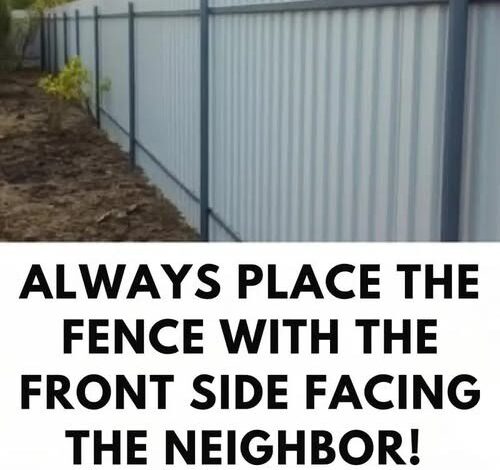
The installation of a perimeter fence is often viewed through a purely functional lens. For most homeowners, the primary objectives are clear: establishing a definitive boundary, securing the safety of children and pets, and carving out a sanctuary of privacy from the outside world. However, beyond the utilitarian requirements of lumber and hardware lies a subtle but profound principle of domestic diplomacy. This principle dictates that when erecting a barrier between two properties, the “finished” or aesthetically superior side of the fence should always face outward toward the neighbor, while the structural supports—the rails and posts—remain facing the installer’s own home. While this might initially seem like an act of self-sacrifice, it is actually a strategic move that bolsters property value, ensures legal compliance, and preserves the delicate social fabric of a neighborhood.
The most immediate impact of this orientation is the promotion of neighborly goodwill. Residential living is, by its very nature, a collective experience. Even when separated by physical walls, the visual environment of one homeowner directly influences the quality of life of another. A fence is a permanent addition to the landscape; by choosing to present the polished, uniform face of the pickets to a neighbor, a homeowner sends a silent but powerful signal of respect. It demonstrates an awareness that the neighbor must also look at this structure every day. Conversely, forcing a neighbor to stare at the “back” of a fence—characterized by exposed horizontal rails and irregular vertical posts—can inadvertently project a sense of indifference or even hostility. In the tight-knit ecosystem of a suburban street, such small aesthetic slights can become the seeds of long-standing resentment. By prioritizing the neighbor’s view, a homeowner transforms a potential point of contention into an act of courtesy that fosters trust and open communication.
Beyond the intangible benefits of social harmony, there are rigid legal and regulatory frameworks that often make this orientation mandatory. Many municipalities, local building departments, and Homeowners Associations (HOAs) have codified the “good neighbor” rule into law. These regulations are not arbitrary; they are designed to maintain a cohesive aesthetic standard throughout the community and to prevent the very disputes that arise from “spite fences” or poorly planned installations. In many jurisdictions, a fence installed with the structural side facing the street or a neighbor is considered a violation of code. The consequences of ignoring these mandates can be severe, ranging from hefty daily fines to legal orders requiring the homeowner to dismantle and flip the entire structure at their own expense. Engaging in a fence project without first verifying these local “face-of-the-fence” requirements is a gamble that rarely pays off, making the outward-facing orientation the only legally sound choice for a prudent property owner.
From a financial perspective, the orientation of a fence plays a significant role in enhancing curb appeal and overall property value. The exterior of a home provides the “visual handshake” to the world, and a fence is often the first element a passerby or potential buyer notices. A fence with its finished side facing the street creates a look of completion, professionalism, and deliberate design. It suggests that the homeowner is meticulous and cares deeply about the maintenance of the property. On the other hand, an outward-facing structural side can make a home look industrial, unfinished, or neglected, as if the project were abandoned halfway through. When it comes time to sell, a “good neighbor” fence becomes a selling point. Prospective buyers appreciate a property that is move-in ready and free from potential conflicts with the people next door. In this sense, “giving away” the best side of the fence is actually a long-term investment in the home’s equity.
This practice also aligns with a broader global and cultural understanding of shared space. Across various cultures, the concept of the “public face” versus the “private reality” is a common theme in architecture. By keeping the structural skeleton of the fence on the interior, the homeowner maintains control over their private environment while contributing to a harmonious public square. This approach reflects a universal value of empathy—the ability to put oneself in the position of the person on the other side of the line. It acknowledges that while the fence is a barrier, it is also a shared asset. When both neighbors follow this convention, the entire neighborhood benefits from a uniform, high-quality appearance that elevates the standard of living for everyone involved.
For those planning a successful fence project, a few proactive steps can ensure the process is as smooth as the finished wood. The first step should always be a thorough investigation of local zoning laws and HOA bylaws to ensure compliance with orientation and height restrictions. Following this, the most effective tool in a homeowner’s arsenal is a simple conversation. Approaching a neighbor before the first post is sunk can prevent years of friction. Discussing the materials, the height, and the intended orientation allows the neighbor to feel included in the process rather than encroached upon. This is also the ideal time to discuss a “double-sided” or “sandwich” fence design. These fences utilize pickets on both sides of the rails, creating a finished look for both parties. While the initial material cost is higher, the “good neighbor” fence is the gold standard for total peace of mind, as it eliminates the “good side/bad side” dilemma entirely.
Finally, it is important to remember that a fence is a living part of the property that requires ongoing care. Regardless of which way it faces, a weathered, leaning, or rotting fence will eventually become an eyesore for everyone. Regular staining, sealing, and prompt repairs to damaged boards are essential tasks for a responsible owner. A well-maintained fence that faces outward is more than just a boundary; it is a statement of pride in one’s home and a commitment to the community.
The takeaway from this principle is that the most effective fences do more than just divide space—they define the character of the people who live within them. By placing the finished side of a fence toward the neighbor, a homeowner chooses kindness over convenience and community over isolation. This small gesture of domestic diplomacy fulfills legal obligations, protects financial investments, and ensures that the physical boundaries we build do not become social barriers. In the end, a fence that is built with respect for the person on the other side is the only kind of fence that truly makes for “good neighbors.”