A Tiny Surprise in Your Childs Hair, A Calm Guide for Parents When You Find a Bug!
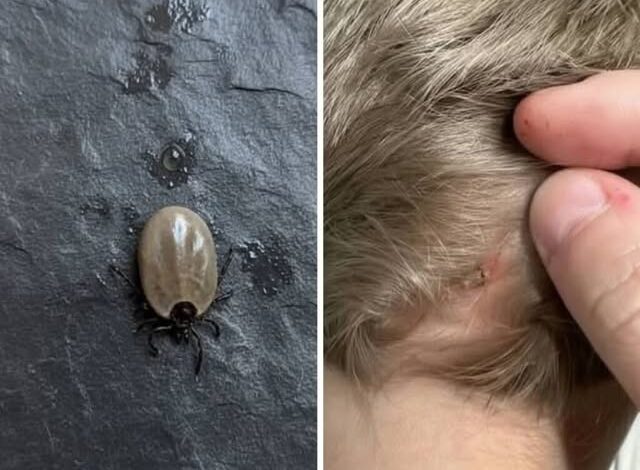
There are certain moments in parenting that trigger an instant reaction—no thinking, no pause, just a surge of concern that takes over before logic has time to catch up. One of those moments happens when you spot something small moving through your child’s hair.
It usually begins in the most ordinary way. You’re brushing their hair after a bath, helping them get ready for school, or sitting together while fixing a messy braid or ponytail. Everything feels routine, calm, predictable. Then your eyes catch something unexpected—a tiny speck where there shouldn’t be one.
And then it moves.
That single movement is enough to change everything.
In an instant, your mind starts racing. Questions come quickly, almost all at once.
What is that?
Is it lice?
Could it be something dangerous?
Do I need to act immediately?
Am I already too late?
That reaction is completely natural. When it comes to your child, even the smallest uncertainty can feel urgent. Your instincts are wired to protect, to respond quickly, to assume the worst so you don’t miss something important.
But here’s the part most parents don’t hear right away: in the majority of cases, finding a small insect in your child’s hair is not an emergency.
It’s unsettling, yes. Unexpected, definitely. But rarely dangerous.
The key in that moment isn’t speed—it’s calm.
The first thing to do is pause. Take a breath. Your reaction sets the tone for everything that follows. If you panic, your child will feel it immediately. If you stay composed, the situation becomes something manageable rather than overwhelming.
Children are incredibly perceptive. They don’t always understand what’s happening, but they understand how you feel about it. A calm voice, steady hands, and a simple explanation can prevent fear from taking hold.
Once you’ve grounded yourself, the next step is observation.
Not every bug you might find in hair is lice. In fact, there are several possibilities. It could be a harmless insect that ended up there by chance—something picked up from playing outside, sitting on grass, or even from a pet. It could be debris mistaken for movement. Or, yes, it could be lice.
Understanding the difference matters.
Lice, for example, are small, wingless insects that live close to the scalp. They don’t jump or fly, but they move quickly and are usually found near the roots of the hair. Their eggs, known as nits, attach firmly to individual strands and are often mistaken for dandruff, though they don’t brush off easily.
Other insects, on the other hand, may appear briefly and not stay. They don’t cling to the hair in the same way and are often easier to remove.
The goal is not to diagnose instantly, but to gather enough information to decide what to do next.
If you suspect lice, there are clear and effective steps you can take. Over-the-counter treatments are widely available and designed specifically to address the issue. Fine-toothed combs can help remove both lice and nits, and consistent follow-up is key to ensuring the problem is fully resolved.
If it turns out not to be lice, the situation becomes even simpler. Gently removing the insect and checking the scalp for anything unusual is often enough.
Either way, the process is manageable.
What often makes the situation feel bigger than it is isn’t the insect itself—it’s the uncertainty around it. The fear of not knowing what you’re dealing with, or what it might mean, can make even a small discovery feel overwhelming.
That’s why information matters.
Knowing what to look for, what steps to take, and what signs actually indicate a problem helps turn that initial moment of panic into something far more controlled.
There’s also another important piece to keep in mind: finding something in your child’s hair is not a reflection of cleanliness or care.
This is a common misconception, especially when it comes to lice. These situations can happen in any environment—schools, playgrounds, camps, homes. They are part of everyday interactions, not a sign that something has gone wrong.
Removing that stigma makes it easier to deal with the situation calmly and effectively.
It also makes it easier to talk to your child about it.
If they’re old enough to understand, a simple explanation can go a long way. Let them know what you’re doing and why, without creating fear. Reassure them that it’s something you can handle together. Keep the tone neutral, even a little matter-of-fact.
That sense of normalcy helps them feel safe.
And in moments like this, safety isn’t just about the situation—it’s about how it’s handled.
There’s also value in turning the experience into a learning moment. Not in a heavy or overwhelming way, but in a simple, practical sense. Teaching your child about personal care, about checking for things that don’t belong, about speaking up if something feels off—these are small lessons that build awareness over time.
At the same time, it’s important not to overreact.
Not every small discovery needs to become a big event. Sometimes, it’s just that—a small, unexpected moment that passes quickly once addressed.
The difference lies in how it’s approached.
Calm observation instead of panic.
Clear action instead of confusion.
Reassurance instead of fear.
Parenting is filled with these moments—small interruptions that test your ability to respond rather than react. They don’t define the day, but they can shape how both you and your child experience it.
Finding a bug in your child’s hair is one of those moments.
It starts with surprise.
It triggers concern.
But it doesn’t have to end in stress.
With a steady approach, the right information, and a willingness to stay calm, what feels alarming at first becomes something simple, manageable, and quickly resolved.
And once it’s over, it becomes just another part of the story—one of those small, unexpected moments that remind you how quickly instincts can take over, and how powerful it is when you choose calm instead.