Swollen Feet! Common Causes, Warning Signs, and When to Seek Medical Advice!
The human body is a marvel of biological engineering, a complex network of systems working in silent harmony to maintain equilibrium. Yet, occasionally, this sophisticated machine sends out signals that something is amiss—subtle distress calls that manifest in the most grounded parts of our anatomy. Among the most common of these indicators is the phenomenon of swollen feet. While often dismissed as a mere byproduct of a long day or a cramped flight, the swelling of the lower extremities is a nuanced physiological narrative that deserves to be read with care. To understand why our feet expand, we must look deeper into the mechanics of fluid dynamics, the impact of lifestyle, and the silent warnings of systemic health.
At the heart of most instances of swelling is a condition known as edema. This occurs when the tiny blood vessels in the body, the capillaries, leak fluid into the surrounding tissues. This excess fluid builds up, causing the tissue to swell. Because we are terrestrial creatures governed by the laws of gravity, this fluid naturally migrates toward the lowest points of our bodies—the ankles and feet. For many, this is a transient experience. We see it after a cross-continental flight where we have been tethered to a narrow seat for hours, or after a summer wedding spent standing on sun-baked pavement. In these moments, the calf muscles, which normally act as a secondary pump to push blood and lymph back toward the heart, are inactive. Without that mechanical assistance, the fluid pools, the skin tightens, and our shoes suddenly feel two sizes too small.
However, the story of swollen feet is rarely written by gravity alone. Our modern lifestyle plays a significant role in how our bodies manage fluid. Diet is a primary protagonist in this regard. Sodium, while an essential mineral, acts as a cellular magnet for water. When we consume high levels of processed foods or salt-heavy meals, the kidneys signal the body to retain water to dilute the excess salt. This systemic retention often makes its first visible appearance in the feet. Similarly, the environmental temperature can dictate the expansion of our limbs. In periods of intense heat, the body’s natural cooling mechanism involves dilating the blood vessels. While this helps dissipate heat through the skin, it also allows more fluid to escape into the interstitial spaces, leading to the familiar puffiness of “heat edema.”
Beyond these environmental and lifestyle factors, the body uses swelling as a protective response to trauma. A misstep on a curb or a minor strain during exercise triggers an inflammatory cascade. The body floods the injured area with white blood cells and fluid to begin the healing process and cushion the joint. In these cases, the swelling is localized and usually accompanied by a clear memory of the inciting incident. However, when swelling arises without a clear injury and refuses to dissipate with rest, the narrative shifts from a temporary inconvenience to a potential clinical symptom.
Medical science recognizes that persistent edema in the lower extremities can be a “canary in the coal mine” for the body’s vital organs. The heart, kidneys, and liver are the primary regulators of fluid balance and pressure. When the heart’s pumping action weakens—a condition known as congestive heart failure—it can no longer move blood efficiently through the venous system. The resulting backup of pressure forces fluid into the tissues of the legs and feet. Similarly, the kidneys serve as the body’s filtration system; if they are struggling to remove enough sodium and water from the blood, the excess has nowhere to go but down. Even the liver plays a role, as it produces albumin, a protein that keeps fluid inside the blood vessels. When liver function is compromised, fluid leaks out of the vessels and into the surrounding areas.
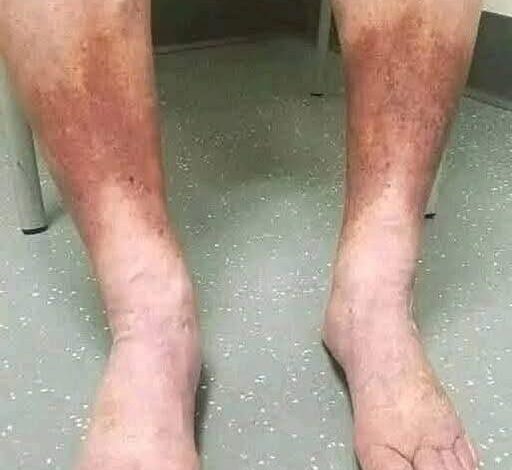
Identifying the threshold between “normal” and “concerning” requires an attuned sense of self-awareness. There are specific red flags that serve as urgent markers for medical intervention. One of the most critical is asymmetry. If one foot is significantly more swollen than the other, it may indicate a localized blockage, such as Deep Vein Thrombosis (DVT)—a blood pool or clot in the deep veins. This is a medical emergency, as a clot can dislodge and travel to the lungs. Other warning signs include “pitting” edema, where a finger press leaves a long-lasting indentation in the skin, or swelling accompanied by redness, warmth, and fever, which suggests an infection like cellulitis. Most urgently, if swelling is paired with shortness of breath, chest pain, or a sudden sense of fatigue, it suggests that the fluid imbalance has reached the pulmonary or cardiovascular systems, necessitating immediate emergency care.
For the vast majority of people, however, the management of swollen feet is rooted in proactive lifestyle adjustments. The most effective remedy is often the simplest: elevation. By raising the feet above the level of the heart for twenty to thirty minutes several times a day, we enlist gravity as an ally rather than an enemy, encouraging the pooled fluid to drain back toward the torso. Movement is the next line of defense. Simple ankle flexes, short walks, or calf raises engage the “venous pump,” forcing the circulatory system to work more efficiently. Compression therapy, involving specialized socks or stockings, provides external pressure to the tissues, preventing fluid from leaking into the spaces in the first place.
Furthermore, a holistic approach to health can prevent the recurrence of edema. Reducing dietary sodium, staying hydrated to flush the system, and maintaining a healthy weight to reduce the pressure on the venous system are all foundational steps. For those whose professions require long hours of sitting or standing, the “five-minute rule”—moving or stretching every hour—can be a transformative habit.
Ultimately, we must view our feet not just as the tools that carry us through the world, but as sensitive barometers of our internal climate. Swollen feet are a testament to the body’s constant struggle to maintain a delicate balance of pressure, chemistry, and gravity. In many instances, the message is a simple request for rest, a glass of water, or a brisk walk. But we owe it to ourselves to listen when that message becomes more insistent. By understanding the causes, recognizing the warning signs, and implementing mindful daily habits, we can ensure that we are not just walking through life, but doing so with a body that is supported, understood, and balanced. The feet may be at the bottom of our physical structure, but the health signals they send should always remain at the top of our minds.