Missile Strike Near School in Southern Iran Raises Questions and International Concern!
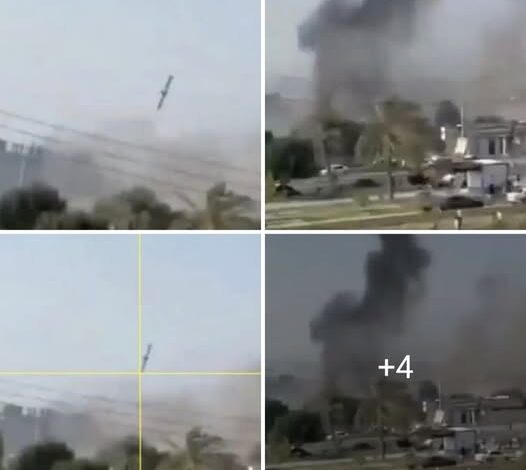
In the early weeks of March 2026, the city of Minab, nestled within the Hormozgan Province of southern Iran, became the epicenter of a chilling security incident that has reverberated far beyond its geographic borders. During what should have been a routine day of education, a massive explosion tore through the vicinity of a girls’ school, shattering the midday quiet and replacing the sounds of learning with the visceral roar of a blast. The event has since transformed from a localized tragedy into a complex international mystery, raising urgent questions about the safety of civilian infrastructure and the volatile nature of modern regional tensions. For the families of Minab, the incident was a terrifying reminder that even the most sacred social spaces—schools—are not immune to the spillover of a world increasingly defined by military friction.
The blast reportedly occurred during peak school hours, causing significant structural damage to the school building and sending shockwaves through the surrounding neighborhood. Witnesses described a scene of immediate pandemonium: shattered glass rained down on sidewalks, plumes of smoke billowed into the arid sky, and students fled the building in a state of sheer panic. Emergency responders, including firefighters and medical teams, navigated the debris-strewn streets to reach the injured. While official casualty counts have been slow to emerge, initial reports indicate that several students were among those transported to nearby hospitals. For a community that views its schools as safe harbors, the sight of ambulances lined up outside a girls’ academy has left a deep emotional scar that may take years to heal.
In the vacuum created by a lack of immediate official confirmation, the digital world moved with its characteristic and often dangerous velocity. Within hours, unverified claims began to circulate across social media platforms, suggesting that the explosion was caused by a specific type of military hardware: the Raduga Kh-55. This Soviet-era long-range cruise missile, designed during the height of the Cold War, is a sophisticated air-launched weapon capable of flying at low altitudes to evade radar detection. While its presence in such an incident would suggest a strategic military strike of significant proportions, defense analysts have urged extreme caution. Identifying a missile type is a rigorous forensic process that involves the careful collection and analysis of metallic fragments, electronic components, and blast signatures. Until investigators can confirm a manufacturing “fingerprint,” any specific identification remains firmly in the realm of speculation.
The mention of the Kh-55, however, has intensified the international focus on the incident. Because such weapons are typically associated with large-scale strategic operations rather than isolated events, their potential involvement raises the stakes of the investigation. Authorities in Iran have reportedly cordoned off the impact site, beginning the painstaking work of documenting the damage and interviewing witnesses. Investigators are tasked with reconstructing an accurate timeline of the event, reviewing satellite data, and examining any available surveillance footage from the neighborhood. Their goal is to determine whether the blast was a result of a mechanical failure, an accidental discharge, or a deliberate act of violence. In a region as geopolitically sensitive as the Middle East, the distinction between an accident and an attack can be the difference between a local investigation and a regional crisis.
International humanitarian organizations have been vocal in their condemnation of the incident, emphasizing that schools are protected civilian infrastructure under international law. The fact that the explosion occurred while students were present has drawn sharp rebukes from human rights advocates who argue that the protection of children must remain a non-negotiable priority, regardless of political or military objectives. Diplomatic statements from several world capitals have echoed these sentiments, calling for a transparent and thorough investigation into why a girls’ school was affected. These global observers are concerned not only with the immediate victims but with the precedent such an event sets for the safety of educational institutions in conflict-prone areas.
For the residents of Minab, the broader geopolitical context provides little comfort in the face of their immediate trauma. The city, which serves as a vital hub in Hormozgan, is now grappling with the logistical and psychological aftermath of the blast. Local leaders are assessing whether the school can be safely reopened or if the hundreds of students affected will need to be relocated to temporary facilities. Beyond the physical repairs, there is the arduous task of supporting the children who witnessed the explosion. Educators and community counselors have stressed that the emotional impact of such violence can lead to long-term stress and a loss of trust in the institutions meant to protect them. The “safe space” of the classroom has been compromised, and rebuilding that sense of security is a project that goes far beyond masonry and glass.
The spread of unverified information has only complicated the recovery process. In the age of instant connectivity, the proliferation of “citizen journalism” can often obscure the truth as much as it illuminates it. Sensationalized posts claiming to identify the culprits or the exact weapon used can inflame tensions and lead to premature conclusions. Analysts emphasize that responsible information consumption is critical during breaking news events. They argue that waiting for forensic evidence—the debris analysis and the blast pattern studies—is the only way to ensure that the eventual response is rooted in fact rather than fervor. In this instance, the role of professional investigators is to serve as the arbiters of truth in a landscape crowded with rumor.
As the investigation continues, the focus remains on the broader implications of civilian safety in the mid-2020s. The incident in Minab is not happening in a vacuum; it occurs against a backdrop of shifting regional alliances, military posturing, and internal security challenges. Whether the cause is determined to be a tragic accident or something more intentional, the outcome remains the same: a community has been terrorized and a generation of students has been traumatized. The international community’s response to this event will likely shape the standards for transparency and accountability in future incidents involving civilian infrastructure.
Looking ahead, the findings of the forensic teams in Hormozgan will be scrutinized by military experts and human rights monitors around the world. Every fragment of metal recovered from the blast site and every witness statement collected will be a piece of a larger puzzle. If a military weapon was indeed involved, the question shifts from “what happened” to “how” and “why” such a device found its way to a civilian neighborhood. Until those answers are provided, the people of Minab wait in a state of uneasy suspense, hoping for justice but primarily desiring a return to the safety they once took for granted. The incident serves as a somber reminder that in the grand theater of global politics, the most vulnerable actors are often the ones who are simply trying to attend school and build a future.