Forget Types, Why Thousands are Now Identifying as Symbiosual and What it Reveals About Modern Attraction
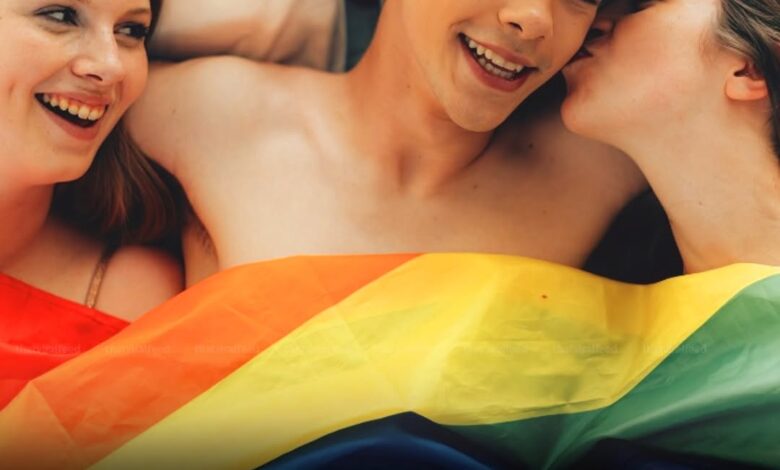
If you have ever found yourself more captivated by the chemistry between a couple than by either individual on their own, you might be experiencing a specific type of attraction that researchers are finally naming. The term is “symbiosual,” and it is rapidly gaining traction as a way to describe those who are drawn to the shared energy, emotional depth, and unique connection existing between people already in a relationship.
While the term is relatively new to the mainstream, it has long been discussed within LGBTQ+ and non-monogamous communities. Symbiosuality isn’t necessarily about a specific gender or a physical “type.” Instead, it is an attraction to the “unit”—the bond, the interplay, and the aesthetic of two or more people as a collective. For a symbiosual person, the appeal lies in the way a couple looks together, how they play with traditional gender roles, or the palpable sense of secure attachment they project.
The surge in interest follows a groundbreaking study by sexuality researcher Dr. Sally W. Johnston, published in the Archives of Sexual Behavior. Dr. Johnston analyzed data from the 2023 Pleasure Study, which surveyed nearly 400 participants about their romantic and sexual identities. The results were staggering: approximately 36% of the participants (145 individuals) reported that they felt more attracted to couples as a unit than to the individuals within those relationships.
According to Dr. Johnston, symbiosuality is distinct from “plurisexualities” like bisexuality or pansexuality because the focus is strictly on the shared energy between people rather than a preference for multiple partners. It is the specific “vibe” of the relationship itself that acts as the catalyst for attraction. Participants in the study described “feeding off the energy” of a couple and feeling a sense of security and confidence when surrounded by multiple people who are already in sync.
Psychology professor and relationship expert Wendy Walsh noted that this attraction often stems from an appreciation for “aesthetic symmetry” or the emotional affirmation that comes from being included in a pre-existing, stable dynamic. One study participant, Eden, explained that seeking out these connections provided a unique sense of emotional safety that one-on-one dating often lacks.
The data reveals that symbiosuality is not confined to a single demographic. The 145 individuals who identified with this attraction pattern spanned a diverse spectrum of backgrounds. In terms of racial and ethnic breakdown, the study showed that the group was approximately 62% White, 15% Hispanic or Latino, 12% Black or African American, 8% Asian, and 3% identifying as other or multiracial. This suggests that the experience of symbiosuality transcends cultural boundaries, though researchers emphasize that more work is needed to understand how different cultural messages about monogamy influence these feelings.
As the vocabulary for human identity continues to expand, symbiosuality has even earned its own entry and official flag on the Orientation Wiki. This move toward validation mirrors other viral shifts in identity, such as the recent rise of “trigender” individuals—people like content creator Emily Skvarch, who identifies as male, female, and non-binary simultaneously.
The takeaway is clear: as we move deeper into 2026, the way we define “who we like” is becoming less about checkboxes and more about the invisible threads of connection. Symbiosuality proves that sometimes, the most attractive thing about a person is the way they love someone else. For thousands of people, the “perfect partner” isn’t a person at all—it’s a partnership.