The Silent Assassin: Why the Minor Irritation in Your Mouth Could Actually Be a Life-Threatening Cancer
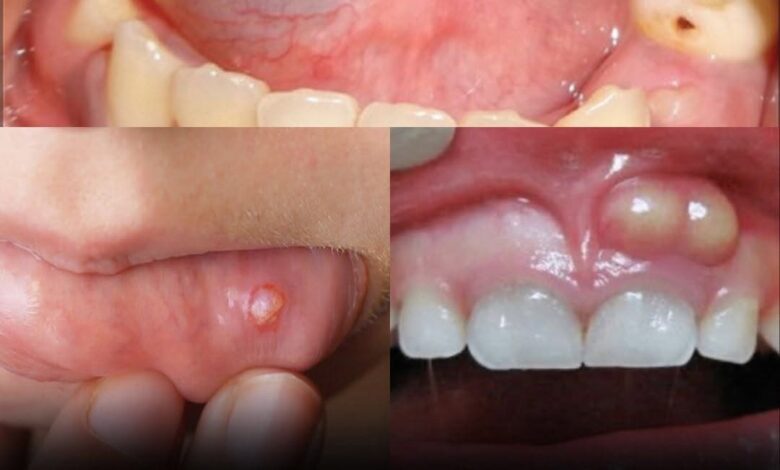
You’ve likely ignored it a dozen times—that nagging little sore, a tiny patch of white skin, or a subtle, unexplained numbness that seems to vanish after a few days. You tell yourself it’s just a scratch from a rough chip or a bit of stress-induced fatigue. But what if your body is desperately trying to warn you about a silent, deadly invader? Oral cancer often hides in plain sight, masquerading as minor inconveniences until it is far too late to stop. Don’t let your complacency be your downfall; the truth behind these “harmless” symptoms could literally save your life.
Most people associate mouth sores with simple irritation, but oral cancer is a quiet, aggressive disease that can develop anywhere within the oral cavity, including the lips, tongue, gums, and even the roof of the mouth. In countries like India, the statistics are staggering, with over 77,000 new cases reported annually and more than 52,000 lives lost every single year. It is one of the leading causes of cancer-related mortality, primarily because it is frequently detected far too late. By the time many patients finally seek medical help, the cancer has often progressed to a stage where it has already metastasized to the lymph nodes or neighboring tissues, making recovery significantly more difficult.
The danger of oral cancer lies in its deceptive subtlety. In its early stages, it rarely presents as a painful, dramatic lesion. Instead, it might manifest as a persistent, non-healing ulcer, a discolored white or red patch, or a slight thickening of the lining inside the cheek. Because these symptoms can mimic common dental issues, they are often brushed off, allowing the disease to fester. However, early detection is not just a suggestion; it is the most vital factor in determining the outcome. When caught in the early stages, the survival rate is a promising 82%, whereas late-stage detection causes those numbers to plummet to a chilling 27%.
While oral cancer can affect anyone, specific demographics are at a higher risk. Individuals over the age of 40, and those with a history of tobacco use—whether through smoking cigarettes, pipes, or chewing tobacco—are particularly vulnerable. In fact, approximately 80% of all oral cancer cases are directly linked to tobacco consumption. When you combine this with regular, heavy alcohol intake, the risk is not just added; it is multiplied. Furthermore, the human papillomavirus (HPV) has emerged as a significant risk factor, particularly for cancers located in the back of the throat. Even for those who do not use tobacco or alcohol, poor oral hygiene, excessive sun exposure without protection, and a diet lacking in essential fruits and vegetables can create a perfect environment for cancerous changes to take root.
Monitoring your oral health requires more than just brushing your teeth; it requires vigilance. You should conduct a self-examination periodically and schedule professional screenings at least twice a year. Be on high alert for symptoms that persist for more than two weeks, such as a sore that refuses to heal, unusual lumps or swelling in the mouth or neck, persistent difficulty or pain while chewing and swallowing, or a sudden, unexplained looseness in your teeth. Even subtle warning signs like chronic hoarseness, ear pain without any associated hearing issues, or a constant, burning sensation in the mouth should be treated as potential red flags that require an immediate, professional evaluation by a dentist or an oral cancer specialist.
The progression of the disease is categorized into four stages, each dictating a different approach to treatment. At Stage 1, the tumor is small—less than 2 centimeters—and has not moved to the lymph nodes, offering the best chance for a successful recovery. By Stage 4, the cancer has spread to nearby tissues or distant organs, necessitating a much more complex, multifaceted treatment approach. Modern medicine offers a range of options, including surgical resection, where the tumor is removed, potentially followed by advanced reconstructive surgery to restore function and appearance. Radiation therapy and chemotherapy are often utilized, either as primary treatments or in combination with other methods to ensure the destruction of malignant cells. In more recent years, targeted therapies and immunotherapies have provided new hope, particularly for advanced cases, by focusing on specific molecules in cancer cells or by supercharging the body’s own immune system to wage war on the malignancy.
The tragic reality is that over 80% of these cases are entirely preventable. By making conscious lifestyle changes—specifically, the cessation of tobacco and alcohol use—and by maintaining an impeccable standard of oral hygiene, you can drastically reduce your risk. Equally important is the role of public awareness. The lack of knowledge about early symptoms and the barriers to accessing specialized medical care, particularly in rural or underserved areas, contribute heavily to the high mortality rates we see today. Education is a powerful tool in this fight; by encouraging your friends and family to pay attention to their oral health and to never ignore the “small stuff,” you are participating in a larger effort to save lives.
In the end, the responsibility for your health begins in the mirror. While it is easy to assume that any pain or change in your mouth is temporary, the cost of being wrong is simply too high. If you notice something that feels, looks, or tastes off, do not wait for it to get better on its own. Do not wait for the “perfect” time to see a doctor. Seek professional care immediately. The peace of mind that comes from a clean bill of health is worth every second of the effort, and the early intervention that a specialist can provide could be the single most important decision you make for your future. Keep your eyes open, stay informed, and treat every abnormal change as a call to action. Your health is your most precious asset; protect it with the vigilance it deserves.