The hidden illness that took this Hollywood legends life!
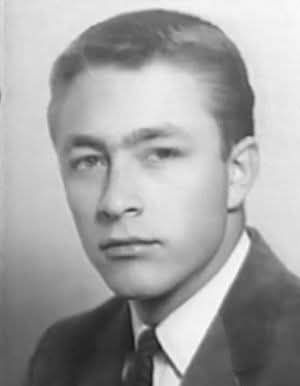
Born Wilfred Bailey Everett Bixby III in 1934, Bill Bixby built a career spanning more than three decades, establishing himself as a gifted and immensely likable actor and director whose presence defined a golden age of American television. From his breakthrough in the early 1960s to his final work directing in the 1990s, Bixby commanded both sides of the camera, yet his premature death in 1993, at the age of 59, left fans mourning the loss of a talent known for his natural, authentic warmth. As his colleague, actor Ray Walston, once perfectly summarized: “I believe that was the reason people liked him — instantly and completely.”
For millions of viewers, Bixby remains most indelibly linked to his final iconic role as Dr. David Banner in the late 1970s and early 1980s television series, The Incredible Hulk—the gentle scientist forever warning those around him, “You wouldn’t like me when I’m angry.” Yet, this singular, powerful role only capsulated a career rich in versatility and quiet human complexity.
The Rise of a Recognizable Face
Born in San Francisco on January 22, 1934, Bill Bixby was an only child who discovered an early, compelling passion for performance, which he honed by joining the speech and debate team at Lowell High School. His early academic pursuits took him through City College of San Francisco and UC Berkeley. However, the pull of the acting world proved stronger, leading him to leave his studies and pursue performance full-time. During these formative years, he sustained himself through various modeling jobs and commercial work, which effectively honed his camera presence before steady television roles began to materialize.
His major career breakthrough arrived in 1963 with the immensely popular science-fiction sitcom, My Favorite Martian. Bixby played the role of Tim O’Hara, a newspaper reporter who inadvertently becomes the keeper of an eccentric alien, played by Ray Walston. The series enjoyed a successful three-season run, immediately transforming Bixby into a recognizable and welcome face in living rooms across the nation.
Following his success in light comedy, Bixby demonstrated his range by tackling dramatic and emotional roles. He starred as the widowed father, Tom Corbett, in the beloved series The Courtship of Eddie’s Father (1969–1972), a role that demanded sensitivity and warmth and earned him three Emmy nominations. He later took the lead in the short-lived but much-loved cult series The Magician (1973–1974), portraying Anthony Blake, a stage illusionist who used his skills to solve crimes.
Despite the strength of these roles, his defining performance for a generation remains Dr. David Bruce Banner in the CBS series The Incredible Hulk (1978–1982). Bixby brought a compelling, grounded humanity to the scientist relentlessly seeking a cure for his terrifying affliction. He later returned to the character in three made-for-television movies—The Incredible Hulk Returns, The Trial of the Incredible Hulk, and The Death of the Incredible Hulk—the latter two he not only starred in but also directed, demonstrating his growing command behind the camera. Throughout these years, he maintained his versatility, appearing in films like Lonely Are the Brave and guest-starring on popular anthology and mystery shows, including Fantasy Island and Murder, She Wrote.
Personal Tragedy and Quiet Resilience
Behind the successful public career, Bill Bixby’s personal life was marked by profound, successive heartbreak. He divorced his first wife, actress Brenda Benet, in 1980. The following year, an unspeakable tragedy struck when their only child, six-year-old son Christopher, died suddenly from a rare and aggressive throat infection. The loss was devastating, and just one year later, Benet died by suicide, compounding Bixby’s grief.
Despite enduring such immense personal pain, Bixby channeled his focus into his work. He continued his acting career but gradually transitioned into directing throughout the 1980s. His directorial credits include episodes of popular series such as Goodnight, Beantown and Sledge Hammer!, culminating in his role as a regular director for the successful series Blossom.
Though he was often described by the press in the 1970s as one of Hollywood’s most sought-after eligible bachelors, Bixby remained deeply guarded about his privacy and the often-frivolous social scene surrounding fame. He once articulated his preference for solitude and genuine connection, stating: “I’m a very private person. I rarely go to cocktail parties because I can’t stand the idle chatter of drunks. My weekends are spent at Malibu. I take a lady and go to the beach and enjoy the beauty of the beach and the lady.”
Bixby married Laura Michaels in 1990, but the marriage was short-lived, ending in divorce in 1991—the same year he received a diagnosis that would ultimately claim his life: prostate cancer.
The Final Chapter
Facing a terminal illness, Bixby demonstrated his characteristic grace and candor. He spoke publicly about his cancer diagnosis, not seeking sympathy, but hoping to encourage other men to seek early detection and medical help. Amidst his battle, he shared a quiet, deeply personal hope with the public: “My prayer was that I would die in my sleep.”
Months before his death, he found a final measure of peace, marrying Judith Kliban on October 3, 1993. His health declined rapidly thereafter. On November 15, while directing an episode of Blossom, he was so severely weakened by the disease that he was forced to direct from a sofa on the set. Judith Kliban cared for him at their home near Century City until he slipped into a coma. Bill Bixby died peacefully on November 21, 1993, at the age of 59. Kliban later recalled the intensity of their final months together, reflecting: “I prayed for some extra time, but what we got was really intense and quite fabulous.”
Bill Bixby’s enduring legacy remains cemented in television history: his undeniable chemistry with Ray Walston, the genuine warmth he brought to The Courtship of Eddie’s Father, and the sensitive, grounded humanity he instilled in David Banner. He also left a powerful mark as a director, proving his talent extended well beyond his acting roles. Outside of his professional life, he enjoyed simple, meaningful pursuits, including Chinese cooking, the game of bridge, listening to music, and gardening—small comforts that anchored a life defined by both immense public fame and profound, private tragedy.
Even decades after his passing, Bixby’s work continues to find new audiences on streaming and digital platforms, ensuring that the memory of this classic television star—the warm, troubled scientist who simply wanted to be left alone—remains very much alive.