My Husband Said His Mom Deserved the Front Seat More than Me – I Taught Him a Lesson
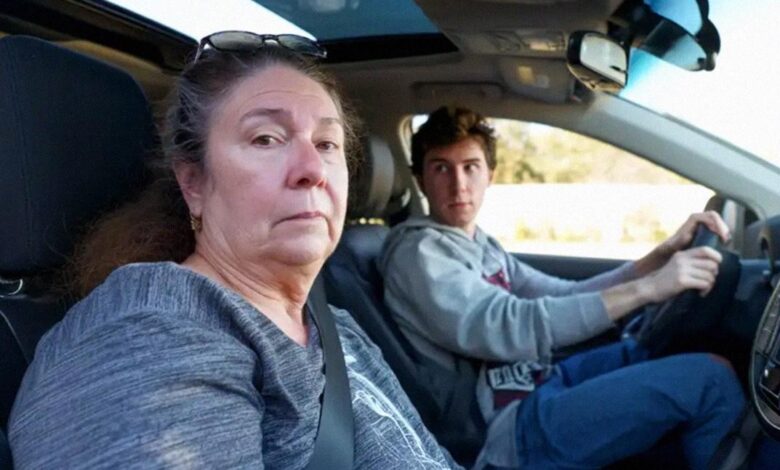
In the early days of our relationship, Harry was the personification of independence and thoughtfulness. He was the kind of man who seemed to have built his life on his own terms, and when he proposed, I felt certain that I was entering a partnership of equals. There were, in hindsight, small tremors that signaled the fault lines beneath our foundation. He called his mother, Stephanie, twice a day with a devotion that bordered on the ritualistic. He sought her counsel on everything from the mundane to the monumental—what shirt to wear, which route to take to the office, even how to style his hair. At the time, I chose to view this through a lens of compassion. Stephanie was a widow who had raised him alone; I told myself that his deference was merely the mark of a “good son.” It is a realization that hurts to recall now, but I was fundamentally wrong about the nature of their bond.
The shift occurred the moment the wedding finery was put away and we moved into our shared apartment. Suddenly, I was no longer the primary person in Harry’s life; I was an interruption. If Stephanie called during dinner, Harry would answer immediately, holding up a silencing finger to me as if my mid-sentence thought was a nuisance. Our plans were never concrete; they were merely placeholders that could be evaporated at a moment’s notice if Stephanie needed furniture moved or groceries delivered. The most stinging example occurred on our first anniversary. We were halfway through appetizers at a restaurant I had dreamed of visiting for weeks when his phone buzzed. He stood up before the screen had even dimmed, claiming his mother was “having a hard night” and felt lonely. I spent the rest of our anniversary sitting across from an empty chair and two plates of cooling food, watching a candle burn down to nothing.
When I eventually lost my grandmother, the pain was existential. She had been my anchor since my parents passed away when I was seven years old, the woman who taught me that love is a steady, quiet foundation. She left me a modest inheritance—$20,000—which felt like a final, protective embrace from beyond. Harry, sensing an opportunity, immediately suggested I buy a car. When I hesitated because I didn’t know how to drive, he was quick with a solution. He promised to be my chauffeur, to handle the errands, and to make our lives easier. He framed it as an investment in our family, and wanting to be a “good wife,” I agreed. I paid for a new car in full with my grandmother’s money.
The betrayal of that investment was swift. Within two weeks, my car had essentially become Stephanie’s personal taxi service. Harry’s morning commutes to drop me at work were soon plagued by “quick detours” to take his mother to the salon, the doctor, or her weekly Bible study. Eventually, the detours became the priority, and I was told to simply take the bus. I found myself standing at crowded bus stops in the rain, shivering with a mixture of cold and humiliation, knowing that Harry was currently behind the wheel of a vehicle I had bought, with Stephanie sitting in the passenger seat as if she owned the road. When I tried to speak up, Harry dismissed me as “dramatic,” arguing that he couldn’t let the car sit in the garage while he took care of the woman who had sacrificed everything for him.
The breaking point arrived on a humid Saturday afternoon. We were all heading out together, and I walked toward the passenger side out of a lingering, hopeful habit. Harry got there first, but instead of holding the door for me, he blocked my path with a shrug. He told me quite plainly that the front seat wasn’t for me because his mother deserved it more. He turned to Stephanie with a smile and declared her the “number one woman” in his life. As I climbed into the back seat, watching Stephanie’s smug expression in the rearview mirror, a brutal clarity settled over me. I wasn’t a partner; I was an afterthought in my own life, funded by my own grandmother’s legacy.
I didn’t cry that night. Instead, I began to build. For the next three months, I led a double life. I told Harry I was working late on spreadsheets and deadlines, but in reality, I was three blocks away at a driving school. My instructor, Miguel, became the catalyst for my reclaimed autonomy. He was patient and encouraging, never making me feel small when I stalled the engine or struggled with a parallel park. As I mastered highway merging and three-point turns, I realized that the power I had handed to Harry—the power of mobility and independence—was something I could simply take back. I didn’t need his permission to move forward.
The day I passed my driving test on the first try, I felt a sense of pride that had been absent from my marriage for years. I tucked my license away and waited for the perfect moment to reveal my progress. That moment arrived on my birthday. Harry had planned a dinner at a restaurant of his mother’s choosing, and as we walked to the car, the familiar choreography began: Harry toward the driver’s side, Stephanie toward the front passenger door. I paused and told them I had a surprise for them in the garage—a white box they needed to retrieve before we left.
Harry, ever the narcissist, assumed the gift was for him. They walked toward the garage together, chattering excitedly, and Harry tossed me the keys so I could “unlock the doors” for their return. The moment they were out of sight, I slid into the driver’s seat. I adjusted the mirrors, buckled my seatbelt, and felt the engine purr to life under my command. Inside the white box in the garage were divorce papers—signed, filed, and finalized. I didn’t wait to hear the shouts or the confusion. I put the car in reverse, backed out of the driveway, and drove away into the evening.
For the first time in years, I was in the front seat, and the air felt clean. My phone erupted with frantic calls and vitriolic texts from both of them, but I sent a single reply: “Please contact my lawyer.” Then, I blocked them. During the divorce proceedings, Harry attempted to claim the car as a marital asset, but my lawyer easily dismantled that argument with bank records proving the car was bought solely with my inheritance. Stephanie tried to paint me as a villain to anyone who would listen, but I no longer cared about the opinions of those who benefit from someone else’s diminishment.
Today, I drive myself everywhere. I drive to work, to the grocery store, and on long, aimless Sunday afternoons to the coast. I recently visited my grandmother’s grave and told her that I finally understood what she meant about foundations. I learned that once you stop riding in the back seat of your own life, you develop an intolerance for anyone who tries to put you there again. Harry said his mother deserved the front seat more than I did, so I gave it to her permanently. I left them both behind in the rearview mirror, and I have never looked back. The front seat is mine now, and I am the only one who decides where we are going.