It is with heavy hearts that we announce the passing of this legendary actress!
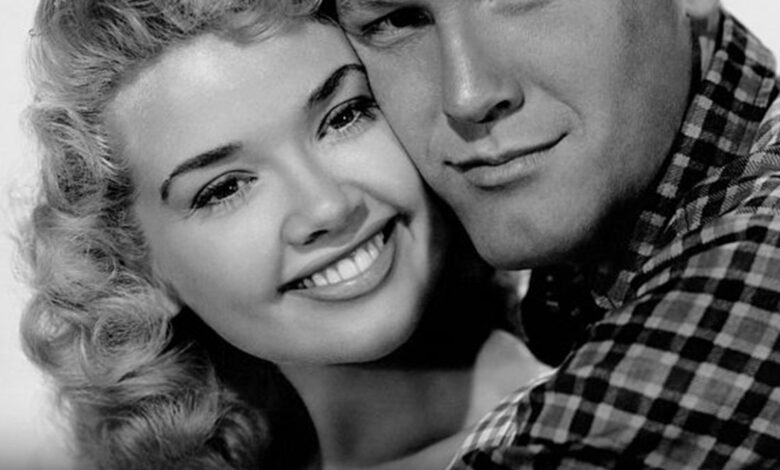
At an age when most children shrink from attention, she was so painfully shy that she would hide behind her mother’s skirt whenever visitors arrived. Few who knew her then could have imagined that this quiet little girl would one day stand beneath Hollywood lights, holding her own opposite legendary stars and later dedicating her life to protecting vulnerable children. Yet that unlikely transformation became the defining arc of Yvonne Lime Fedderson, whose passing has now left both the entertainment world and the humanitarian community in mourning.
Yvonne Lime Fedderson died peacefully of natural causes at her home in Paradise Valley, Arizona, on Friday, January 23, 2026. She was 90 years old. Her death marks the close of a life that bridged two worlds—classic Hollywood and decades of tireless advocacy for children who could not speak for themselves.
Born and raised in Glendale, California, Yvonne’s earliest years were shaped by a deep sense of timidity. Acting was never initially about fame or ambition; it was a solution offered by caring adults who hoped drama classes might help her find confidence. What began as therapy quietly turned into destiny. Through stage work and small appearances, she discovered not only her voice but an unexpected ease in front of audiences. By the age of ten, she was already working professionally, showing a natural screen presence that contrasted sharply with her reserved off-camera demeanor.
Her transition into film came swiftly. In 1956, she made her motion picture debut in The Rainmaker, playing Snookie Maguire alongside Burt Lancaster and Katharine Hepburn. The role may have been modest, but her performance was anything but forgettable. Studio executives were impressed enough to sign her to Paramount Pictures immediately—an extraordinary move at the time, made without even requiring a formal screen test. It was a rare vote of confidence and a clear signal that Hollywood had taken notice.
The following year proved pivotal. In 1957, Yvonne appeared in I Was a Teenage Werewolf, portraying the girlfriend of Michael Landon’s character. What began as a low-budget genre film quickly turned into a cultural phenomenon, grossing more than $2 million on a $150,000 budget. The movie’s unexpected success cemented her status as a rising star of late-1950s cinema and introduced her to a generation of moviegoers who would remember her long after her screen appearances ended. That same year, she also appeared—uncredited but unmistakable—as Sally in Loving You, starring Elvis Presley, adding another iconic project to her résumé.
In 1958, she received top billing in Dragstrip Riot, further solidifying her position in Hollywood’s youth-driven film market. Though her film career was relatively brief by modern standards, it coincided with a dynamic era in American cinema, and her performances left a lasting impression. She embodied a blend of warmth, sincerity, and quiet strength that made her memorable even in ensemble casts.
Television soon became another steady outlet for her talent. Throughout the late 1950s and 1960s, Yvonne appeared regularly on popular series, co-starring on the NBC sitcom Happy as Sally Day and making multiple appearances on The George Burns and Gracie Allen Show. Her guest roles spanned a wide range of genres, from westerns like Wichita Town and Bat Masterson to family and comedy series such as Dobie Gillis, The People’s Choice, and Gomer Pyle, U.S.M.C. Her final on-screen role came in 1968 on My Three Sons, a show produced by her husband, Don Fedderson.
While her acting career brought her public recognition, it was her work beyond Hollywood that became her most enduring legacy. In 1959, Yvonne co-founded the nonprofit organization Childhelp alongside fellow actress Sara O’Meara. What began as a shared concern for abused and neglected children evolved into a global organization that has spent decades providing prevention, treatment, and advocacy services for vulnerable youth and families.
Yvonne’s commitment to Childhelp was not symbolic or distant. She devoted years of hands-on work, fundraising, and public advocacy to the cause, using her platform not to maintain celebrity but to amplify the voices of children who had none. Her dedication did not go unnoticed. Between 2000 and 2005, she received five consecutive nominations for the Nobel Peace Prize, an extraordinary acknowledgment of her humanitarian impact.
Following the announcement of her passing, Childhelp released a heartfelt tribute, honoring the compassion, determination, and hope she brought to the organization for more than six decades. The statement described her as a guiding light whose influence would continue to be felt in the lives of countless children and families long after her death.
In her personal life, Yvonne married television producer Don Fedderson in 1969. Together, they welcomed a daughter, Dionne Fedderson. In her later years, Yvonne chose a quieter life away from Hollywood, living in Paradise Valley with her daughter. There, she focused on family, reflection, and the ongoing mission of Childhelp, remaining deeply connected to the work that had defined her adult life.
Those who knew her well often remarked on the contrast between her early shyness and her later strength. She never lost her gentleness, but she learned how to channel it into purpose. From a child who once hid from visitors, she became a woman who confronted some of society’s darkest realities with resolve and compassion.
Yvonne Lime Fedderson’s life cannot be measured solely by film credits or awards. Her true legacy lies in transformation—both her own and that of the countless children whose lives were changed because she chose service over spotlight. She leaves behind not only memories on screen, but a living, breathing humanitarian mission that continues to grow.
In remembering her, the world remembers more than a Hollywood actress. It remembers a woman who turned personal growth into public good, who understood that lasting impact is not found in applause, but in the quiet, steady work of caring for others.