Octomoms octuplets turn 16 – their lives now!
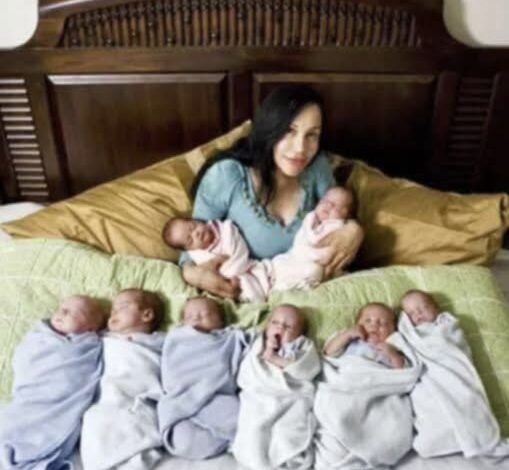
In 2009, the world watched in a mixture of awe and disbelief as Natalie Suleman, the woman the media would soon dub “Octomom,” gave birth to the first set of surviving octuplets in history. At the time, Suleman was already a single mother of six, and the addition of eight more infants turned her life into a global spectacle. For years, she was a fixture of tabloid headlines, a caricature of controversial choices and public ire. However, sixteen years later, the narrative of Natalie Suleman has shifted from one of “unbelievable pandemonium” to a quiet, hard-fought victory of family resilience and personal redemption.
The road to her current life was paved with immense hardship and complicated origins. The birth of Noah, Isaiah, Jeremiah, Jonah, Josiah, Makai, Maliyah, and Nariyah was the result of in-vitro fertilization (IVF) performed by Dr. Michael Kamrava. The medical community was shocked when it was revealed that Kamrava had implanted twelve embryos, far exceeding standard safety guidelines. While Kamrava initially claimed he acted on Suleman’s wishes, she later alleged that she had been misled while under sedation, believing she was only receiving half that number. The fallout was swift: Kamrava’s medical license was revoked for gross negligence, and Suleman was left to face the logistical and financial nightmare of raising fourteen children alone.
In those early, desperate years, Suleman found herself trapped in a cycle of survival that forced her into a career path she now looks back on with regret. Struggling to pay for nannies, medical care, and the basic necessities for a household of fifteen, she took work as a stripper, appeared in adult films, and participated in celebrity boxing matches. This era was marked by severe financial strain, culminating in a 2012 bankruptcy filing with debts reaching $1 million. Her public image reached its lowest point in 2014 when she faced charges for welfare fraud, eventually receiving probation and a mandate for community service.
The turning point came around 2013, sparked by the realization that her children, particularly her eldest daughter Amerah, were beginning to internalize the toxic environment of their mother’s public persona. Driven by a desire to protect them, Suleman made a radical decision: she discarded the “Octomom” moniker, returned to her birth name, Natalie, and walked away from the media circus. She retreated to a more modest life in Orange County, California, returning to her professional roots in the mental health field. She spent several years working as a full-time substance abuse counselor, a role that allowed her to use her own struggles with anxiety and PTSD to help others.
On January 26, 2025, the octuplets celebrated their milestone 16th birthday, an event Natalie marked with a rare and touching tribute on social media. She spoke of her children not as a “caricature” or a world record, but as humble, grounded, and kind individuals. Now high schoolers, the octuplets are deeply involved in a lifestyle focused on fitness and a plant-based vegan diet, often helping their mother prepare nutrient-dense meals for the entire household. Despite the cramped quarters of their rented townhouse—a property they secured with the help of a supportive church community—the home is filled with a sense of order and peace that seemed impossible a decade ago.
Life today is still physically and mentally demanding. Natalie remains the primary, around-the-clock caregiver for her son Aidan, who is profoundly autistic and non-verbal. Her eldest children have moved into adulthood; Joshua, her third child, recently made Natalie a grandmother for the first time, adding a new generation to their expansive family tree. In early 2025, after more than twelve years of seclusion, Natalie and her children decided to step back into the spotlight on their own terms. Through a Lifetime docuseries, Confessions of Octomom, the family shared their side of the story, with many of the children speaking on camera for the first time to defend their mother against the “terrorization” she endured during their youth.
Natalie Suleman’s journey is a stark reminder of the power of maternal focus. She has traded the chains of infamy for the quiet dignity of a mother who did “whatever it took” to see her children thrive. While she admits to a deep regret—not suing her fertility doctor, whose insurance might have provided the financial security her children deserved—she is clearly at peace. She no longer sees herself as a victim of her past, but as a survivor who managed to raise fourteen well-adjusted teenagers against all odds. Today, she is focused on her children’s future, grateful for the “safe and predictable little world” she managed to build from the ruins of her public life.