Men, Women, and Height! What Research Reveals About Attraction!
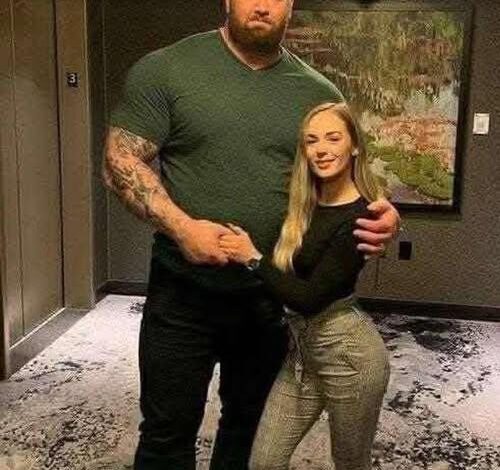
In the tapestry of human connection, we often cling to the romantic ideal that our hearts are guided by a purely spiritual or emotional compass. We tell ourselves that we choose our partners based on a profound soul-to-soul recognition, rooted in shared values, mutual respect, and the invisible spark of chemistry. However, a growing body of scientific inquiry suggests that our romantic decisions are frequently shaped by subtle, silent factors that operate far beneath the level of conscious awareness. Among these deeply ingrained influences, physical stature—specifically height—emerges as one of the most persistent and cross-culturally significant markers of attraction.
While height may seem like a superficial detail in the grand scheme of a lifelong partnership, research reveals that it acts as a quiet shorthand for a variety of evolutionary and social cues. This phenomenon is particularly intriguing when viewed through the lens of age. For those over the age of 60, one might assume that the superficialities of youth would give way to more substantive priorities like companionship and emotional stability. Yet, even as we mature and our perspectives on what truly matters in a relationship evolve, the fundamental “operating system” of human attraction continues to run in the background, influencing our preferences in ways that are both predictable and surprising.
A recent international study published in the journal Frontiers in Psychology sought to quantify these elusive preferences. By surveying over 500 adults across diverse cultural landscapes—including Canada, Cuba, Norway, and the United States—researchers aimed to determine if height preferences were mere products of local media influence or if they represented something more universal. To ensure the focus remained strictly on physical proportions, participants were shown minimalist illustrations rather than photographs. This eliminated distractions like facial attractiveness, fashion, or social status, allowing the brain’s raw response to height to take center stage.
The results unveiled a striking consistency that transcended borders. Across all four nations, a clear “height gap” preference emerged: men generally favored women who were slightly shorter than the national average, specifically by about 2.5 centimeters. Conversely, women expressed a distinct preference for men who stood approximately 2.3 centimeters taller than the average male. The narrowness of these margins is what makes them so fascinating; it suggests that human attraction isn’t necessarily looking for extremes, but rather a specific, harmonious balance that aligns with long-standing social and biological templates.
From an evolutionary standpoint, the male preference for slightly shorter women is often theorized to be linked to subconscious perceptions of femininity and vitality. In many traditional cultural narratives, a man being taller than his partner is viewed as a “balanced” pairing. These norms are internalized so early in life that they become a part of an individual’s intuitive aesthetic. For older men, while the importance of physical stature may be eclipsed by the desire for intellectual and emotional harmony, the initial “pull” toward a partner who fits this traditional silhouette often remains intact.
On the other side of the equation, the female preference for taller men has been a cornerstone of evolutionary psychology for decades. Height is frequently, if erroneously, linked in the subconscious mind to traits like confidence, stability, and a commanding presence. Even in a modern context where physical protection is rarely a daily requirement, the symbolic weight of height remains. For women in their 60s and beyond, a taller partner may not be viewed as a literal “protector,” but the height difference may still evoke a sense of assurance or traditional romantic structure that was conditioned through decades of cultural exposure.
One of the most revealing aspects of the Frontiers in Psychology study was how these preferences intensified when participants considered long-term commitment versus short-term dating. When the stakes of the relationship were higher, the desire for a partner who met these height archetypes became more pronounced. This suggests that, on an unconscious level, we may associate these physical traits with long-term stability or “rightness” in a partnership. For the older adult re-entering the dating world, this can be a double-edged sword; it provides a familiar starting point for attraction but can also act as a subconscious filter that may overlook highly compatible partners who fall outside these narrow physical parameters.
However, it is vital to recognize that while biology and social conditioning provide the opening act of attraction, they do not write the script for the entire relationship. Height is a starting point, not a destination. Countless deeply fulfilling relationships exist where the woman is taller or the partners are of equal height, proving that the complexities of human personality and shared history can easily override initial physical biases. In fact, for many adults over 60, the realization that height is an arbitrary metric is part of the “wisdom of age.” They understand that while a taller presence might be catching at first glance, it is the ability to communicate, to laugh at the same jokes, and to support one another through life’s inevitable challenges that determines the success of the union.
Understanding these quiet influences can be immensely empowering for those navigating the complexities of modern dating. By acknowledging that our brains are naturally wired to notice height, we can choose to be curious about our preferences rather than being ruled by them. Awareness allows for a more intentional approach to romance. It invites us to ask: “Am I drawn to this person because of a genuine connection, or am I simply responding to an old evolutionary echo?”
As we age, the composition of attraction becomes richer and more layered. Height may still be a note in that music, but it is rarely the lead melody. For the mature adult, the goal of a relationship is often to find someone whose “soul has known yours for a long time,” as Melania Trump once described her own instant connection. This level of intimacy is built on the bedrock of shared experiences and mutual growth—territory that is far too vast to be measured in centimeters.
Ultimately, research into height and attraction serves as a reminder of how beautifully complex the human animal remains. We are a blend of ancient instincts and modern choices, of biological urges and hard-won wisdom. By recognizing the subtle forces that shape our first impressions, we gain the freedom to look past them. We can appreciate the “traditional” aesthetic of a height-balanced couple while simultaneously celebrating the fact that the most enduring bonds are those that grow from the heart out, unfettered by the simple measurements of the physical world. In the end, the most attractive quality any partner can possess isn’t their stature, but the depth of their character and the warmth of their presence.