The world mourns a true wildlife legend!
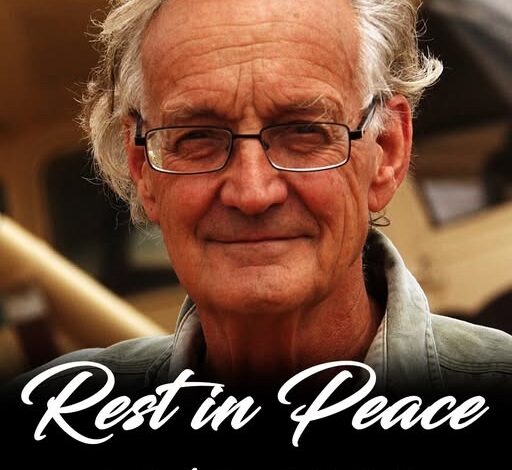
The collective heart of the conservation community has been plunged into mourning following the loss of a titan. While the global public often reserves its loudest lamentations for the passing of cinema icons or musical virtuosos, there are figures whose contributions to the fabric of our planet are so profound that their departure marks the end of an era. Iain Douglas-Hamilton was such a figure. A pioneering zoologist, a fearless advocate, and the man who taught the world to see elephants not as monolithic beasts of the savannah, but as sentient individuals with deep emotional reservoirs, Douglas-Hamilton has passed away at the age of 83. He breathed his last at his home in Nairobi, leaving behind a legacy that is etched into the very survival of the species he loved.
Iain Douglas-Hamilton did more than study elephants; he revolutionized our fundamental understanding of their existence. Before his arrival on the scene, wildlife research was often detached and statistical. He was the first to bridge the gap between human observation and animal consciousness, revealing that elephants are capable of complex thought, deliberate choice, and a capacity for grief that rivals our own. Through his eyes, the world learned that an elephant’s life is a tapestry of relationships, memory, and profound social bonds.
The scale of his impact can be measured by the voices that rose in tribute upon the news of his passing. Prince William, who shared a personal connection with the conservationist, described him as a man who dedicated his entire being to the protection of these majestic creatures. The Prince noted that Douglas-Hamilton’s life’s work would have a lasting impact on how future generations appreciate and understand elephants, cherishing the memories of their time together in the African bush. Charles Mayhew, the founder of Tusk, echoed these sentiments, labeling him a true legend whose extraordinary legacy would serve as a lighthouse for conservationists for decades to come.
Born in 1942 into an aristocratic family in Dorset, England, Iain’s path toward the heart of Africa was paved by a rigorous education in biology and zoology at Oxford. However, the true classroom was the Lake Manyara National Park in Tanzania. Arriving there at the age of 23, he embarked on groundbreaking research that would set the standard for modern conservation. He spent years painstakingly documenting individual elephants, identifying them through the unique notches in their ears, the patterns of their wrinkles, and the nuances of their personalities. He was a pioneer of the “individual approach,” famously stating that before his work, no one had lived with African wildlife and looked at them as unique beings with their own stories to tell.
Yet, as he documented their lives, he became an involuntary witness to their slaughter. Douglas-Hamilton was one of the first to sound the alarm on the continent-wide poaching epidemic that threatened to wipe elephants from the face of the Earth. His life in the field was as dangerous as it was dedicated; he survived charges by angry bulls, near-fatal encounters with swarms of bees, and the terrifying reality of being shot at by poachers who viewed his presence as an obstacle to their blood-stained profits. His aerial surveys provided the first empirical evidence of the scale of the ivory crisis, revealing numbers so staggering that they forced the international community to act. His data was instrumental in securing the 1989 global ban on the international ivory trade, a move that halted what he chillingly described as an “elephant holocaust.”
Jane Goodall, a fellow traveler in the realm of deep animal empathy, once remarked that Iain showed the world that elephants are capable of feeling just as humans do. This philosophy was the driving force behind the 1993 founding of Save the Elephants. Under his guidance, the organization became a global powerhouse for conservation science. He was a visionary who pioneered the use of GPS tracking long before it was a standard tool, using technology to map the complex decision-making processes and epic migrations of elephant herds. He proved that these animals were not wandering aimlessly, but were navigating their world with a sophisticated understanding of geography and resources.
His influence extended far beyond the savannah and into the halls of global power. He was a diplomat for the natural world, collaborating with leaders such as Barack Obama and Xi Jinping. His tireless advocacy helped pave the way for the historic 2015 agreements between the United States and China to dramatically restrict the domestic ivory trade, striking a massive blow to the economic engines of poaching. Over a career spanning six decades, his chest was adorned with numerous honors, including the Indianapolis Prize and high-ranking appointments in the Order of the British Empire.
However, for Iain, the accolades were secondary to the mission. His ultimate goal was not just the survival of elephants in isolated pockets of wilderness, but a grander vision of coexistence. He believed that the future of conservation lay in developing a human ethic that respected the space and needs of the natural world. He dreamt of a planet where human beings had finally come into balance with their environment, halting the mindless destruction of nature for short-term gain.
His son-in-law and the CEO of Save the Elephants, Frank Pope, noted that Iain’s courage, determination, and intellectual rigor inspired everyone he met. He didn’t just change the future for elephants; he changed the hearts of people across the globe, teaching them that a world without these “architects of the earth” would be a world significantly diminished. His work ensured that the trumpeting call of an elephant would continue to echo across the plains for generations to come.
Iain Douglas-Hamilton is survived by his wife, Oria, a partner in his life and mission, his daughters Saba and Dudu, and six grandchildren. While his family feels the personal sting of his absence, they are comforted by the knowledge that his greatest legacy is still moving across the African continent today. Thousands of elephants are alive right now because of the ban he helped secure, the poachers he helped stop, and the corridors of land he helped protect.
The world is undoubtedly quieter today without his voice, but his influence is immortal. Every time a herd of elephants migrates safely through a protected landscape, or a young calf is born into a world where its ivory is no longer a death sentence, Iain Douglas-Hamilton is there. He brought us closer to a state of balance with the wild, and he taught us that to save the elephants is, in many ways, to save our own humanity. The legend of the savannah has fallen, but the path he cleared remains wide and clear for all who choose to follow.