Senate Confirms Trump Nominee Anne-Leigh Moe As US District Judge!
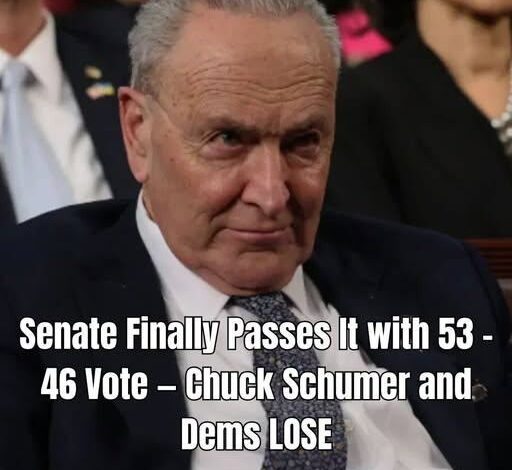
The United States Senate has officially confirmed Anne-Leigh Moe to serve as a U.S. District Judge for the Middle District of Florida, marking a significant milestone in the administration’s ongoing mission to reshape the federal judiciary. The confirmation came following a narrow but decisive 53–46 vote, largely along party lines, underscoring the high stakes and deep ideological divisions that currently define the judicial appointment process. Shortly after the vote was finalized, President Trump took to Truth Social to celebrate the victory, characterizing the appointment as a major win for his “Law and Order” agenda and praising Judge Moe as a jurist who will strictly adhere to the Constitution.
Anne-Leigh Moe’s ascent to the federal bench is the culmination of a distinguished career within the Florida legal system. Since 2022, she has served as a judge on Florida’s Second District Court of Appeal, where she earned a reputation for a meticulous and principled approach to the law. Before her elevation to the appellate level, she served as a circuit judge in Hillsborough County, a role that provided her with extensive experience in the daily realities of the courtroom. Her background in both trial and appellate law was frequently cited by her supporters during the confirmation hearings as evidence of her readiness for the lifelong responsibilities of a federal judgeship. For the administration, Moe represents the ideal profile for a judicial nominee: a young, conservative intellectual with a proven track record of traditionalist rulings.
The Middle District of Florida, where Judge Moe will now preside, is one of the busiest federal districts in the country, covering a vast geographical area that includes major metropolitan centers like Tampa, Orlando, and Jacksonville. Her presence on the bench is expected to have an immediate impact on the court’s heavy caseload, particularly in civil and criminal matters that fall under federal jurisdiction. This appointment is part of a broader, more systematic effort by the Trump administration to fill federal vacancies with judges who prioritize originalism and a narrow interpretation of federal power. By filling these seats, the administration is ensuring that its judicial philosophy will persist for decades, long after the current executive term concludes.
While the confirmation of Judge Moe signals a victory for the administration in the halls of the Senate, it occurs against a backdrop of significant political turbulence in Washington. The nation is currently grappling with a persistent government shutdown, yet the political fallout for the President appears to be deviating from historical norms. According to analysis from CNN’s Harry Enten, President Trump seems to be in no rush to reach a resolution that would reopen the government. Unlike the record-breaking shutdown of 2018–2019, which saw the President’s approval ratings take a visible hit as the public largely assigned him the blame, the current situation paints a very different picture of the American electorate’s sentiment.
Data indicates that the President’s approval rating has not only remained stable throughout this standoff but has actually experienced a slight uptick. Enten suggests that the “blame game” typically associated with government shutdowns has evolved. In previous years, the executive branch was often held primarily responsible for the cessation of government services. However, current polling suggests that a growing number of Americans now view Congress, and specifically Democratic leadership, as the primary obstacle to a resolution. The prevailing narrative among the President’s base—and a growing segment of independent voters—is that the shutdown is a direct result of Democrats blocking essential funding bills. This shift in public perception has granted the President a level of political leverage that few of his predecessors enjoyed during similar fiscal crises.
The contrast between the 2018–2019 shutdown and the current one is stark. In the previous instance, the President eventually relented under the pressure of sinking poll numbers and public frustration over interrupted services. Today, the administration appears to be operating from a position of strength, bolstered by a supportive media ecosystem and a voter base that views the shutdown as a necessary tactic in a larger battle over national priorities. This lack of political urgency to end the shutdown allows the administration to remain steadfast in its demands, while simultaneously continuing its aggressive pace of judicial confirmations. It is a dual-track strategy: maintaining a firm stance on the budget while quietly but effectively cementing a conservative legacy in the federal courts.
Judge Moe’s confirmation serves as a reminder that even when the legislative and executive branches are at a fiscal impasse, the work of the judiciary continues. The federal courts act as the final arbiter of American law, and the judges who sit on these benches hold the power to influence everything from environmental regulations to civil liberties. For proponents of the administration, Moe is a symbol of a judiciary that will act as a “bulwark against overreach.” For critics, her appointment is seen as another step in the “politicization” of the courts. Regardless of the viewpoint, the reality is that the Middle District of Florida now has a new voice that will help shape the legal landscape of the state for the foreseeable future.
The broader implications of these judicial wins are profound. Each confirmation reduces the number of vacancies available for future administrations to fill, effectively narrowing the path for a different judicial philosophy to take root. By focusing on young, experienced judges like Moe, the administration is effectively “future-proofing” its policy goals through the court system. This strategy recognizes that while presidents and members of Congress are subject to the whims of the election cycle, a federal judge is a permanent fixture of the American government.
As Washington remains locked in a stalemate over funding and policy, the confirmation of Anne-Leigh Moe stands as a clear example of the administration’s ability to achieve long-term objectives amidst immediate chaos. The President’s “Law and Order” mandate is being woven into the fabric of the country, one judge at a time. While the headlines may remain focused on the government shutdown and the shifting blame in the polls, the true, lasting impact of this era may well be found in the quiet courtrooms of places like the Middle District of Florida, where newly confirmed judges like Anne-Leigh Moe will begin their life’s work of interpreting the law.
The political landscape of 2026 is one where traditional rules of engagement no longer seem to apply. A government shutdown that once would have signaled a political crisis is now being managed as a tactical stalemate, and judicial confirmations that were once viewed as routine are now celebrated as pivotal ideological victories. As Judge Moe prepares to take her seat on the bench, she does so in a nation that is deeply divided on the path forward, but one where the administration’s influence on the third branch of government is undeniably growing stronger.