A LEGEND OF STAGE AND SCREEN!
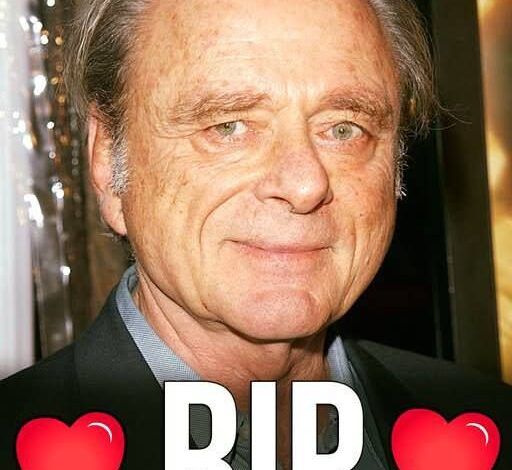
In the frenetic ecosystem of modern entertainment, where celebrity is often measured by the volume of one’s social media presence and the frequency of viral outbursts, the passing of Harris Yulin at the age of 87 serves as a poignant reminder of a different era. He died in New York City following a cardiac arrest, leaving behind a body of work that stands as a fortress of artistic integrity. While the digital headlines of February 2026 are frequently dominated by those who chase visibility at any cost, Yulin’s legacy is defined by a quiet, unwavering devotion to the craft of acting—a discipline shaped not by the glare of the spotlight, but by the pursuit of emotional truth in the shadows of the rehearsal room.
Harris Yulin was the quintessential “actor’s actor,” a stabilizing force whose mere presence on a cast list signaled a level of gravitas and reliability. His career was a masterclass in restraint. He understood a fundamental truth that many contemporary performers overlook: that true power does not require noise. Whether on a Broadway stage, a gritty film set, or a prestige television series, Yulin operated with a surgical precision. He anchored his scenes through the unspoken—the heavy pause, the slight shift in posture, or a measured tone that suggested a lifetime of history behind a single line of dialogue. He did not perform for the sake of the applause; he performed to serve the narrative, placing the integrity of the story above the vanity of the performer.
His filmography reads like a roadmap of American cinema’s most influential moments over the last half-century. From his chilling portrayal of the corrupt narcotics officer Mel Bernstein in Scarface to his authoritative presence in Training Day and his memorable turn in Ghostbusters II, Yulin brought a grounded, thoughtful reality to every character he inhabited. On television, his range allowed him to move seamlessly from the sophisticated comedy of Frasier to the dark, high-stakes drama of Ozark. In each role, he avoided the trap of the “caricature.” His characters unfolded slowly, revealing their complexities through minute details rather than grand declarations. This patience gave his work a haunting, lasting quality; his scenes tended to linger in the minds of the audience long after the credits rolled.
However, to measure Harris Yulin solely by his IMDB credits would be to miss the most significant portion of his legacy. His influence was perhaps most profound within the walls of the Juilliard School, where he served as a mentor and guide to generations of aspiring actors. In the classroom, Yulin was a sentinel of high standards. He taught his students that acting was not a glamorous path to public recognition, but a rigorous, lifelong discipline. He championed the idea that talent is merely a starting point—a raw material that is useless without the accompanying virtues of humility, keen observation, and professional responsibility.
Former students recall a man who paired his demanding expectations with a sincere, paternal care for their growth. He encouraged them to listen before they spoke, to understand the psychological architecture of a character before they attempted to perform it, and to value sincerity over display. In a culture that increasingly rewards speed, self-promotion, and “brand-building,” Yulin modeled a different path: the path of the artisan. He showed them that a career is built brick by brick, through the daily labor of showing up prepared and respecting the work of one’s colleagues.
Reflecting on Yulin’s life offers a necessary corrective to our modern obsession with fame. His story suggests that not every meaningful contribution needs to be visible to the masses to have an impact. There is a specific kind of greatness in reliability—in being the person who stabilizes a room, who serves the work rather than using the work for self-enhancement, and who chooses excellence over ego. This type of life rarely dominates the 24-hour news cycle, but it is the bedrock upon which an industry is built. It reflects a deeper truth: that what is done with genuine care, for the right reasons, carries a spiritual weight that outlasts any fleeting moment of public applause.
Yulin’s passing is a significant loss for his wife, Kristen Lowman, and the countless actors who looked to him as a North Star of professional conduct. But he leaves behind a standard that continues to resonate. It is a standard of quiet dedication—the belief that if one works faithfully and authentically, day after day, meaning will inevitably follow. He proved that the deepest influence is rarely the loudest. Like a subterranean river, his work and his teachings flowed beneath the surface of the industry, nourishing the soil from which new art continues to grow.
As we look back on his eighty-seven years, Harris Yulin reminds us that the most enduring legacies are those built on substance. He was a man who understood that the spotlight is a flickering thing, but the light of a well-lived, disciplined life is constant. He did not shout to be heard; he simply spoke the truth, and the world slowed down to listen. In the end, his life was a testament to the fact that greatness does not need to announce itself. It simply works, it simply exists, and it leaves the world a more thoughtful place for having hosted it. His performances will remain preserved in the archives of cinema, but his true monument is the integrity he instilled in the craft itself—a legacy that is as lasting as it is silent.