A Life of Rapid Success and Lasting Impact! Remembering Her Legacy
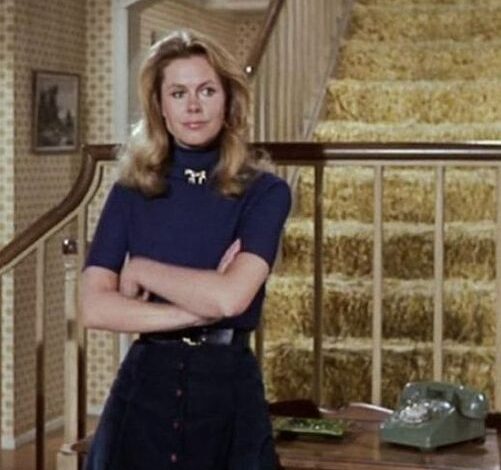
The legacy of Elizabeth Montgomery stands as a testament to the enduring power of charm, wit, and a touch of the supernatural in the golden age of American television. Decades after her passing in the mid-1990s, Montgomery remains a figure of immense comfort and nostalgia for millions of viewers. While she is most frequently remembered for her iconic role as Samantha Stephens on the classic sitcom Bewitched, her life and career were defined by a sophisticated versatility and a commitment to social causes that extended far beyond the twitch of a nose. To look back at her journey is to witness a life of rapid success, artistic evolution, and an impact that continues to ripple through the entertainment industry today.
The Foundation of a Creative Spirit
Elizabeth Montgomery was not merely a product of Hollywood; she was a child of its intellectual and artistic elite. Born in 1933 to the legendary actor Robert Montgomery and socialite Elizabeth Bryan Allen, she grew up in an environment where the performing arts were not just a career path, but a way of life. This early exposure to the mechanics of storytelling and the discipline of acting provided her with a unique perspective. Surrounded by the creativity of the mid-century theater and film scenes, she developed a keen interest in the craft from an early age.
Rather than relying solely on her family name, Montgomery sought a formal education in the arts, attending the American Academy of Dramatic Arts. Her early television appearances in the 1950s—often on her father’s show, Robert Montgomery Presents—served as a training ground where she honed her natural warmth and impeccable comic timing. These formative years allowed her to cultivate a screen presence that felt both grounded and ethereal, a duality that would later become her signature.
A Career Transformed by Magic
While Montgomery’s career steadily progressed through various stage productions and dramatic film roles, it was the 1964 debut of Bewitched that transformed her into a global phenomenon. As Samantha Stephens, a witch attempting to lead a normal suburban life, Montgomery navigated the complexities of domesticity and magic with a grace that was revolutionary for its time.
The show was more than a lighthearted comedy; it was a subtle commentary on the shifting roles of women in American society. Montgomery played Samantha not as a subservient housewife, but as a capable, intelligent, and often superior partner to her husband, Darrin. Her performance showcased a remarkable range, particularly in the dual role of Serena, Samantha’s wild and rebellious cousin. This contrast allowed Montgomery to demonstrate her versatility, proving she was as adept at physical comedy and character acting as she was at the leading-lady charm that made her a household name.
Beyond the Sitcom: The Evolution of a Gifted Artist
When Bewitched ended its eight-year run in 1972, Montgomery made a conscious and bold decision to pivot away from the lighthearted image she had cultivated. She sought roles that challenged both her and her audience, effectively redefining the “television movie” genre. Her performance in the 1974 film A Case of Rape was a landmark moment in broadcasting history, bringing the trauma of sexual assault to the forefront of national conversation and earning her an Emmy nomination.
She continued this trend with The Legend of Lizzie Borden, where she portrayed the infamous alleged axe murderer with a chilling, restrained intensity. These projects showcased a woman who was unafraid to explore the darker corners of the human psyche. She moved from the “Queen of Magic” to a respected dramatic actress who used her platform to highlight social issues, including her vocal support for the LGBTQ+ community and her advocacy for veteran rights—causes that were often considered controversial at the time.
A Legacy of Strength and Lasting Impact
In her later years, Elizabeth Montgomery faced significant health challenges, yet she remained a figure of strength and kindness. When she was diagnosed with colorectal cancer in 1995, she handled the situation with the same dignity and privacy that had characterized her entire life. Her passing at the age of 62 was a profound loss for the entertainment world, yet the “timeless episodes” she left behind ensure that her light has never truly faded.
Her influence is visible in every modern supernatural comedy and in the careers of actresses who refuse to be pigeonholed into a single archetype. Montgomery proved that a woman could be a superstar, a producer (a role she took on during the later seasons of Bewitched), and a social activist all at once.
Finding Grounding in a Volatile 2026
The enduring nostalgia for Montgomery’s work provides a necessary anchor in a contemporary world that often feels increasingly fragmented. In February 2026, as we navigate a news cycle filled with “urgent” geopolitical strikes, tragic school bus accidents, and the high-stakes search for missing persons like Nancy Guthrie, the simple joy of a classic sitcom serves as a form of cultural medicine.
While the “Latest News” tracks the recovery of suspect backpacks in Arizona or the viral scrutiny of billionaire philanthropists like Susan Dell, the legacy of Elizabeth Montgomery reminds us of a time when the world’s problems could—at least for thirty minutes—be solved with a bit of magic and a lot of heart. Her story is a reminder that success is most impactful when it is used to foster kindness and understanding.
As we reflect on her life, from the oceanfront homes of the elite to the silver screen icons she inspired, we see a woman who was truly a “Visionary.” Elizabeth Montgomery’s legacy lives on not just in the characters she brought to life, but in the path she cleared for future generations of artists to speak their truth, embrace their versatility, and prioritize substance over spectacle. She remains, quite literally, a “light that will never fade,” guiding us through the complexities of the modern era with the same grace she displayed decades ago.