Country music legend dies in tragic motorcycle accident!
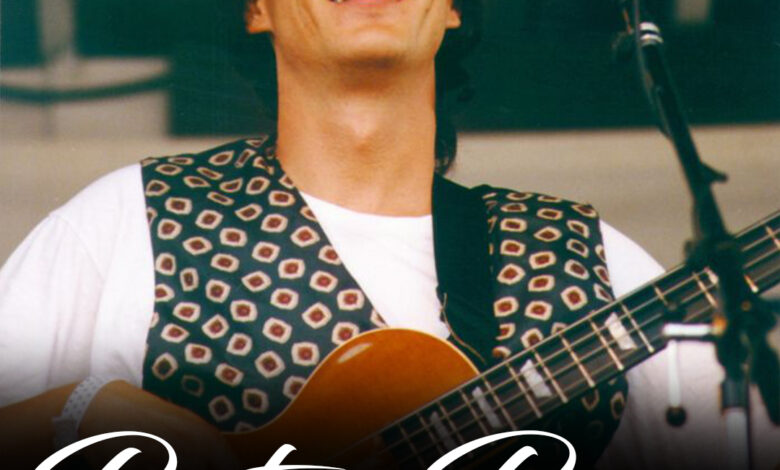
The music world is mourning the loss of a voice that shaped bluegrass and country music for decades. Ronnie Bowman, a respected songwriter and performer whose work reached far beyond his own recordings, has passed away following a tragic motorcycle accident. His death has left a deep void among fans, fellow musicians, and everyone who had the chance to experience his talent and presence firsthand.
According to his family, Bowman died at Vanderbilt Hospital after complications from injuries sustained in the accident. The news came as a shock, spreading quickly through the music community and leaving those who knew him struggling to process the loss. In a statement, his wife, Garnet, shared the devastating update, expressing both heartbreak and gratitude for the overwhelming support that followed.
“We are in complete shock and utterly devastated,” she said, confirming that he passed away on Sunday, March 22, after the accident the day before. Her words reflected not only personal grief but also the collective sense of loss felt by the many people whose lives Bowman had touched.
Born in Mount Airy, North Carolina, Bowman’s connection to music began almost as early as his life itself. He was just three years old when he started performing, singing alongside his four sisters in a family band. Those early performances took place in churches across North Carolina and Virginia, where the roots of his musical identity were formed. It was there that he developed not only his voice but also his understanding of storytelling through song—a skill that would define his career.
From those humble beginnings, Bowman grew into one of the most respected figures in bluegrass and country music. While his own recordings resonated with listeners, his influence extended even further through the songs he wrote for others. His ability to capture emotion, authenticity, and lived experience made him a sought-after collaborator among some of the biggest names in the industry.
He co-wrote “It’s Getting Better All the Time” for Brooks & Dunn, a song that became a defining hit. He also contributed to Kenny Chesney’s success with “Never Wanted Nothing More,” and wrote “The Healing Kind” for Lee Ann Womack. Each of these songs carried his signature—honest, grounded, and deeply human.
One of his most celebrated contributions came through his work with Chris Stapleton. Bowman co-wrote three tracks on Stapleton’s acclaimed album Traveller, including “Nobody to Blame,” which went on to win Song of the Year at the ACM Awards in 2016. The recognition highlighted not only the success of the song but also Bowman’s enduring impact as a songwriter.
Despite his achievements, Bowman never lost sight of where his journey began. In an acceptance speech, he spoke about his mother, Hazel Bowman, recalling how she encouraged him to start writing songs when he was just fourteen years old. That moment, simple as it was, set him on a path he would follow for the rest of his life.
“I’ve been doing that ever since, thanks to my mama,” he said, acknowledging the influence that shaped his career and his voice.
Those who worked with him remember more than just his talent. They remember his presence.
Tributes from across the music community have poured in, each one reflecting a different aspect of who he was. Billy Strings described him as one of the best entertainers in the genre, someone who could light up any room simply by being in it. His performances weren’t just about the music—they were about connection, about creating moments that stayed with people long after the last note faded.
Dierks Bentley shared a personal memory that captured Bowman’s character. He recalled a moment on a tour bus when Bowman learned that Bentley’s wife loved a particular song. Without hesitation, he sang it for her, turning a simple gesture into something meaningful. It was, as Bentley described, exactly the kind of thing Bowman would do—thoughtful, generous, and genuine.
For Dan Tyminski, Bowman was more than a colleague. As a longtime bandmate in the Lonesome River Band, he saw him as a brother. Their connection extended beyond music, built on years of shared experiences and mutual respect. In his tribute, Tyminski spoke about that bond, describing it as something rare and lasting.
“He was so much more than a bandmate,” he said. “He was my brother.”
Others echoed similar sentiments.
John Carter Cash shared his condolences, remembering Bowman as both a friend and an exceptional musician. His message, like many others, reflected not just admiration but a sense of personal loss.
Fans, too, have shared their memories.
Some recalled meeting him at festivals, describing his kindness and the way he made people feel seen and appreciated. Others spoke about his music—how it resonated with them, how it became part of their own lives. Social media has filled with messages of grief, gratitude, and remembrance, each one adding to the collective picture of a man who left a lasting impression.
What stands out across all these reflections is consistency.
Whether through his songs, his performances, or his interactions with others, Bowman carried a sense of authenticity that people recognized immediately. He didn’t just create music—he lived it. And in doing so, he built connections that extended far beyond the stage.
His passing leaves a silence that cannot easily be filled.
In a genre built on storytelling, his voice was one of the ones that gave those stories depth and meaning. His work will continue to be heard, played, and remembered, but the presence behind it—the person who brought it to life—is now gone.
He is survived by his wife, Garnet Imes Bowman, and their daughter, Chassidy Bowman. For them, the loss is deeply personal, extending beyond the public recognition of his career into the private spaces of family and memory.
For the wider community, it is the loss of an artist who helped shape the sound and spirit of bluegrass and country music.
In the end, what remains is not just a list of accomplishments or a catalog of songs.
It is a legacy.
A body of work that continues to speak.
A collection of moments shared with others.
And the memory of a man whose music, kindness, and presence left a mark that will not fade.