DHS Secretary Kristi Noem Responds to Fatal ICE-Involved Shooting in Minneapolis!
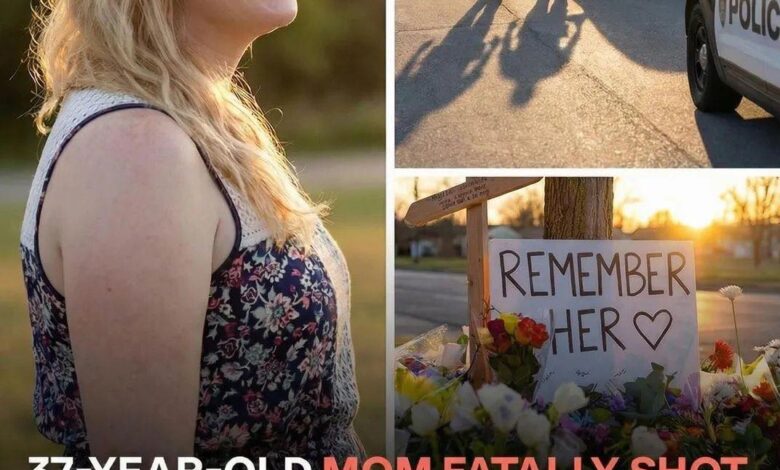
A fatal encounter involving federal immigration officers in Minneapolis has ignited a wave of grief, anger, and national scrutiny, reopening long-standing questions about the use of force, federal accountability, and the credibility of official narratives when civilians are killed. The shooting, which occurred on January 7, 2025, left 37-year-old Renee Nicole Good dead and a federal officer injured, setting off an immediate clash between government statements and community perceptions of what unfolded.
Within hours of the incident, the Department of Homeland Security moved to publicly frame the event. Kristi Noem, speaking on behalf of DHS, described the shooting as a tragic outcome of a volatile situation, while firmly asserting that the agent involved acted in accordance with training and policy. Her remarks emphasized the danger officers allegedly faced and the rapid escalation that, according to federal officials, left little room for alternative outcomes.
The government’s account states that agents from U.S. Immigration and Customs Enforcement were in the area assisting a government vehicle that had become stuck in snow. During that effort, officials say a crowd formed, shouting at officers and surrounding them. DHS claims that Good remained inside a vehicle despite repeated commands to exit, and that the vehicle was then used in a threatening manner toward agents. According to this version of events, an officer fired his weapon in self-defense after perceiving an imminent danger. The officer was treated for injuries and released the same day.
Noem acknowledged the loss of life, calling it deeply unfortunate, but stopped short of signaling any wrongdoing by federal personnel. She maintained that early assessments showed agents followed established protocols, reinforcing the administration’s position that the shooting, while tragic, was justified under the circumstances described.
At the federal level, other political figures quickly echoed that stance. Donald Trump commented publicly, portraying the incident as emblematic of the increasingly dangerous environment faced by law enforcement officers. His remarks focused on chaos, crowd dynamics, and vehicle-related threats, framing the shooting within a broader narrative of risk to officers performing their duties. Federal officials also referenced recent incidents nationwide in which vehicles were used to harm or threaten law enforcement, arguing that such patterns heighten the need for split-second defensive decisions.
Yet the speed with which the federal government closed ranks drew immediate criticism. Community members and civil rights advocates questioned why officials were so quick to defend the shooting before an independent investigation had been completed. For many, the rapid release of a detailed government narrative felt less like transparency and more like damage control, particularly given the history of disputed accounts in officer-involved killings.
In Minneapolis, the mood was markedly different. In the neighborhoods closest to the scene, vigils sprang up almost immediately. Candles, handwritten notes, and flowers lined sidewalks as residents gathered to mourn Good and to express disbelief at the official explanation. Friends and family described her as a poet, a mother, and a deeply compassionate person who invested time and care into her community. They spoke of her creativity, her warmth, and her habit of checking in on neighbors who needed help.
To those who knew her, the portrayal of Good as a threat was jarring. Family members said she was not reckless or violent, and they challenged the notion that she would knowingly endanger others. The disconnect between the woman they remembered and the government’s depiction intensified their grief, adding a layer of anger and disbelief to an already devastating loss.
Local leaders in Minneapolis also expressed concern over the incident. City officials and state lawmakers called for a transparent, independent investigation, stressing that public trust depends on more than internal reviews and official statements. Several emphasized that accountability is not incompatible with officer safety, and that thorough scrutiny is essential whenever lethal force is used.
Advocates pointed out that the case fits into a broader national conversation about federal enforcement practices and their impact on local communities. Unlike local police departments, federal agencies often operate with less visible oversight at the municipal level, which can complicate efforts to obtain information and build trust after controversial incidents. The Minneapolis shooting has therefore become a focal point not only for questions about one officer’s actions, but also for how federal agencies engage with communities during high-stress operations.
The family of Renee Nicole Good has called for patience and honesty as investigations proceed. They have urged officials and the public alike to remember that behind policy debates and legal language is a human life lost, and a family permanently altered. Good leaves behind a child who now must grow up without a mother, a fact repeatedly cited by mourners as the clearest measure of the tragedy’s cost.
As investigations move forward, multiple agencies are expected to review body-camera footage, witness statements, and forensic evidence. Whether those findings will align with the initial DHS account remains to be seen. What is already clear is that the shooting has exposed deep fractures in how authority, accountability, and public safety are understood and experienced.
For many residents, the incident reinforces a familiar pattern: lethal force used quickly, official defenses issued immediately, and answers that arrive slowly, if at all. For federal officials, the case underscores the challenges of operating in tense environments where misunderstandings can escalate with devastating speed. Between those positions lies a widening gap of trust that no single statement can easily bridge.
As Minneapolis continues to grieve and the nation watches, the outcome of the investigations will carry implications far beyond one January night. They will shape perceptions of federal enforcement, influence future policy debates, and determine whether the death of Renee Nicole Good leads to meaningful accountability or becomes another unresolved chapter in America’s long struggle to reconcile power, safety, and human dignity.