From beaten and bruised to one of the brightest stars in the world!
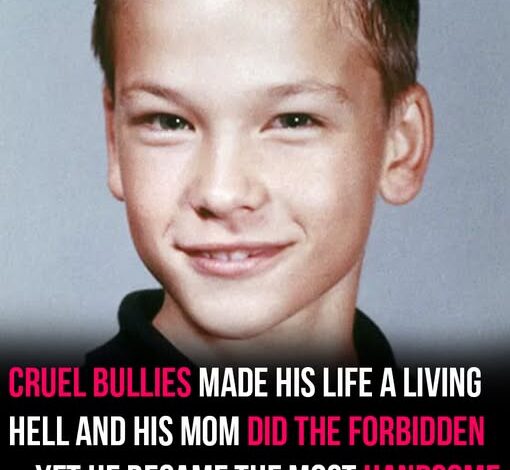
In the humid, rhythmic heat of a Houston dance studio in the 1950s, a young boy sat quietly in a corner, his eyes wide and fixed on his mother. While other children were defined by the simple binary of school and play, Patrick Swayze’s childhood was a masterclass in artistic immersion. There were no babysitters for the son of Patsy Swayze; if she was choreographing for the Houston Jazz Ballet Company, Patrick was there. He wasn’t just a spectator; he was a sponge, absorbing the counts, the discipline, and the sweat of a world that demanded both grace and grit.
Born on August 18, 1952, Patrick was a whirlwind of energy from the start. His father, Jesse, was a draftsman at a chemical plant—a man of engineering precision—while his mother was the soul of creative movement. Between these two poles, Patrick grew up in a household where structure and artistry didn’t just coexist; they fought for dominance. He was a boy who wanted to do everything: he was a skater, a swimmer, a Little League star, a violinist, and a dancer. But in the social landscape of Texas in the 1960s, carrying ballet shoes in one hand and a violin in the other was an invitation for conflict.
The bullying was relentless. His brother later recalled the cruel taunts of boys who saw dance shoes as a sign of weakness. “Hey, twinkle your toes for us, pretty boy,” they would sneer. The bruises Patrick brought home were physical manifestations of a culture that didn’t understand him. Yet, his family offered a different kind of strength. His father taught him the harsh but resilient rule of finishing every fight he found himself in, while his mother fiercely encouraged him to use those very ballet shoes to defend his dignity. Eventually, Patrick did just that—confronting his tormentors in a gym with boxing gloves, proving that the grace of a dancer did not negate the power of a fighter.
The Pivot from Stadium to Stage
As a teenager, Swayze seemed destined for a different kind of glory. He was a formidable football player with his sights set on a college scholarship. However, a catastrophic knee injury ended that dream in a single play. At the time, it felt like the end of the world. In reality, it was a redirection of his destiny. Stripped of the gridiron, he poured his “hyper” energy into gymnastics and classical dance. By the age of 20, he moved to New York City to refine his craft at the Harkness and Joffrey Ballet schools.
Hollywood soon took notice. His breakout came in 1983 with The Outsiders, followed by Red Dawn. But it was 1987’s Dirty Dancing that transformed him from a working actor into a global icon. Johnny Castle was more than a character; he was the ultimate synthesis of Swayze’s life—a man of immense physical strength who moved with the fluidity of water. The boy once mocked for dancing had become the world’s definitive leading man.
The Private Toll of a Public Life
Fame, however, did not provide a shield against personal sorrow. Swayze’s life was anchored by his relationship with Lisa Niemi, whom he met when they were just teenagers at his mother’s studio. Their marriage was a rarity in Hollywood: steady, grounded, and enduring. Yet, they faced a private grief that haunted them for years. In 1990, a long-awaited pregnancy ended in a devastating miscarriage. They tried again, but the dream of children never materialized. This void, combined with the crushing pressure of sudden global fame, led Swayze into a battle with alcoholism. “I got stupid and drank too much,” he would later admit, describing the bottle as a way to cope with the insecurity and grief that followed him even at the heights of his success.
Loss became a recurring theme. The death of his father in 1982 was followed years later by the tragic suicide of his sister, Vicky. These events left him feeling “cursed,” wrestling with a sense of responsibility and a search for identity that the cameras never captured.
The Final Act of Resilience
In 2008, Swayze faced his most formidable opponent: a diagnosis of pancreatic cancer. True to the boy who boxed his way through Houston, he refused to play the victim. He continued to film the television series The Beast, often refusing pain medication while on set because he didn’t want it to affect his performance. He faced his mortality with the same stubborn dignity he used against the schoolyard bullies decades earlier.
Patrick Swayze passed away on September 14, 2009. By then, the boys who once teased him were long forgotten, while the “pretty boy” with the ballet shoes had left an indelible mark on history. His story serves as a reminder that the qualities for which the world mocks us as children are often the very traits that make us legendary as adults.
The Legacy of a Multi-Faceted Icon
| Life Stage | Primary Focus | Resulting Impact |
| Childhood | Artistic & Athletic Immersion | Developed “restless energy” and diverse skill sets. |
| Adolescence | Football & Boxing | Built the physical toughness that defined his action roles. |
| Early Adulthood | Classical Ballet | Mastered the grace required for Dirty Dancing. |
| Maturity | Iconic Stardom & Advocacy | Proved that masculinity and vulnerability can coexist. |
Swayze’s journey from “beaten and bruised” to “brightest star” is a testament to the power of authenticity. He didn’t just survive his childhood; he weaponized the unique combination of skills it gave him. He showed the world that a man could be a cowboy, a soldier, a bouncer, and a dancer all at once.
His enduring appeal lies in that refusal to be one-dimensional. He carried his ballet shoes in one hand and his bruises in the other, and he never put either down until the very end. For anyone who feels “different” or out of place, Swayze’s life is a blueprint for success: stay loyal to the things that set you apart, because those are the things that will eventually make you unforgettable.