From poverty to becoming a global superstar – an inspiring story!
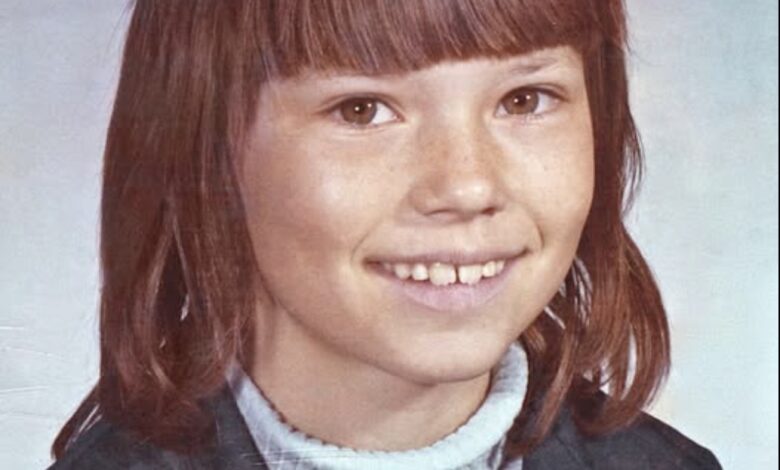
The story of Shania Twain, the Queen of Country Pop, is not defined merely by diamond records and stadium lights, but by a relentless, grinding journey from profound poverty and trauma to global resilience. Her life began far from any glamorous stage, rooted in the harsh, resource-scarce environment of Timmins, Ontario, where survival was a daily calculation. In a crowded house, where she was one of five children, money was perpetually scarce, the furnace often failed in the brutal Canadian winters, and dinner was a hopeful proposition, never a guarantee. Her stepfather’s meager income from reforestation work barely managed to cover the most basic necessities, all while her mother silently battled crippling depression.
Shania learned the crushing shame of poverty early. At school, lunchtime was an exercise in painful performance, where she would pretend she’d “left her sandwich in the locker” or claim she wasn’t hungry, all the while watching her classmates finish their meals, desperately hoping for a discarded crust. The constant, gnawing hunger and the cold were physical realities that shaped her worldview, forcing her to find solace elsewhere. Music became her first, most reliable escape. She would slip away into the quiet woods with her guitar, build a tiny, temporary fire for warmth, and sing until the cold, the hunger, and the constant worry momentarily fell away.
Her mother, recognizing the raw, exceptional gift her daughter possessed, decided to leverage it for the family’s survival. By the age of eight, Shania was performing late-night sets in local bars, relying on a simple legal loophole: she would only begin her performance after alcohol service had ceased for the night, technically keeping the environment “legal” for a minor. The air was thick with smoke, and the hours were punishing, but by the age of eleven, she had secured a proper permit for earlier sets, and by fourteen, she finally earned her first consistent paycheck. She also grabbed a steady job at McDonald’s—a true “saving grace,” not just for the small wage, but because it guaranteed her reliable, daily meals. Her routine became an exhausting cycle: school, followed by a shift flipping burgers, followed by hours on a smoky stage, repeating endlessly—a punishing grind fueled only by hope and a dream she refused to relinquish.
The struggle at home was not limited to economic hardship; it was deeply dangerous. Her stepfather, who had legally adopted Shania and her siblings, was prone to explosive violence and controlling behavior. Shania recalls a memory of throwing a chair to defend herself—an action she later described as “more anger than courage.” The home life turned darker and more insidious when, at the age of ten, the sexual abuse began. She carried the weight of that deep, damaging secret for years, internalizing the trauma alongside every other burden life had placed upon her young shoulders.
The tenuous structure of her life shattered completely when she was just twenty-two. Her mother and stepfather were both killed instantly in a devastating car accident. In an instant, Shania was not just an aspiring musician; she was the glue holding her younger siblings together, assuming the immediate, overwhelming role of legal guardian and head of the household. Her music career was instantly put on hold for the sake of survival. She secured a singing contract at a remote resort nearby, chosen not for the glamour, but because the job came with a small home—a place to keep her family intact and shielded from the outside world. Her days were relentless: mornings began by chopping wood just to heat the house; the middle of the day was spent ensuring her siblings made it to school; and her nights were surrendered to the resort stage. Somewhere in that exhausting, sacrificial grind, she learned how to transform herself for the audience, presenting a polished, powerful, feminine performer to the world, even when she felt anything but.
As her siblings grew independent and stable, Shania finally began to turn the focus back to her own destiny. A professionally produced demo tape found its way into the hands of Mercury Nashville, securing her first real record deal. Then came the partnership that would define her career and an entire musical era: meeting and collaborating with producer Robert “Mutt” Lange. Their connection was immediate and intense, fusing into both a professional and romantic bond. They married and, working as a formidable co-writing team, crafted a revolutionary sound that merged traditional country storytelling with explosive, arena-ready pop rock. This transformation blasted her onto radio charts and into arenas around the world, creating the magnetic, glamorous Shania Twain the world knew and adored.
Yet, at the height of her immense global success, fate dealt two devastating blows. First, her most vital tool—her voice—began to falter. It took nearly a decade for doctors to correctly diagnose the culprit: Lyme disease, which had severely damaged the vocal cords. The subsequent surgery and the forced silence that followed were terrifying; for a performer whose entire identity was wrapped up in her voice, the potential loss was existential. Though she eventually returned to the stage, her voice carried a raspier, harder-won edge—a permanent testament to her battle.
The second blow struck her personal life, the very creative anchor that had fueled her greatest albums. She discovered that Mutt Lange was having a prolonged affair with her close friend, Marie-Anne Thiébaud. The betrayal was absolute. In the strangest twist of fate, Shania found an unexpected source of empathy and strength in the person who understood her pain best: Marie-Anne’s husband, Frédéric Thiébaud, who had also been betrayed. The shared, overwhelming grief over the collapse of their respective marriages slowly morphed into friendship, and that friendship, against all odds, deepened into love. Shania and Frédéric married in 2011, opening a new, gentler chapter defined by quiet stability and mutual respect. She and Lange still share a son, Eja D’Angelo, and Shania maintains a clear-eyed perspective on her past, refusing to hold onto resentment, choosing instead to acknowledge the great music they made and the family they created.
From nights huddled in the cold without heat to standing under dazzling stadium lights, from a voice nearly lost to a life courageously reimagined, Shania Twain has truly lived through extremes. The chart-topping superstar the world celebrates today was forged in continuous hardship, steadied by extraordinary grit, and saved—again and again—by the relentless, transformative power of music.