How Dana Gray became one of the most feared women in America!
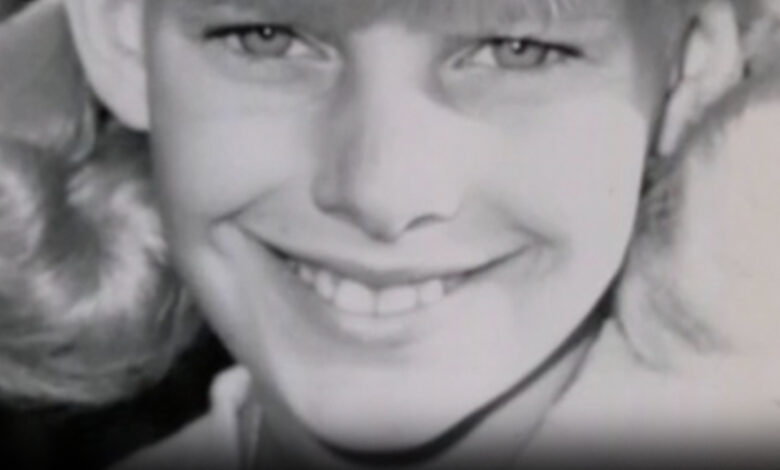
Dana Sue Gray’s life wasn’t a straight descent into darkness. It was a split road, clean down the center—one half shaped by ambition and grit, the other by a hunger that eventually hollowed her out from the inside. Before she became a name whispered in fear, she was a girl growing up under the unpredictable shadow of a volatile mother, learning early that affection could turn sharp without warning. Loss struck her young, leaving her to navigate grief with no map and no mercy. And from that chaos grew a woman who chased adrenaline the way others chased stability. Nursing gave her structure. Competitive cycling gave her power. But control—the one thing she never truly had—always slid just out of reach.
Those who knew her in her early twenties remember a woman who could switch from warm and attentive to restless and impulsive in a blink. She wanted comfort but didn’t trust it. She wanted connection but feared being trapped by it. And underneath it all, she carried a constant urge to escape the weight of her own life. That tension eventually became her fuel—and her undoing.
Gray’s path toward becoming one of America’s most feared women didn’t erupt suddenly. It crept in quietly, like a leak in a house no one notices until the foundation starts to rot. Financial chaos, relationship turmoil, and an insatiable craving for high-end shopping pushed her into corners she refused to acknowledge. She was drowning, and instead of reaching out, she clawed downward searching for something—anything—that might give her a sense of power again.
Her first victim never saw her coming. These were quiet neighborhoods, peaceful pockets of retirement communities where people still left their doors unlocked because trust had been built over decades. Gray walked in with a nurse’s calm. She knew how to lower defenses, how to smile just right, how to slip into a home without raising alarm. Her victims were elderly women living alone, women who saw in Gray a harmless visitor, maybe even a comforting presence.
But behind the smile was a storm. Gray attacked swiftly, brutally, fueled by a rage she never understood or admitted at the time. When the violence stopped, she didn’t flee in panic—she stayed long enough to take their credit cards, their checkbooks, their wallets. Within hours of killing them, she would be in a salon getting a facial, or at a department store buying high-end clothes, lotions, perfumes—anything that made her feel rich, pampered, untouchable. The emotional whiplash was staggering: bloodshed followed by spa treatments, murder followed by manic shopping sprees.
Investigators later said it was one of the most chilling parts of her pattern—not the violence itself, horrifying as it was, but the way she used luxury purchases as anesthesia for her conscience. She wasn’t killing for necessity. She wasn’t killing out of self-defense. She was killing for the high. For the relief. For the ability to buy fleeting comfort that lasted just long enough to steady her nerves before the cravings started again. The more she spent, the more she needed. The more she killed, the less she felt.
Her victims’ families were left with the kind of grief that never cools. Daughters lost mothers. Grandkids lost the women who’d baked their birthday cakes and sewn their Halloween costumes. Their last moments were stolen in silence, in homes that had once been sanctuaries. The crime scenes left detectives shaken, not just because of the brutality, but because nothing about Gray fit the stereotype people cling to when imagining killers. She didn’t lurk in shadows or prowl dark streets. She moved through daylight, blending in, earning trust effortlessly.
Her arrest was swift once investigators connected the dots. Surveillance footage, fraudulent purchases, and patterns too distinct to deny brought everything crashing down. In court, the image the world had once seen of Dana Sue Gray—a dedicated nurse, a disciplined athlete, a woman who outwardly seemed stable—collapsed into dust. She pled guilty to multiple murders and avoided the death penalty, but was sentenced to life without parole.
Today, she’s an aging inmate inside the California Institution for Women, far removed from the glossy stores and expensive spas that once served as her temporary escapes. Over the years, she has shed the arrogance that marked her early prison days. She now spends her time advocating for incarcerated women, especially those society has written off. She mentors, tutors, listens. She apologizes more often than she speaks. And she claims, over and over, that remorse kept her awake for years, gnawing at her until she could no longer outrun it.
Whether the remorse is genuine is a debate that splits even criminal psychologists. Some see a woman hollowed out by guilt and attempting, however imperfectly, to make amends inside the only world she has left. Others see someone who has learned how to shape her story so it draws less fury and more pity. A woman who once manipulated lonely victims with a soft voice and a warm expression would certainly know how to sound reformed.
Regardless of what she feels now, the echo of her choices remains—not just in the files gathering dust in law enforcement archives, but in the lives she tore open. The families left behind never got their mothers back. Their fear didn’t evaporate when she was locked away; it settled into the quiet parts of their lives, the way grief always does. Communities that once left their doors unlocked began bolting them shut, checking twice before going to bed. Her crimes didn’t just steal lives—they shattered a sense of safety that had taken generations to build.
Dana Gray’s story endures because it forces people to confront an uncomfortable truth: monstrosity doesn’t always look like the movies. Sometimes it wears a nurse’s uniform. Sometimes it smiles. Sometimes it reassures you before it destroys you. And sometimes, decades later, it sits behind bars speaking about growth and regret, while the world tries to decide whether a person capable of that kind of darkness can ever transform into something better.
Her past remains a wound—one she inflicted, one she can never fully close. But it also stands as a reminder: the most dangerous people aren’t always the loudest or the most obvious. Sometimes they’re the ones who learned to hide their storms behind perfect composure.