How to Recognize and Let Go of Toxic Friendships!
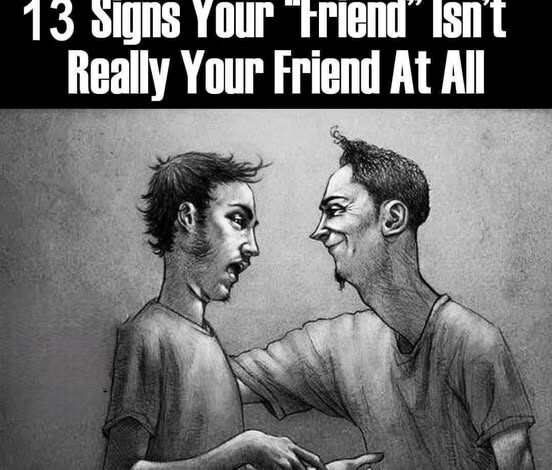
In the intricate social architecture of 2026, the concept of friendship has taken on a more vital role than ever before. We often describe our friends as our “chosen family”—the individuals who serve as our witnesses, our supporters, and the mirrors that help us see the best versions of ourselves. A healthy friendship is a sanctuary; it is a space characterized by laughter, mutual respect, and a profound sense of stability that anchors us during life’s most turbulent chapters. Statistically, the value of these bonds is undeniable. Recent data suggests that nearly 98% of people in the U.S. report having at least one close confidant, and extensive longitudinal research involving hundreds of thousands of participants has confirmed that high-quality social connections can significantly increase longevity while dramatically reducing the physiological impacts of stress.
As psychologist Julianne Holt-Lunstad has famously observed, the mere knowledge that we have a reliable support system makes the challenges of the modern world feel more manageable. When we are not alone, the “hills” of life literally appear less steep to our brains. However, the shadow side of this biological need for connection is the phenomenon of the toxic friendship. While a supportive bond acts as a catalyst for growth, a toxic one acts as a corrosive agent. Clinical psychologist Dr. Andrea Bonoir defines these harmful dynamics as relationships that consistently generate stress, sadness, or anxiety rather than providing a foundation for flourishing.
Recognizing a toxic friendship requires a high degree of emotional intelligence and the courage to look past the history of the relationship to its current reality. Often, these connections don’t begin with overt conflict; they are a “slow-burn” erosion of the self. You may find yourself feeling habitually drained after a coffee date, second-guessing your own worth, or—perhaps most tellingly—altering your personality and compromising your values just to maintain a fragile peace. In 2026, as we emphasize the importance of mental health and “living with purpose,” identifying these “energy drainers” has become an essential life skill.
To navigate this terrain, it is helpful to categorize the common archetypes of toxic behavior. The first is “The Braggart,” an individual who treats every interaction as a monologue of self-praise. In these relationships, your life is merely a backdrop for their highlight reel, and your successes are often met with a quick pivot back to their own achievements. Closely related is “The Constant Complainer,” whose relentless negativity acts as a psychological sinkhole. No matter the solution offered or the beauty of the day, they find the flaw, slowly pulling your own outlook into the depths of their dissatisfaction.
Then there are the friends who fail the “loyalty test.” “The Unsupportive” friend is a ghost when the stakes are high, vanishing the moment you require genuine encouragement or a shoulder to lean on. Similarly, “The Unreliable” friend treats promises like suggestions, leaving a trail of disappointment and broken plans in their wake. These behaviors are often underpinned by a lack of basic respect, which is most visible in “The Hypocrite”—the person who holds you to a rigid moral or social standard that they themselves feel no obligation to follow.
Perhaps the most damaging to one’s self-esteem is “The Belittler.” This individual uses “humor” as a weapon, disguising barbs as jokes and constant put-downs as “just being honest.” Over time, these subtle insults dismantle your confidence, making you feel small in the very place you should feel most secure. This dynamic is often paired with “The Needy” friend, who demands an infinite supply of emotional labor but offers nothing in return. They are the “black holes” of intimacy, consuming your time and energy until you have nothing left for yourself.
We must also be wary of “The Ultra-Negative” and “The Selfish.” The former magnifies every minor hurdle into a catastrophe while minimizing your victories, making it impossible to maintain a positive momentum. The latter operates on a transactional basis where the transaction only ever benefits them; they expect to be your priority but refuse to even make you an option. Finally, there is “The Jealous” friend—an individual who feels threatened by your growth or your other social connections. They may try to isolate you or make you feel guilty for having a life that extends beyond their control. This is not protectiveness; it is a manifestation of deep-seated insecurity that seeks to dim your light so they don’t have to feel the shadows.
So, how does a confident woman or man of purpose handle these discoveries? The hard truth of 2026 is that we must accept that changing another person is rarely possible. Toxic individuals may offer apologies or promises of improvement, but without deep, internal work, they often revert to the same harmful patterns of behavior. The power, therefore, lies entirely in what you can control: your boundaries.
The process of “letting go” is rarely easy, especially when there is years of history involved. However, it is a necessary act of self-preservation. Setting clear boundaries is the first step—limiting the time spent together, refusing to engage in one-sided emotional labor, and calling out belittling comments in real-time. If these boundaries are not respected, taking a definitive “space” or stepping away from the friendship entirely may be the only way to protect your emotional well-being.
Life is an finite resource, and the quality of our days is largely determined by the quality of the people we allow into our inner circle. Much like the “clever tricks” we use to organize our homes, we must occasionally perform a “social audit.” We must invest our time and heart into friendships that feel supportive, uplifting, and mutual. These are the relationships that make us laugh until it hurts, that make us feel safe enough to be vulnerable, and that remind us of our true essence when we’ve lost our way.
A healthy friendship does not create a constant stream of drama; it creates a reservoir of peace. It is a relationship where your rise is celebrated, your flaws are held with compassion, and your boundaries are respected as sacred. As we move forward into the remainder of 2026, the goal is to surround ourselves with “chosen family” who add to our joy rather than draining it. By letting go of the toxic, we create the necessary space for the transformative. We owe it to ourselves to choose the people who see the “angels” in our lives and the strength in our souls. In the end, the best indicator of a good life is not the quantity of friends on a screen, but the quality of the peace found in the company we keep.