Midnight Oils Founding Drummer Passes Away at 70!
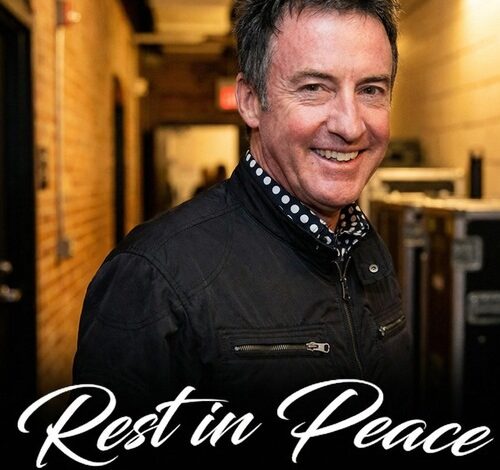
The global music community and the nation of Australia are in mourning following the announcement that Rob Hirst, the founding drummer and rhythmic architect of the legendary rock band Midnight Oil, has passed away at the age of 70. His departure comes after a courageous and private battle with pancreatic cancer, a struggle the band confirmed through a poignant tribute shared across their social platforms. While the news has brought a heavy silence to the world of rock, it has also sparked a massive celebration of a life defined by unwavering artistic integrity, socially conscious storytelling, and a percussive style that became the heartbeat of a movement.
Midnight Oil was never just a band; they were a cultural force, and Rob Hirst was the engine room that drove that force forward. Formed in Sydney in 1972, the group spent years honing a raw, high-octane sound in the rough-and-tumble pub circuit of Australia. From those early days, Hirst established himself as a drummer of rare intensity. He didn’t just play the drums; he attacked them with a precision and athletic energy that matched the band’s fiery political rhetoric. By the time the 1980s arrived, Midnight Oil had evolved from a local favorite into a global phenomenon, eventually selling over 20 million albums. Their 1987 masterpiece, “Diesel and Dust,” became a definitive record of the era, bringing the struggles of Indigenous Australians and the fragility of the environment to the forefront of the international pop charts.
While many drummers are content to stay in the background, Hirst was a central pillar of the band’s creative output. He was a prolific songwriter and a thoughtful lyricist, co-writing many of the group’s most enduring anthems. When listeners hear the driving rhythm of “Beds Are Burning,” the industrial clatter of “Blue Sky Mine,” or the haunting resonance of “The Dead Heart,” they are hearing Hirst’s ability to marry complex social themes with irresistible rock grooves. His work helped define a uniquely Australian sound—one that was rooted in the red dust of the outback but spoke a universal language of justice and human rights. His contributions ensured that Midnight Oil’s music carried a weight that extended far beyond mere entertainment, challenging audiences to think as deeply as they danced.
Throughout the decades, Hirst remained the steady pulse of the band, even as they navigated the shifting tides of the music industry. After a significant hiatus in the early 2000s—during which time lead singer Peter Garrett pursued a career in federal politics—the band reunited in 2016 for “The Great Circle” world tour. It was a triumphant return that proved their message was as relevant as ever. Hirst’s drumming remained as powerful as it had been in the seventies, providing the foundation for their final studio album, “Resist,” released in 2022. This final chapter of the band’s history was a powerful summation of their career, culminating in a farewell tour that allowed generations of fans to say a final, loud goodbye to the legends who had soundtracked their lives.
Beyond the massive stages and the roar of the stadium crowds, Rob Hirst was a man of deep personal creativity and warmth. His artistic soul was restless, leading him to explore various solo projects and collaborations outside of the “Oils” umbrella. Perhaps the most touching of these was the collaborative work he produced with his daughter. Having reconnected later in his life, the two found a shared language through music, creating an album that captured the beauty of discovery and the strength of familial bonds. Those close to him noted that this creative partnership brought him immense joy, offering a softer, more intimate counterpoint to the thunderous rock of his primary career.
Even as his health declined, Hirst’s commitment to his craft never wavered. In late 2025, he released a final solo EP, a collection of songs that reflected a lifetime of reflection and wisdom. In his final interviews, he spoke eloquently about the nature of songwriting, describing it as a constant companion that never truly leaves a creator. For Hirst, music was a vital necessity, a way of processing the world and leaving a mark that would endure long after the final beat of the drum. He remained an active participant in the artistic community until the very end, proving that true passion is a flame that cannot be extinguished by illness.
The tributes that have poured in since his passing highlight the profound impact he had on fellow musicians and fans alike. Peers from across the industry have cited him as an influence, not just for his technical prowess behind the kit, but for his dedication to purpose-driven art. Fans have shared stories of how his rhythms helped them through difficult times or inspired them to become more engaged with the world around them. The band’s own message expressed a sentiment felt by millions: that while words feel inadequate to describe the magnitude of the loss, the songs remain. They are permanent fixtures in the cultural landscape, echoing with the honesty and energy that Hirst poured into every recording session and every live performance.
Rob Hirst’s legacy is one of rhythmic brilliance and moral clarity. He helped prove that rock music could be a vehicle for change, a tool for education, and a bridge between disparate communities. His life was a testament to the idea that one can be a world-class entertainer and a committed advocate for progress at the same time. As the echoes of his final tour fade, the steady, driving beat of his drums will continue to resonate through speakers and headphones around the world, a timeless reminder of the man who provided the heartbeat for a nation’s conscience. He leaves behind a body of work that will continue to inspire, heal, and connect people for generations to come, ensuring that the rhythm of Rob Hirst will never truly stop.
In the end, Rob Hirst’s story is a reminder that the most powerful music is that which is made with both the hands and the heart. He lived his life with a stick in each hand and a vision in his mind, and the world is a louder, better, and more thoughtful place because of it. While the stage may be empty, the music he helped create continues to invite us to listen, to care, and to keep the rhythm alive.