New Trump approval ratings shows what the Us really thinks of him!
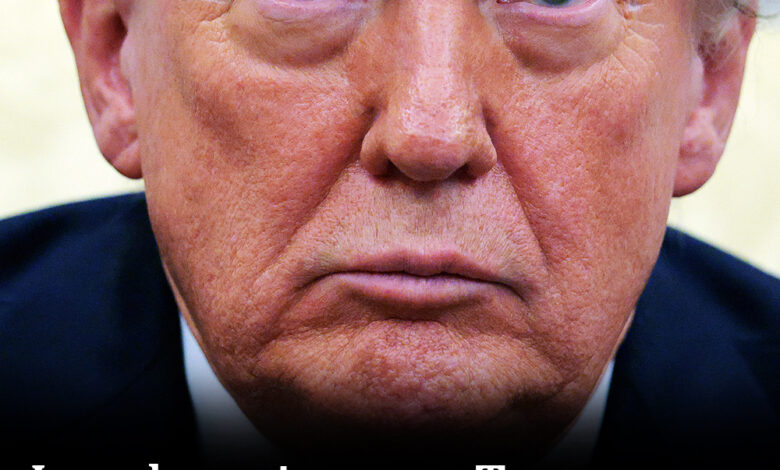
Donald Trump likes to paint a picture of control — a second term running smoothly, the country on a solid path, strength radiating from the Oval Office. But the latest national polling cuts sharply against that image, revealing a public mood far more frustrated, tired, and skeptical than the one he describes.
A new CNN/SSRS survey, conducted between October 27 and 30 with 1,245 adults across the country, shows Trump’s approval rating sinking to 37%. Back in February, he was sitting at 47%. Now he’s hovering near the same low point he hit after January 6, 2021. Sixty-three percent of Americans say they disapprove of how he’s handling the job.
And it’s not just about Trump personally — people are deeply worried about the direction of the country. Sixty-eight percent say things in the U.S. are going “pretty” or “very badly.” Only 32% believe the nation is doing “fairly” or “very well.” Everyday realities like grocery bills, rent, gas, and general cost-of-living pressures are weighing heavily. Nearly half of those surveyed — 47% — say the economy and rising expenses are their number-one concern.
Another 26% worry about the state of American democracy itself, a sign that the political tension of the last decade hasn’t faded. Immigration, despite being one of Trump’s loudest talking points, lands far lower than expected: only 10% of respondents consider it the country’s most urgent issue.
When asked to evaluate Trump’s policies, the public response was blunt. Sixty-one percent believe his decisions have made the economic situation worse. Only 27% think he’s helped it. Internationally, 56% say he’s damaged America’s global reputation; just 32% say he strengthened it.
Concerns about presidential power are rising too. Sixty-one percent believe Trump has “gone too far” in how he uses authority — a reference to his heavy reliance on executive orders, rapid National Guard deployments, and unilateral military actions. And with midterm elections approaching, voters are signaling how they plan to respond: 41% say their vote will be a direct rejection of Trump; only 21% plan to cast their vote as a show of support.
This slump is happening during a tense moment in Washington. The federal government is wrestling with a shutdown that could become the longest in U.S. history. Families are fighting higher costs on every front. Economic uncertainty has become a part of daily life. And questions about the health of America’s democratic system hang in the air. People are tired, stretched thin, and impatient for stability.
Predictably, Trump isn’t buying any of it. On Truth Social, he dismissed the poll outright:
“So many Fake Polls are being shown by the Radical Left Media… In the Fair Polls, and even the Reasonable Polls, I have the Best Numbers I have ever had… Fake News will never change, they are evil and corrupt…”
He insisted he created “the Greatest Economy in the History of our Country,” kept prices low, dodged wars, and set the standard for American strength — all while assuring his followers that he remains comfortably seated in the Oval Office.
But polls don’t rise or fall based on speeches. They move when people feel the impact of decisions in their day-to-day lives. And right now, those day-to-day realities are heavy.
Whether public opinion rebounds is impossible to predict. Trump’s approval numbers have swung up and down throughout both terms, shifting with economic conditions, political fights, global events, and the constant churn of headlines. But the upcoming midterms will be the closest thing the country gets to a national report card — a blunt measure of how Americans truly feel about where things stand and where they think the country should go next.
For now, the message from voters is unmistakable: the mood is sour, the confidence is shaken, and the public is far less convinced of Trump’s narrative than he is.