The Little Scalp Invader! What Parents Should Do When a Strange Bug Appears in Their Childs Hair!
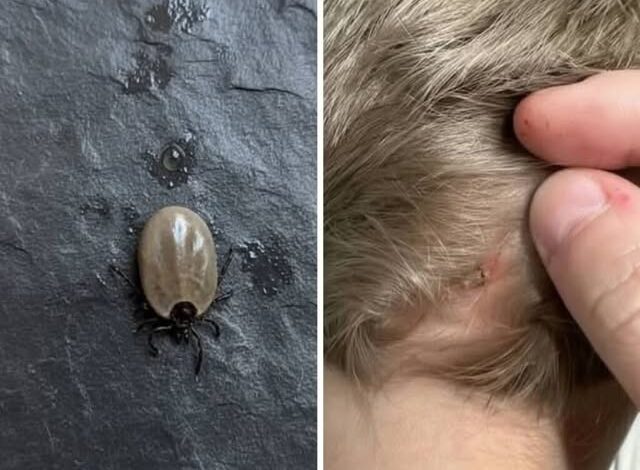
The discovery of an unfamiliar insect nestled in the soft strands of a child’s hair is a moment that seems to bypass the rational mind and strike directly at a parent’s primal instincts. It often begins in the quietest of settings: during the rhythmic brushing of hair after a warm bath, the careful plaiting of braids before a school day, or a lazy afternoon spent lounging on the sofa. Then, the eye catches a movement—a tiny, dark speck that shouldn’t be there. In that instant, a visceral wave of panic often takes hold. The mind spirals through a frantic checklist of anxieties: Is it a tick? Is it lice? Has the house been compromised?
While the initial impulse may be to reach for the strongest chemicals available or rush to the nearest emergency clinic, the most vital tool a parent possesses in this situation is calm, clinical observation. The human scalp is an intimate landscape, and the presence of an invader feels like a profound violation of safety. However, by transforming that emotional reaction into an organized response, you can move from a state of alarm to one of effective management. Most scalp-related discoveries are not emergencies; they are simply manageable hurdles in the journey of parenting.
Identifying the Invader: The Three Primary Suspects
To handle the situation correctly, you must first determine exactly what has taken up residence in the hair. Most cases fall into three distinct categories, each requiring a unique strategy for removal and prevention.
Suspect A: Head Lice (Pediculosis humanus capitis)
Head lice are arguably the most common scalp invaders, particularly among school-aged children. These insects are roughly the size of a sesame seed, wingless, and vary in color from tan to pale gray. Unlike many other insects, they do not jump or fly; they are specialized crawlers, designed to move rapidly from one hair shaft to another. They require a human host to survive and will perish within forty-eight hours if separated from the scalp.
The most definitive evidence of lice, however, is often not the bug itself, but the nits. Nits are tiny, oval eggs that are literally glued to the hair shaft with a specialized protein. Unlike dandruff or hair product residue, nits cannot be flicked or brushed away. They are most frequently found in the “hot zones” of the scalp: behind the ears, at the crown, and along the nape of the neck.
Suspect B: The Tick
Ticks represent a different profile of risk and behavior. Unlike lice, which roam the scalp, a tick’s primary goal is to attach to the skin to feed. Ticks are typically flat and oval-shaped with eight legs, though they can appear swollen and grayish if they have already begun to engorge. If you find an insect that is firmly embedded in the skin and does not move when touched, it is likely a tick.
The primary concern with ticks is the potential transmission of regional illnesses, such as Lyme disease. While the majority of tick bites do not lead to infection, the method of removal is critical to reducing the risk.
Suspect C: The Accidental Visitor
It is important to remember that not every insect found in a child’s hair is a parasite. Children are natural explorers who roll in the grass, climb trees, and play on carpets. Occasionally, a common garden ant, a small beetle, or a harmless spider may find itself lost in a child’s hair. If you find a single insect with no evidence of eggs (nits) or scalp irritation, it is likely just a transient visitor that can be rinsed away without further concern.
The Myth of the Itchy Scalp
One of the most persistent misconceptions in parenting is that a child with lice will always be seen scratching their head. In reality, the itch is not caused by the insects crawling; it is an allergic reaction to the saliva the louse injects into the skin during feeding. This sensitivity can take several weeks to develop. Consequently, a child can have a mild infestation for a significant period without ever feeling an itch. This is why regular “peek-a-boo” scalp checks are far more effective than waiting for symptoms to appear.
Immediate Action: Containment and Care
Once an insect is spotted, your primary objective is to maintain a neutral atmosphere. Children are highly attuned to their parents’ emotional states; if you treat the discovery as a catastrophe, they will internalize that fear. Instead, treat the process like a science experiment or a routine grooming task.
For Free-Crawling Insects: Use a pair of tweezers or a tissue to carefully remove the insect. Place it in a sealed plastic bag or a container with rubbing alcohol. This allows you to show the specimen to a pediatrician or school nurse if you are unsure of its identity.
For Attached Ticks: Use fine-tipped tweezers to grasp the tick as close to the skin’s surface as possible. Pull upward with steady, even pressure. Do not jerk or twist the tick, as this can cause the mouthparts to break off and remain in the skin. Once removed, clean the bite area and your hands with rubbing alcohol or soap and water.
The Modern Approach to Treatment
The landscape of lice treatment has shifted significantly in 2026. Due to the emergence of “super lice”—populations that have developed a genetic resistance to common over-the-counter chemical pesticides—many experts now advocate for a more manual, physical approach.
The Wet Combing Method is widely regarded as the gold standard for safe, effective lice removal. By applying a generous amount of thick white hair conditioner to damp hair, you temporarily “stun” the lice, making it impossible for them to scurry away. Using a high-quality metal nit comb, you systematically comb through the hair section by section, from the scalp to the ends. After each pass, wipe the comb on a white paper towel to inspect for lice and nits.
This process should be repeated every three to four days for at least two weeks. This timeline is crucial because it accounts for the life cycle of the louse, ensuring that any newly hatched nymphs are removed before they have the chance to mature and lay more eggs.
Reclaiming the Peace
Finding a bug in your child’s hair is a rite of passage for almost every parent. It is not a reflection of your home’s cleanliness or your parenting skills; it is simply a biological reality of childhood social interaction and outdoor play. By arming yourself with the correct identification techniques and a systematic removal plan, you strip the situation of its power to cause panic. You are not just removing a “scalp invader”; you are demonstrating to your child how to handle life’s small, itchy surprises with grace and confidence.