The Silver Rebellion, Why Your Gray Hair is Making Everyone Around You Panic
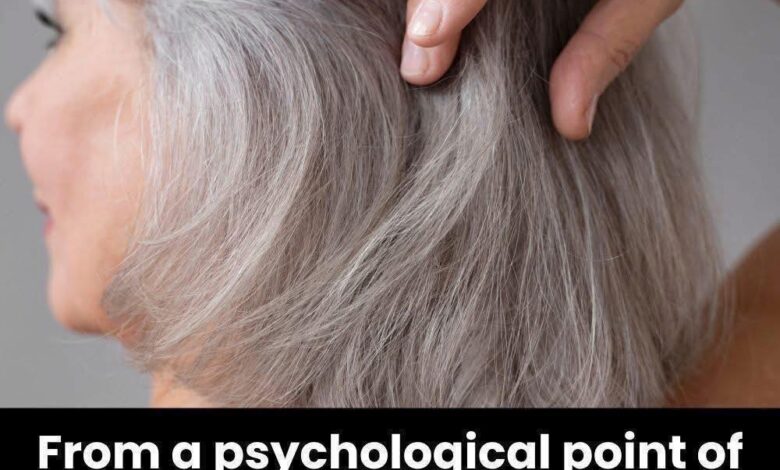
The sight of a woman embracing her natural gray hair shouldn’t be a revolutionary act, yet in the high-gloss world of 2026, it remains one of the most polarizing social statements a person can make. It isn’t just about a change in pigment; it is a seismic shift in social dynamics that leaves onlookers feeling strangely vulnerable. When a woman stops fighting the silver, she isn’t just changing her look—she is breaking a profound, unspoken pact that governs modern society. We have all agreed to pretend that time is a manageable resource, something that can be softened, tucked away, and hidden behind a $200 salon appointment. By refusing to participate in that illusion, the “gray-haired woman” becomes a mirror that no one asked for, reflecting a truth that many spend their lives trying to outrun.
The discomfort that often bubbles up around women who go gray has very little to do with aesthetics. In reality, it is rarely a question of whether she “looks good.” Instead, it is about the existential anxiety she triggers. Her hair is a public declaration of the one thing we work hardest to deny: that our control over our bodies is limited, that youth is a temporary loan, and that aging is a natural progression rather than a personal failure to be corrected. To a society obsessed with “anti-aging” serums and “age-defying” procedures, a head of silver hair is a glitch in the matrix. It makes the inevitable impossible to ignore, and for many, that is an unforgivable offense.
Beyond the existential threat, gray hair violates a rigid gender script that has been enforced for generations. This script demands that women remain pleasing, polished, and perpetually ageless for as long as humanly possible. We are taught that a woman’s value is inextricably linked to her proximity to youth. By stepping outside that narrative, she signals a radical shift in her primary allegiance. She is no longer seeking external validation from a world that demands she hide her history; she is moving toward an inner alignment. Her gray hair isn’t an apology for “letting herself go”—it is a boundary. She is essentially saying, “I will not make myself disappear just to keep you comfortable.”
This transition often marks a profound psychological turning point. For many women, the decision to go gray is the moment they stop performing for an invisible audience. It is the death of the “pleaser” and the birth of the authentic self. This newfound autonomy is what truly makes people stare. There is an undeniable power in a person who is no longer susceptible to the shame associated with growing older. When the fear of being “old” vanishes, so does a massive amount of social leverage that others held over her. She becomes unpredictable, emboldened, and entirely her own.
The “silver rebellion” is ultimately about reclaiming the narrative of a life well-lived. Each gray strand is a marker of a decade navigated, a crisis survived, or a joy experienced. To dye them away is to suggest that those years were a mistake that needs to be erased. By keeping them, she honors her own timeline. As more women join this movement, the “discomfort” felt by others is slowly being replaced by a quiet, burgeoning respect.
In a world that profit from your insecurities, liking yourself exactly as you are is the ultimate act of defiance. The woman with gray hair isn’t “giving up”; she is leveling up. She is a reminder that beauty isn’t something that fades with time—it is something that evolves. And while her hair might make some people uncomfortable today, it is paving the way for a future where no woman feels the need to apologize for the passage of time.