The way you use your bag gives clues!
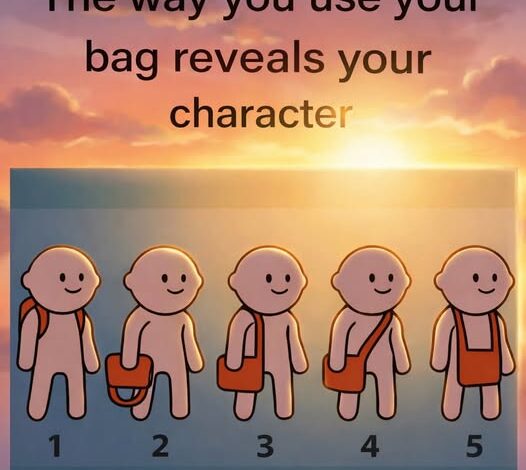
The items we choose to carry and the manner in which we house them serve as a silent, mobile biography. A bag is rarely just a receptacle for personal effects; it is an externalized version of a person’s psyche, reflecting how they think, plan, and navigate the complexities of the world. From the meticulous professional with a designated slot for every stylus to the creative soul whose bag is a swirling ecosystem of receipts and inspiration, these small daily habits offer profound clues into the deeper traits that define our characters.
For many, a bag functions as a portable safety net—a literal weight on the shoulder that provides metaphorical security. These are the individuals whose bags are filled with “just in case” items: a backup charger, a sewing kit, various medications, and perhaps an extra umbrella. This inventory reveals a personality rooted in preparation, generosity, and a high degree of dependability. These people are often the unsung heroes of a social group, the ones everyone turns to when a minor crisis strikes. However, this habit also hints at a more complex inner life. Carrying a heavy bag of contingencies can suggest an underlying difficulty with letting go, indicating a need to feel in control of an unpredictable environment. For the “over-packer,” the physical weight of the bag is often a manifestation of an emotional desire to be indispensable and safe.
At the opposite end of the spectrum is the minimalist, whose light, compact bag—or lack thereof—reflects a mindset built on efficiency and self-reliance. To these individuals, every ounce of weight is a burden to be scrutinized. They carry only the absolute essentials: a phone, a card, and perhaps a single key. This approach signals a deep-seated confidence in their ability to adapt to whatever the day brings without the need for external tools. It reflects a desire to keep life streamlined and a fundamental dislike for unnecessary clutter, whether physical or mental. These individuals value freedom of movement and tend to trust their own ingenuity over a pre-packaged survival kit. Their simplicity is a form of power, asserting that they are enough, regardless of what they happen to be holding.
Structure and organization offer another window into the soul. For the person who treats their bag like a carefully engineered system, every item has a specific home. Their pens are tucked into loops, their electronics are organized by cord length, and they can find their house keys in pitch darkness within seconds. This structured approach mirrors a personality that is detail-oriented, reliable, and exceptionally punctual. In their world, disorder is not just a nuisance; it is an unsettling disruption of the logic they apply to the rest of their lives. While this level of organization is an undeniable professional strength, it can also be a source of personal stress. When plans shift unexpectedly or when they cannot find a specific item immediately, the loss of control can feel disproportionately distressing.
In stark contrast are those whose bags appear to be in a state of perpetual chaos. A peek inside might reveal a tangle of headphones, old cinema tickets, loose change, and half-finished notebooks. To an outside observer, this disorder looks like a lack of discipline, but it often reflects a personality defined by high levels of creativity and spontaneity. These individuals do not view their bag as a system to be managed, but as a collection of possibilities. They often thrive on flexibility and find inspiration in the unexpected juxtapositions found at the bottom of a tote bag. While they are usually the most adaptable and relaxed people in a room, their lack of structure can occasionally lead to struggles with procrastination or the frantic, last-minute stress of searching for a passport five minutes before a flight.
For the style-focused individual, the bag is an instrument of self-expression rather than a mere utility. Their choice of bag is a conscious decision meant to signal their identity to the world. For them, the aesthetic of the bag is as important as—if not more important than—what is inside. This focus on the external often reflects a personality that is social, confident, and highly aware of the power of image. They understand that we are often judged by the symbols we carry, and they use their bag to communicate their taste, status, or membership in a specific subculture. To them, the bag is a piece of wearable art, a way to move through the world with a sense of curated purpose.
The physical proximity with which a person keeps their bag also offers psychological insights. Those who keep their bags close at all times—clutching them in their laps during dinner or never letting the strap leave their shoulder—often place a high premium on privacy and security. This behavior suggests a cautious nature and a strong need for personal boundaries. They may be protective of their internal world as much as their physical belongings, showing a selective trust when it comes to the people and environments around them. This “close-carry” habit is a protective instinct, a way of maintaining a small, private territory in an increasingly public world.
Finally, the shift toward technology-heavy bags or the total abandonment of bags altogether highlights our evolving relationship with the modern world. The person whose bag is a mobile office—filled with tablets, multiple phones, and noise-canceling headphones—reveals an adaptability based on tools. They navigate life through a digital lens, feeling most secure when they are connected and equipped to handle work from anywhere. Conversely, the person who walks through a city with nothing in their pockets but a smartphone demonstrates a radical trust in the infrastructure of modern society and the helpfulness of others.
Ultimately, the way we use our bags is a testament to the fact that even our most mundane habits are rooted in the architecture of our personalities. Whether we are weighed down by the past and the “just in case” or moving lightly through a streamlined future, our bags tell the story of who we are when no one is looking. They are the artifacts of our daily existence, proving that the way we carry ourselves is intrinsically linked to the things we choose to carry with us. By observing these patterns, we gain not just an understanding of a person’s schedule, but a deeper insight into their soul.