Trump to sue Trevor Noah after controversial Epstein joke at Grammys!
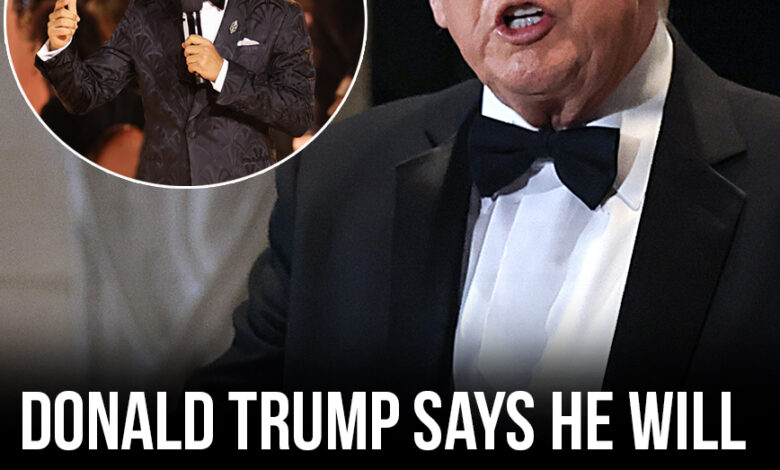
The 2026 Grammy Awards ceremony at the Crypto.com Arena was designed to be a celebration of musical innovation and artistic triumph, but as has become increasingly common in the modern era, the evening was ultimately defined by the volatile intersection of entertainment and high-stakes politics. While the night featured plenty of traditional spectacle—including Chappell Roan’s avant-garde fashion choices and a surreal comedic turn by Cher—it was a single, biting quip from host Trevor Noah that transformed a night of accolades into a brewing legal battlefield. The fallout from a joke regarding Donald Trump and the late Jeffrey Epstein has since dominated the national conversation, illustrating the profound friction that exists when satire takes aim at one of the most litigious figures in American public life.
The controversy was ignited during one of the night’s most prestigious moments: the presentation of Song of the Year. Trevor Noah, a veteran of political satire known for his sharp-edged observational humor, took the stage to introduce the category. The ceremony happened to coincide with a period of renewed public scrutiny following the release of a massive batch of unsealed documents related to Jeffrey Epstein’s legal history. Seizing on the zeitgeist, Noah offered a monologue that linked the desire for a Grammy trophy to Donald Trump’s well-documented interest in geopolitical real estate and his proximity to the Epstein case. Noah quipped that every artist wants the Song of the Year trophy almost as much as Trump wants Greenland, adding that because Epstein’s private island was no longer an option, the former president needed a new island to frequent with Bill Clinton.
The reaction within the arena was a mix of gasps and laughter, but the reaction from the Trump camp was instantaneous and visceral. The joke struck a particularly sensitive nerve because the newly released documents reportedly mention Trump’s name over 1,000 times. While legal experts and the Department of Justice have clarified that a name appearing in these files does not constitute evidence of wrongdoing—often reflecting mere social acquaintances or flight manifests—the optics are undeniably fraught. Trump has consistently maintained that while he knew Epstein in the social circles of Palm Beach and New York, he never participated in illegal activities, never visited the infamous Little St. James island, and eventually severed ties with Epstein years before the financier’s ultimate downfall.
The response from the former president was swift, appearing on his Truth Social platform shortly after the broadcast concluded. Trump, who has a long history of critiquing award shows as elitist or declining in quality, labeled the 2026 Grammys “virtually unwatchable.” However, he saved his most pointed vitriol for Noah, characterizing the host’s remarks as “false and defamatory.” In an expansive post, Trump reiterated his denial of ever visiting Epstein’s island and claimed that Noah’s joke crossed the line from comedy into actionable slander. He warned of an impending lawsuit, a move that would align with his previous legal challenges against media organizations and individual commentators whom he believes have misrepresented his record for political or ratings gain.
Adding a layer of complexity to the situation, Trump addressed the matter more formally while speaking to the press aboard Air Force One. During this exchange, he shifted the narrative, suggesting that the newly unsealed documents actually served to exonerate him by highlighting the “sensationalist and untrue” nature of certain claims submitted to the FBI years ago. He accused Noah of parroting a false narrative and suggested that the joke was part of a broader conspiracy to damage his political standing. Trump also took the opportunity to target author Michael Wolff, alleging that the writer had conspired with Epstein-related information to fabricate a damaging legacy.
The White House and the Department of Justice have found themselves in the difficult position of navigating the fallout from these document dumps. Official statements have emphasized that many of the claims found within the older Epstein files remain unverified, cautioning the public and the media against drawing definitive conclusions from raw investigative material. However, in the world of late-night comedy and award show monologues, nuance often takes a backseat to punchlines. For Trevor Noah, the joke was a way to tap into a current news cycle that is both sensational and significant; for Donald Trump, it was a defamatory attack that warranted a courtroom response.
The legal community is currently divided on the viability of such a lawsuit. Defamation cases involving public figures and satire are notoriously difficult to win in the United States, as the legal standard requires a showing of “actual malice”—the knowledge that a statement was false or a reckless disregard for the truth. Satire and parody are traditionally protected under the First Amendment, especially when they involve hyperbolic comparisons or jokes that an average viewer would not perceive as a literal statement of fact. However, Trump’s legal team has signaled that they intend to argue that the specific nature of the joke, by implying his presence on an island associated with criminal activity, transcends the boundaries of protected humor.
Beyond the legal technicalities, the incident at the 2026 Grammys underscores a broader shift in how major cultural events are staged and received. Award shows have evolved into platforms for civic commentary, where hosts and presenters feel a mandate to address the pressing issues of the day. This shift has turned ceremonies like the Grammys into polarized environments, where half the audience applauds the bravery of the commentary while the other half decries it as partisan grandstanding. Trevor Noah’s Epstein joke was not an isolated moment; it was a symptom of a cultural climate where every microphone is an opportunity for accountability, and every joke is a potential catalyst for a lawsuit.
As the dust settles on the Crypto.com Arena, the focus remains on whether Trump will follow through on his threat to sue. If a lawsuit is filed, it would likely become a landmark case regarding the limits of political satire in the digital age. It would force a judicial examination of whether a joke told on a national stage can be considered defamatory when it touches upon matters of public record, however unverified those records may be. For the Grammys, the night will be remembered less for the musical performances and more for the moment the music stopped to make room for a legal firestorm. It served as a stark reminder that in 2026, there is no such thing as “just a joke” when it involves the intersection of celebrity, crime, and the highest levels of American power. The fallout continues to ripple through social media and legal circles alike, proving that the echoes of a single monologue can resonate far longer than any Song of the Year.