Unchained Melody! The Eternal Song That Defined Generations
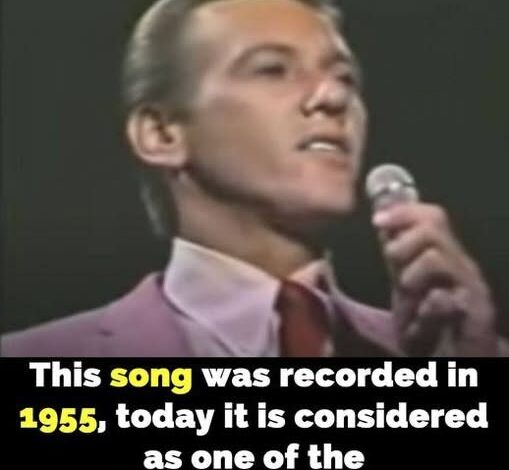
Few songs have carved themselves into human memory the way “Unchained Melody” has. Written by Alex North and Hy Zaret in the 1950s, it has outlived trends, outperformed the film it was written for, and become one of the most universally recognized expressions of longing ever created. More than a ballad, it’s a piece of emotional history—an anthem of yearning that refuses to age, refuses to fade, and refuses to be replaced. With more than 670 recorded versions by artists from every corner of the world, the song has become a cultural constant, rediscovered again and again as each generation finds its own reflection in the melody.
Its origin, ironically, was modest. In 1955, a small, largely forgotten prison film titled Unchained needed a theme song. Alex North, known for crafting rich, emotional film scores, teamed up with lyricist Hy Zaret, whose strength lay in writing sparse, potent lines. They didn’t aim to create a legend; they aimed to capture a single character’s longing for home and freedom. Yet they tapped into something far bigger—a timeless ache that exists in every human heart. The film sputtered out of public consciousness, but its song outgrew it almost instantly.
The first recording, performed by baritone Todd Duncan, set the tone for what would become the song’s trademark emotional depth. His voice carried a quiet desperation—a mixture of hope, fear, and devotion. Within months, other artists released their own takes. Les Baxter, Al Hibbler, and Roy Hamilton all recorded versions that charted. That kind of simultaneous success was rare, and it proved early that this song wasn’t tied to any one voice or arrangement. It was simply too powerful, too adaptable, too honest.
Then came 1965—the year “Unchained Melody” became immortal. The Righteous Brothers recorded what is now considered the definitive version, despite the fact that the song originally appeared as a B-side. Bobby Hatfield’s vocal performance wasn’t just technically impressive; it was raw, exposed, almost pleading. His voice cracked in all the right places, soared where the melody demanded, and held back when restraint spoke louder than volume. DJs flipped the record, listeners demanded it, and suddenly the song wasn’t just a hit—it was a phenomenon.
Decades later, another seismic shift occurred when Elvis Presley made the song part of his live performances. By the late 1970s, Elvis was a man carrying a lifetime of emotional and physical strain. But when he sang “Unchained Melody,” especially during those final years, it was as if every ounce of vulnerability, every private battle, poured into the microphone. Watching him grip a piano, voice trembling with sincerity, remains one of the most haunting moments in music history. His interpretation didn’t reinvent the song—it revealed something new inside it.
And then, in 1990, the song was reborn yet again. The film Ghost, starring Patrick Swayze and Demi Moore, featured the Righteous Brothers’ recording during the now-iconic pottery wheel scene. What could have been a simple, intimate moment became unforgettable. The song fused with the emotion on screen, and suddenly a younger generation—one that hadn’t grown up with the original—fell in love with it. After Ghost, the song shot back up the charts, proving once again that great art doesn’t expire; it reinvents itself.
Part of the song’s staying power comes from its structure. It starts quietly, almost like a confession whispered into the dark. Each line builds slowly, tension rising in the melody until it crests in a sweeping, cathartic release. That rise mirrors the emotional arc of longing itself—gentle at first, then overwhelming. Singers love it because it demands both control and vulnerability. Listeners love it because they feel the escalation in their own chest.
The lyrics do something unusual, too. They’re simple. Direct. Nothing is wasted. Every line carries emotional weight without slipping into clichés. It speaks to anyone who has ever missed someone—or wished for someone—or held onto hope even when the odds were stacked against them. That universality is why artists from every genre and culture have covered it. Country singers, rock bands, opera vocalists, pop stars—each finds something personal in it. And audiences respond every single time.
The song’s reach extends far beyond English-speaking countries. It became a romantic standard in Asia, a nostalgic anthem in Europe, and a heartfelt ballad across Latin America. Even translated, the emotional essence remains intact. “Unchained Melody” doesn’t rely on cultural context. It relies on human experience. That’s why it works everywhere.
There’s also a scientific reason it hits so hard. Music psychologists often point to the harmonic structure and rising intervals—the slow emotional climb—as triggers for chills, goosebumps, and deep emotional responses. The song releases dopamine and oxytocin, the chemicals associated with love, memory, and bonding. It taps directly into the emotional wiring of the brain, which is why people often cry the first time they hear it, or the fiftieth.
Its role in pop culture is impossible to pin down fully because it keeps evolving. Talent show contestants reach for it when they want to prove their emotional and vocal range. Filmmakers use it when they need to convey heartbreak, longing, or connection in a single scene. TikTok users set it to videos about love, loss, and nostalgia. Weddings, funerals, anniversaries—moments defined by emotion—often rely on it when spoken words fall short.
Yet the creators, Alex North and Hy Zaret, remain relatively unsung outside musical circles. Their partnership was lightning in a bottle. North brought cinematic sweep; Zaret brought poetic restraint. Together, they crafted something that outlived them both. Zaret famously refused to use the word “unchained” in the lyrics, choosing instead to write something universal rather than literal. It’s ironic considering the title—but it was also the right choice. It allowed the song to stand on its own, independent from the obscure film that birthed it.
Seventy years later, “Unchained Melody” still matters. In a world dominated by digital noise and short attention spans, this song is proof that emotional truth is timeless. Young listeners discover it on streaming platforms and hear something that feels brand new. Older listeners revisit it and remember what it meant to them decades ago. It’s not just nostalgia; it’s resonance.
Every person who hears it brings their own story. For some, it’s a love song. For others, it’s a reminder of someone they’ve lost. For others still, it’s about hope—the belief that connection survives separation.
That’s the real magic of “Unchained Melody.” It adapts to the listener. It becomes whatever the heart needs it to be.
What began as a theme song for a forgotten film has turned into a global, everlasting anthem. Todd Duncan gave it emotional roots. The Righteous Brothers made it immortal. Elvis made it personal. Ghost made it iconic all over again. And every artist since has kept that torch burning.
As long as human beings continue to love deeply, grieve honestly, and yearn fiercely, “Unchained Melody” will keep echoing across generations — a reminder that real emotion never goes out of style.