What It Can Mean When a Black Cat Approaches You!
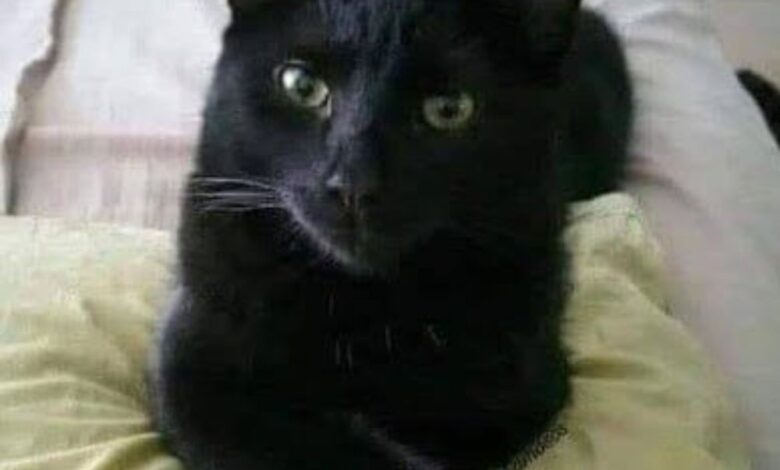
The intersection of animal behavior and human superstition is perhaps nowhere more evident than in the sudden approach of a black cat. For millennia, this simple act—a creature walking through shadows toward a human observer—has been filtered through an intricate web of folklore, omens, and cultural biases. Depending on the century and the geographic location, the appearance of a melanistic feline could be interpreted as a divine blessing, a maritime safeguard, or a herald of impending doom. Understanding these shifting perspectives allows us to see the black cat not as a supernatural entity, but as a fascinating mirror of human psychology and history.
The Dark Ages: Misplaced Fear and Its Consequences
The negative stigma surrounding black cats is largely a product of medieval European history. During this era, the confluence of religious fervor and widespread illiteracy gave rise to a deep-seated fear of the unknown. Black cats, with their nocturnal habits and silent movements, became easy targets for superstition. They were frequently associated with witchcraft, believed by many to be “familiars”—supernatural entities that assisted witches in their craft. This unfounded fear grew so intense that it led to the systematic persecution of cats across the continent.
However, history provides a grim lesson in the ecological consequences of such superstition. As the feline population in European cities plummeted due to these persecutions, the natural check on rodent populations was removed. This imbalance allowed for the rapid proliferation of rats, which carried the fleas responsible for the bubonic plague. Thus, the very superstitions that sought to protect the population from “evil” inadvertently facilitated one of the greatest biological catastrophes in human history.
A Global Tapestry of Good Fortune
Contrastingly, many other cultures have viewed the arrival of a black cat as an auspicious event. In Japan, black cats have long been considered symbols of good luck and are believed to ward off evil spirits. They are particularly favored by single women, as folklore suggests that a black cat can help attract a worthy suitor. This positive association is reflected in the popularity of “Maneki-neko” figures, which are often produced in black to symbolize protection and health.
In the United Kingdom, particularly among coastal communities, the black cat was once a vital part of a sailor’s household. It was believed that keeping a black cat at home would ensure the safety of family members at sea. These “ship’s cats” were also prized on vessels not just for their rodent-hunting abilities, but as living talismans against storms and shipwrecks. Similarly, the ancient Egyptians revered all felines, viewing them as earthly representatives of the goddess Bastet. To be approached by a cat in ancient Egypt was to be touched by a symbol of domestic harmony, fertility, and protection.
Behavioral Science: Looking Beyond the Fur
In the 21st century, animal behaviorists offer a more grounded perspective on why a cat might approach a stranger. A cat’s decision to interact with a human is dictated by environmental cues and body language rather than the color of its coat. Cats are naturally observant and tend to approach individuals who exhibit calm, non-threatening behaviors. Interestingly, many cats are attracted to people who are indifferent to them or even slightly allergic, as these individuals often avoid direct eye contact—which, in the feline world, is a sign of respect and non-aggression rather than disinterest.
The “mystery” of the black cat in modern times is often more about aesthetics than mythology. Their sleek, ebony fur makes them popular subjects for photography and seasonal art, yet they remain among the most difficult animals to place in adoptive homes due to lingering superstitions. This phenomenon, often referred to by shelter workers as “Black Cat Syndrome,” highlights how ancient fears can still subtly influence contemporary human behavior, even in a society that prides itself on scientific literacy.
The Echo of Superstition in a Modern World
The tendency to assign meaning to a black cat’s approach is reflective of a broader human desire to find patterns in the chaos of daily life. This is particularly evident in the current media climate of early 2026, where the news cycle is dominated by a mix of profound tragedies and unexplained mysteries. From the urgent geopolitical tensions involving U.S. strikes on Iranian facilities to the deeply personal and frightening developments in the Nancy Guthrie kidnapping case in Arizona, the public is currently living in a state of heightened sensitivity.
In such a climate, the “Uncategorized” events of life—like a black cat crossing a path or the recovery of a suspect’s backpack in a trash bin—take on a weight they might not otherwise carry. We see this in the viral stories of the day: the tragedy of a bus accident that claimed the lives of twenty students, the “Prophet of Doom” sharing worrying predictions for the year ahead, and the historical philanthropic pledges of billionaires like Susan Dell. When the world feels unpredictable, the mind naturally reaches back to old symbols and omens to provide a sense of narrative structure.
Conclusion: The Cat as a Curious Observer
Ultimately, when a black cat approaches you, it is an interaction between two sentient beings. The cat is likely seeking warmth, food, or a moment of social engagement, blissfully unaware of the centuries of baggage humans have attached to its appearance. Whether you choose to see the encounter as a sign of luck, a warning, or simply a pleasant interaction with a neighbor’s pet depends entirely on the cultural and personal lens through which you view the world.
As we navigate the complexities of 2026—dealing with the loss of icons like Pamela Bach-Hasselhoff, the search for missing loved ones, and the shifts in global power—there is a quiet dignity in the simple, unscripted moments of the natural world. A black cat moving through the shadows is a reminder that while human history is written in the ink of superstition and conflict, nature continues its routine, unaffected by our narratives. To be approached by such an animal is a small, grounded moment of connection in an increasingly digital and distracted age. It is a reminder to pause, observe, and appreciate the silent, curious architecture of life that exists right in front of us, regardless of what color it happens to be.