Who could be drafted? Inside US draft rules if global war breaks out!
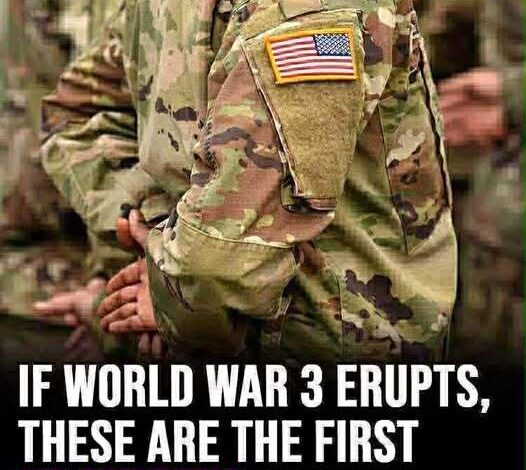
The geopolitical landscape of 2026 has seen a marked shift in public consciousness, as discussions regarding global stability and military readiness dominate the digital sphere. Between speculative political proposals and active military strikes in various international theaters, a surge of concern has sent many Americans to their search engines. Queries regarding “World War III” and “U.S. draft age and rules” have reached levels not seen in decades, reflecting a deep-seated anxiety among a population that has not faced compulsory service in over half a century.
To understand the reality of a potential draft, one must first look at the current state of the American military. Since the abolition of conscription in January 1973 following the Vietnam War, the United States has relied exclusively on an all-volunteer force. This professionalized military has proven effective for over fifty years, yet the legal architecture for a draft remains dormant but intact within federal law. While there is no active draft today, the Selective Service System remains the administrative foundation that would allow the President and Congress to reinstate conscription during a declared national emergency.
For the three generations of Americans who have grown up in the era of the volunteer force, the actual mechanics of a draft are often a mystery. Should a national emergency necessitate a return to conscription, the process would be governed by a random lottery system. The sequence is specifically designed to prioritize those in the prime of their young adulthood. The lottery would begin with men in the calendar year they turn 20. If further manpower were required, the draft would expand to include those aged 21 through 25 in ascending order. Only after those age groups were exhausted would the military look to 19-year-olds, and finally, 18-year-olds.
Currently, registration with the Selective Service remains a legal requirement for almost all male U.S. residents between the ages of 18 and 25. This mandate is broad, encompassing not only citizens but also non-citizens, refugees, dual nationals, and asylum seekers. While there are narrow exceptions for certain elected officials, members of the clergy, and institutionalized individuals, the vast majority of young men are required to have their information on file. Students who are drafted can often request postponements to finish a current semester or academic year, but the obligation itself remains.
One of the most frequent points of modern debate is the role of women in the Selective Service. Under existing law, women are not required—nor are they permitted—to register for the draft. While there have been significant legislative discussions regarding the expansion of registration to all genders, particularly as women now serve in all combat roles, any such change would require an act of Congress to amend the Military Selective Service Act.
The consequences of failing to register by the age of 26 are significant, though often misunderstood. While direct criminal prosecutions for non-registration are rare in the modern era, the administrative penalties can be life-altering. Beyond the theoretical threat of fines or imprisonment, failing to register can result in a permanent loss of eligibility for federal student loans, government job opportunities, and even certain paths to citizenship for immigrants.
In this period of heightened global tension, the “loud” talk of war often obscures the “quiet” legal realities of the draft. While the prospect of conscription can be frightening, it remains a “break-glass-in-case-of-emergency” tool—one that would require significant political consensus and a formal legislative shift to move from the realm of theory back into the reality of American life.