With deep sadness, we share news about this iconic pop duo!
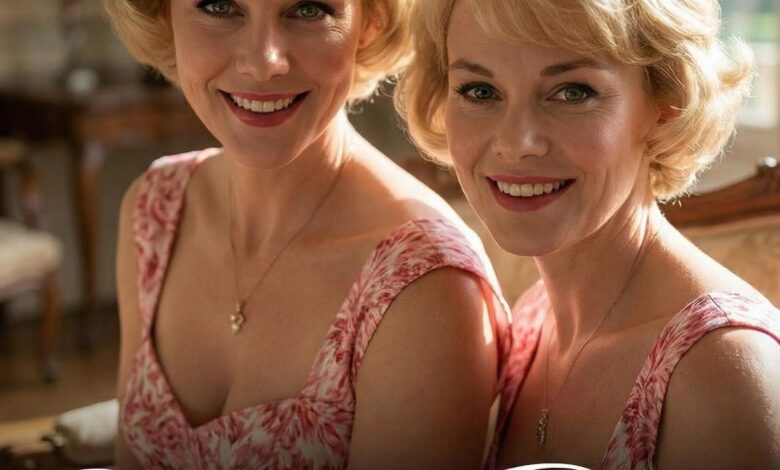
Alice and Ellen Kessler spent nearly nine decades moving in perfect rhythm, two lives intertwined so tightly that the world rarely thought of one without the other. Known simply as the Kessler Twins, they were more than entertainers — they were cultural touchstones, symbols of poise and precision whose influence stretched from postwar Europe to international stages. Their passing at age eighty-nine marked the end of an extraordinary artistic partnership, one that shaped the landscape of music, dance, and television for generations. Their family confirmed that the sisters planned their final chapter together with the same deliberation and unity that characterized their entire lives, choosing to leave the world in peace and side by side, just as they had always lived.
Born in 1936, the twins began performing almost as soon as they could walk. Their early passion led them from ballet studios to theater stages, and by the late 1950s, their unique harmony — physical, emotional, and artistic — had caught the attention of audiences across Europe. Their breakthrough moment arrived in 1959, when they represented West Germany in the Eurovision Song Contest. The performance placed them eighth, but the ranking mattered far less than the visibility it brought. Overnight, Alice and Ellen became recognizable figures, admired not only for their beauty and talent but for the perfect synchronicity that set them apart from every other act of their time.
Television turned them into household names throughout the 1960s. As variety shows grew into cultural phenomena, the Kessler Twins became recurring guests, especially on the beloved Italian program Studio Uno. Audiences tuned in eagerly, drawn to their precision choreography, effortless glamour, and unmistakable chemistry. They performed alongside legends — Frank Sinatra, Fred Astaire, and others who defined the golden age of entertainment — yet they never appeared overshadowed. The twins held their own with a quiet confidence that only deep discipline and lifelong partnership could produce.
Their presence wasn’t limited to television. Magazine covers across Europe and beyond displayed their iconic silhouettes, perfectly mirrored poses, and radiant expressions. Their popularity transcended language and nationality, earning them a following that spanned borders and generations. To their fans, the twins represented elegance and optimism during a rapidly changing era, women who moved through the world with a grace that felt both aspirational and deeply human.
Offstage, their bond remained just as strong. They lived close to one another, made joint career decisions, and built a life rooted in mutual respect and unwavering loyalty. Friends described them as disciplined, warm, and dedicated — women who carried themselves with humility despite decades of international attention. Their careers evolved with time, but their unity never faltered. To the public, they appeared almost mythical in their togetherness; to those who knew them, they were simply inseparable sisters who found comfort and purpose in each other’s presence.
In their later years, the twins continued to attract admiration for their resilience and authenticity. As policies in Germany changed to allow medically assisted dying under strict regulations, the sisters made a private decision that aligned with their lifelong philosophy: they would remain together through every stage, even the final one. Reports confirmed that they passed away peacefully at their shared home near Munich, with the proper legal processes followed and no concerns of outside interference. According to loved ones, they had long expressed the wish to be placed together in a single urn — a final reflection of the unity that defined their existence.
When news of their passing broke, tributes poured in from across Europe. Radio Monte Carlo honored them as symbols of European entertainment, praising their elegance, discipline, and cultural impact. Fans recalled their performances with fond nostalgia — the glittering costumes, the synchronized steps, the charm that never once dimmed in decades of public life. Colleagues from television, music, and theater shared stories of working with two women who were not only consummate professionals but generous, spirited collaborators. Many described the twins as pioneers who shaped the identity of postwar European entertainment, bringing joy and artistry into millions of homes.
Their legacy doesn’t rest on a single award or moment of fame; it spans thousands of performances, countless rehearsals, and the quiet, consistent dedication that defined their craft. Alice and Ellen grew up in a world recovering from turmoil, yet they managed to infuse it with beauty. Their synchronized dances became metaphors for unity and resilience. Their enduring partnership reminded audiences that connection, when nurtured with love and purpose, can become a lifelong masterpiece in its own right.
Even now, their influence lingers in the fabric of European culture. Younger generations discovering archival footage often marvel at the precision of their performances, the way two bodies could move as though powered by a single heartbeat. Their recordings, interviews, and televised specials continue to circulate, keeping their spirit alive. And those who watched them during their prime remember the feeling of gathering around a television set, waiting for the twins to appear — mirrors of each other, yet distinctly themselves.
Alice and Ellen’s story is more than a tale of two entertainers. It’s a testament to devotion, perseverance, and the extraordinary possibilities that arise when two people choose to walk through life side by side. They weren’t just sisters. They were partners, confidantes, artists, and icons. They shaped each other as profoundly as they shaped the world around them.
Now, as Europe mourns their passing, it also celebrates the remarkable journey they shared. Their final act — choosing peace, choosing togetherness — mirrors the way they lived. And while the stage lights have dimmed, their memory continues to shine in the countless people they inspired.
The Kessler Twins are gone, but their grace endures. Their story remains woven into the history of performance, and their influence will echo long after their final bow.