With heavy hearts, we announce the passing of this beloved actress and TV legend!
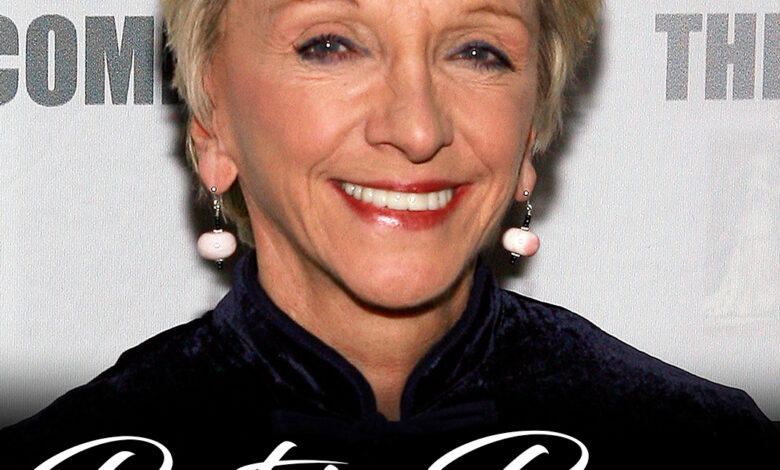
Elizabeth Franz’s passing has left a real ache in the worlds she lit up — Broadway, film, and television. She wasn’t the kind of performer who chased spectacle or headlines. She built her legacy on depth, craft, and emotional honesty. At 84, after a fight with cancer compounded by a severe reaction to treatment, she died at home in Woodbury, Connecticut, with her husband, Christopher Pelham, confirming the news. It’s the kind of loss that reminds people how rare it is for an artist to stay great for six decades straight — and still be underrated.
Franz’s colleagues often referred to her as “America’s Judi Dench,” and that wasn’t flattery. It was recognition of the way she carried a role: fully inhabited, stripped of pretense, and anchored by lived emotion. Her rise wasn’t glamorous or fast. She started Off-Broadway, grinding through the kinds of roles only die-hard theatergoers remember. Then she landed the role that would define the early part of her career — Sister Mary Ignatius in Sister Mary Ignatius Explains It All for You. The play stirred controversy, but Franz’s performance was undeniable. She won an Obie, and in an ironic twist, some of the very nuns who came to protest wound up becoming her friends. That was Franz in a nutshell — blunt force power softened by humanity.
But the performance most people will never forget is Linda Loman in the 1999 Broadway revival of Death of a Salesman with Brian Dennehy. Critics didn’t just rave; they recalibrated the entire understanding of the character because of what she did. Arthur Miller himself said Franz restored Linda’s fire — a protectiveness and dignity he felt had been “washed out” in earlier portrayals. She played Linda as a woman who was neither shrinking nor saintly, but fiercely loyal, painfully aware, and quietly holding her collapsing world together. It earned her a Tony Award and, later, an Emmy nomination when she reprised the role for Showtime’s film adaptation.
Her stage credits read like a syllabus of American and international theater: Brighton Beach Memoirs, Morning’s at Seven, The Cherry Orchard, The Miracle Worker, Uncle Vanya, and dozens more. She kept working well into her later years, not because she needed to, but because the craft was oxygen for her. Directors knew she would bring gravity. Younger actors knew she would bring generosity. Audiences knew she would bring truth.
Her film and television work carried the same grounded power. Franz held her own next to Robert De Niro in Jacknife, Harrison Ford in Sabrina, and Jamie Lee Curtis in Christmas with the Kranks. On TV, she became a familiar presence: Mia, the kind innkeeper in Gilmore Girls; guest roles in Grey’s Anatomy, Homeland, Judging Amy, Law & Order, SVU, and Cold Case. She had the rare ability to step into a supporting role and make it matter. Her characters always felt lived-in, never decorative.
What many didn’t know — or only learned later — was how much her artistry was shaped by a tough childhood in Akron, Ohio. Her father spent 36 years in a tire factory before being abruptly dismissed, a blow that left him shattered. Her mother battled mental illness, disappearing for stretches of time that forced Franz to grow up fast and stay quiet about her own emotions. Acting became her outlet — the one place where feeling deeply wasn’t dangerous but useful. She eventually studied at the American Academy of Dramatic Arts, and from there she built the life that had once felt impossible.
Her personal life carried its own chapters of joy and heartbreak. She married actor Edward Binns, who died in 1990. Years later, she married Christopher Pelham, who became her partner not just in life but in her final, hardest months. She is survived by Pelham and her brother Joe.
Elizabeth Franz leaves behind more than a list of credits. She leaves a blueprint for what honest acting looks like — unflashy, emotionally rigorous, and rooted in empathy. Her performances didn’t just entertain. They revealed something about people: their contradictions, their quiet suffering, their resilience.
For those who saw her on stage, she was unforgettable. For those who only knew her from television, she was a warm, steady presence. For the actors who worked with her, she was a master class wrapped in kindness. And for the audiences who will continue to discover her work, she’ll be a reminder that greatness isn’t always loud — sometimes it’s deliberate, disciplined, and deeply human.
Rest in peace to a remarkable woman who never once phoned it in. She gave everything she had, every time, for as long as she could. Her legacy will outlast the footlights.