New Footage Sheds Light on Events Involving Alex Pretti!
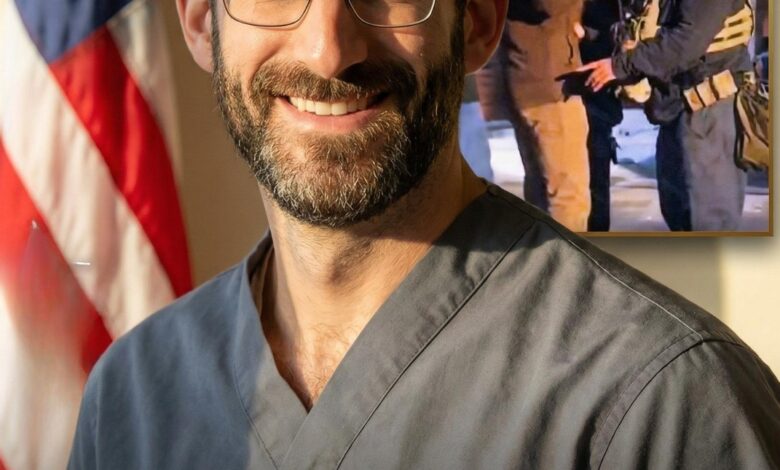
The fatal shooting of Alex Pretti, a 37-year-old intensive care nurse, at the hands of federal agents in Minneapolis has become a flashpoint in a national debate over law enforcement tactics and government transparency. On the morning of January 24, 2026, what began as a targeted immigration enforcement operation near the intersection of 26th Street and Nicollet Avenue escalated into a tragedy that has left a community in mourning and officials under intense scrutiny. As newly released and analyzed video footage surfaces, the official narrative provided by the Department of Homeland Security (DHS) is being increasingly challenged by visual evidence and eyewitness testimony.
Alex Pretti was not a bystander to the tension of his city; he was a man known for his dedication to others, serving veterans at the Minneapolis VA Medical Center. On that Saturday morning, witness accounts and video recordings suggest he was acting as an observer, filming the interactions between federal agents and civilians with his smartphone. According to witnesses, the atmosphere turned volatile when agents attempted to enter a local donut shop in pursuit of a suspect. When employees locked the doors, denying entry, the agents reportedly redirected their focus toward the crowd outside.
The footage, analyzed by major news organizations including the BBC, The New York Times, and The Washington Post, captures a pivotal sequence of events. Pretti is seen attempting to assist a woman who had been shoved to the ground by an agent. As he placed a protective arm around her, he was pepper-sprayed and tackled by a group of roughly six federal agents. In the seconds before he was subdued, the video clearly shows Pretti holding a cell phone in his right hand. While authorities emphasized that Pretti was carrying a registered handgun—which he was legally licensed to possess—the visual forensic evidence indicates he was not brandishing the weapon during the confrontation.
The most harrowing aspect of the newly surfaced footage is the timeline of the shooting itself. Analysis shows that as agents wrestled Pretti to the ground, one officer managed to retrieve the handgun from Pretti’s waistband and began to retreat from the scuffle with the weapon in hand. Less than a second later, and roughly eight seconds after Pretti had been pinned to the street, a volley of approximately ten shots was fired by other agents at close range. The footage suggests that Pretti was disarmed and incapacitated on the pavement when the fatal shots were discharged, raising grave questions about the “defensive” nature of the force used.
In the immediate aftermath, high-ranking officials characterized the incident in starkly different terms. DHS statements alleged that Pretti had “approached” officers with a handgun and “violently resisted” efforts to disarm him, with some officials even labeling the ICU nurse a “domestic terrorist” and a “would-be assassin.” These characterizations have drawn fierce backlash from Pretti’s family and the American Federation of Government Employees (AFGE), who condemned the statements as “disgusting lies” and an attempt to slander a man who spent his life saving others. The contrast between these official pronouncements and the bystander video has fueled a crisis of public trust, leading to calls for the resignation of top leadership.
The investigation into the shooting has been marred by reports of procedural irregularities. Minnesota state authorities, led by Attorney General Keith Ellison, have expressed “zero trust” in the federal government’s internal probe, alleging that state crime investigators were blocked from the scene. Furthermore, reports surfaced that the handgun seized from Pretti was not properly secured as evidence, having been placed on the seat of a vehicle rather than in a documented evidence bag. This perceived mishandling of a key piece of the investigation has led a federal judge to issue emergency orders to prevent the destruction or alteration of any evidence, including body-camera footage from the agents involved.
In Minneapolis, the response has been one of collective grief and righteous anger. Vigils have transformed the intersection where Pretti fell into a memorial of candles and flowers, while local businesses on “Eat Street” have closed their doors to recuperate from the trauma of the event. The city’s leadership, including Mayor Jacob Frey, has demanded an end to the federal surge operation, describing the presence of masked agents in the streets as an “occupation” that has made the city less safe for its residents.
The case of Alex Pretti has now moved into the halls of power in Washington. Senate Democrats have signaled that they will withhold support for broader funding packages for the Department of Homeland Security unless significant accountability measures and policy changes are implemented. The debate is no longer just about a single street encounter; it is about the legality of federal tactics in American cities, the rights of citizens to document law enforcement, and the threshold for the use of lethal force against those who are legally armed.
As the investigation continues, the focus remains on the digital record left behind—not just by the bystanders who refused to look away, but potentially by the phone Pretti was holding when he was killed. For a family seeking justice and a city seeking peace, the hope is that a transparent review of every camera angle will finally provide a clear accounting of the moments that led to a nurse being shot on his own neighborhood street. The broader conversation now turns toward ensuring that such a tragedy serves as a catalyst for systemic change, prioritizing de-escalation and the protection of civil liberties in every encounter between the public and those sworn to protect them.