Hollywood Mourns The Legendary Tough Guy Actor Who Could Play Both The Hero And The Villain With Unmatched Intensity
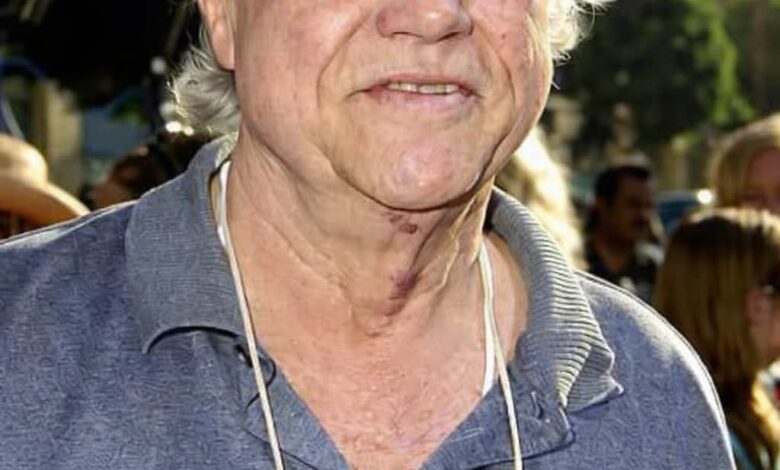
The world of cinema has lost one of its most distinctive and reliably formidable presences. Joe Don Baker, the rugged, quintessential American actor who carved out a decades-long career by embodying characters defined by their grit, intensity, and unmistakable authenticity, has passed away at the age of eighty-nine. His family confirmed the news of his death, marking the end of a life that spanned from the humble, dusty plains of Texas to the shimmering, high-stakes arenas of Hollywood stardom. While the details surrounding the final moments of his life remain private, his death has triggered an outpouring of tributes from fans and colleagues who remember him not just for the roles he played, but for the singular, muscular energy he brought to every frame of film he occupied.
Born in 1936 in the small town of Groesbeck, Texas, Baker’s early life was marked by both resilience and tragedy. He lost his mother when he was only twelve years old, an experience that required him to mature far faster than his peers, eventually being raised by his aunt. This early adversity arguably laid the foundation for the kind of tough, grounded characters he would later excel at portraying. He was a man who understood the weight of hardship, and it showed in his work. He pursued his education at North Texas State College on a sports scholarship, graduating in 1958, and subsequently served two years in the United States Army. This period of service, combined with his athletic background, imbued him with a physical self-assurance that made him perfectly suited for the screen.
After his military commitment, Baker sought to sharpen his craft at the renowned Actors Studio in New York City. The training he received there proved invaluable as he began to navigate the cutthroat world of stage acting and early television. He paid his dues in the traditional way, appearing in iconic series that defined the landscape of the time, such as Bonanza and Gunsmoke. These roles served as his proving ground, allowing him to refine his ability to portray men of action and conviction. His cinematic debut came in the form of an uncredited role in the classic 1967 film Cool Hand Luke, a project that put him in the orbit of legends and hinted at the trajectory his career would soon follow.
Baker’s ascent to true prominence began through his work in Westerns like Guns of the Magnificent Seven and Wild Rovers, but it was his transformation into the legendary Sheriff Buford Pusser in the 1973 hit Walking Tall that catapulted him into the stratosphere of stardom. In that role, Baker became an icon of vigilante justice. The image of the towering sheriff wielding his signature wooden club became burned into the collective consciousness of American filmgoers. It was a role that demanded a perfect balance of righteous anger and raw, physical intimidation, and Baker delivered it with such conviction that the film became a massive box-office success. He didn’t just act the part; he inhabited it, becoming the very personification of a man pushed to the brink and fighting back with whatever tools were at his disposal.
What truly separated Joe Don Baker from many of his contemporaries, however, was his remarkable range. He was never content to remain trapped in the box of the “tough guy,” even if he was undeniably good at it. Throughout his career, he showcased a versatility that allowed him to drift seamlessly between genres and tones. He delivered compelling performances in films such as the crime thriller Charley Varrick, the cult favorite Mitchell, the baseball drama The Natural, and the hit comedy Fletch. His ability to hold his own against industry titans was perhaps best showcased in Martin Scorsese’s 1991 remake of Cape Fear, where his presence added a layer of menace and gravitas that was essential to the film’s success.
Perhaps the most fascinating chapter of his career was his unique double-dipping in the James Bond franchise. It is a rare feat for an actor to be remembered as both a terrifying villain and a reliable ally in one of the most storied film series in history. Baker managed this with ease, first playing the ruthless arms dealer Brad Whitaker in 1987’s The Living Daylights. He followed that up by portraying the CIA agent Jack Wade in GoldenEye and Tomorrow Next Dies, a character that provided a much-needed injection of levity and grounded professionalism opposite Pierce Brosnan. His ability to inhabit two such radically different roles within the same franchise spoke to the depth of his talent and his inherent, watchable charisma.
Baker’s influence also extended well into the medium of television, where he continued to challenge himself with demanding, complex roles. He earned significant acclaim and prestigious award nominations for his work in the critically lauded Edge of Darkness and the biographical television film George Wallace, proving that his intensity translated just as effectively to the small screen as it did to the silver screen. In his later years, he continued to work with a passion that belied his age, appearing in projects as varied as the whimsical sci-fi comedy Mars Attacks!, the high-octane remake of The Dukes of Hazzard, and the atmospheric Mud.
In 2012, Joe Don Baker made the decision to retire from the demanding world of acting. He left behind a body of work that is characterized by its consistency, its rugged integrity, and its undeniable impact on popular culture. He was a man who belonged to a specific, bygone era of Hollywood, where actors were defined by their work ethic, their physical presence, and an ability to hold the screen with little more than a piercing gaze. As we look back on his life and his contributions to film, it is clear that he was one of the last of his kind—a true professional who brought an uncompromising commitment to every character he played, whether he was wielding a club in the backwoods of Tennessee or working for the CIA in the middle of a global crisis. Joe Don Baker has left the stage, but the legacy of the man who walked tall remains, etched firmly into the history of American cinema.