The Haunted Soul of a Masterpiece: Why This 1955 Anthem Still Makes Millions Weep
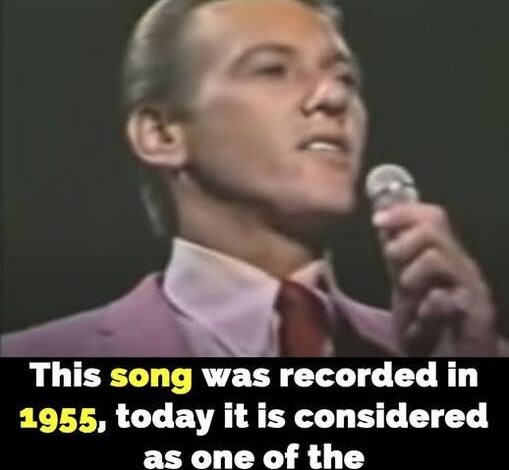
When the opening notes drift through the air, time itself seems to stop, pulling every listener into a vortex of raw, unadulterated longing. “Unchained Melody” is not just a song; it is a spiritual experience, a haunting echo of human heartbreak that has refused to die for over seventy years. While thousands of melodies have vanished into the abyss of obscurity, this legendary track remains firmly embedded in our collective consciousness, vibrating with an intensity that can trigger physical chills. What is the dark, beautiful secret behind its eternal power, and why does this 1955 ballad continue to break hearts across generations?
The history of “Unchained Melody” begins not in a polished studio, but in the collaborative brilliance of composer Alex North and lyricist Hy Zaret. Conceived in 1955 as the theme for the obscure prison film Unchained, the song was never intended to become the global cultural monolith it eventually grew into. Todd Duncan, the original vocalist, provided a haunting, soulful rendition that laid the groundwork, but the song was destined to travel far beyond the confines of a screen. With over 670 recorded versions spanning countless languages and genres, it stands as one of the most covered compositions in the history of music, a testament to its universal ability to articulate the ache of isolation and the intensity of desire.
However, when people speak of the “definitive” version, the conversation inevitably gravitates toward the 1965 masterpiece by The Righteous Brothers. Their recording remains the gold standard, largely due to the soaring, operatic vulnerability of Bobby Hatfield. There is a tangible, almost desperate quality to his performance—a reaching for something just out of grasp—that has defined the song for millions. It is rare for a recording to feel so intimate, yet so expansive; it is a performance that doesn’t just ask to be heard, but demands to be felt deep within the listener’s marrow.
The enduring nature of this song is perhaps best illustrated by the modern reaction to it. On a digital archive of their 1965 performance, which has amassed over 76 million views, the comment section acts as a digital confessional. Listeners describe visceral reactions: chills tracing their spines, sudden, uncontrollable tears, and a profound sense of loss for the legendary voices that have since departed this mortal coil. It is a rare phenomenon for a piece of music to bypass the intellectual mind and go straight to the emotional center, yet “Unchained Melody” accomplishes this with every play. It serves as a bridge across time, connecting us to our own past loves and the universal ache of wanting to be held by someone who is no longer there.
While the Righteous Brothers solidified the song’s place in the pop culture pantheon, the legend of the track underwent a second transformation in the hands of Elvis Presley. By the twilight of his career, Elvis had developed a unique, almost supernatural ability to inhabit a song, stripping away the artifice until only the raw nerve of the melody remained. His live performances of “Unchained Melody” are legendary, characterized by a fragile intensity that contrasted sharply with his high-energy stage persona. When Elvis sat at the piano, his voice trembling with a weariness that resonated with anyone who had ever suffered a heartbreak, he gave the song a new, darker dimension.
The Elvis rendition did more than just breathe new life into an aging ballad; it cemented the song’s immortality by proving its versatility. He didn’t just sing the notes; he lived them in real-time, turning a studio classic into a harrowing, intimate testimony of the human condition. His influence expanded the song’s reach to an entirely new demographic of fans, ensuring that “Unchained Melody” would not be relegated to the dusty shelves of music history. Instead, it was catapulted into the future, becoming a staple in movies, television shows, and the personal playlists of anyone seeking solace in the beauty of sorrow.
It is rare to find a composition that can successfully bridge the gap between 1955 and the present day without losing an ounce of its potency. Many songs are products of their time, tethered to the production styles and cultural trends of the decade in which they were born. “Unchained Melody” defies this rule. It possesses a timeless structure—a soaring melody coupled with lyrics that are deceptively simple yet profoundly deep. It does not try to be trendy or clever; it simply attempts to define what it means to be alive and longing. That is its genius.
As we look toward the future of music, it is comforting to know that some things remain unchanged. We may move toward synthesized sounds and fleeting viral trends, but there will always be a place for the lonely piano and the desperate, high-reaching vocal. Whether you find yourself returning to the precise, soaring harmonies of the Righteous Brothers or the broken, weary power of Elvis Presley, you are participating in a ritual that has spanned seven decades. The song reminds us that while people come and go, and while our lives are inevitably marked by loss, the art we leave behind can act as a beacon.
“Unchained Melody” remains one of the most beloved ballads ever written because it speaks a truth that does not age. It captures the exact moment when the heart realizes that time is slipping away, yet refuses to stop hoping for one more moment of connection. In a fast-paced, often disconnected world, the song stands as a monument to our shared vulnerability. It serves as a reminder that even when we are “unchained”—free from the bonds of those we love—we are still, in many ways, tethered to the emotions that define us. As long as there are people who need to feel, and as long as there are voices brave enough to sing of that need, this masterpiece will continue to haunt and heal in equal measure. It is, quite simply, the song that refuses to be forgotten.