THE SHOCKING TRUTH ABOUT THE BROWN STRINGS IN YOUR AVOCADO AND WHY YOU SHOULD THINK TWICE BEFORE THROWING THEM AWAY
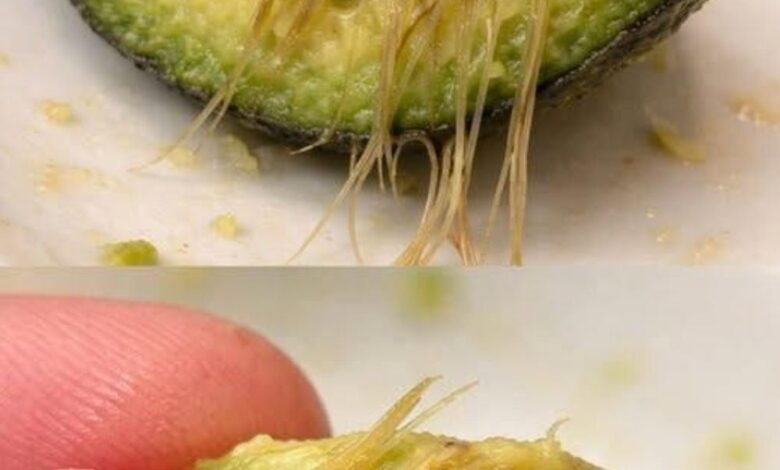
The avocado has become more than just a fruit; it is a cultural phenomenon, a culinary staple, and the undisputed king of the modern breakfast table. Yet, for all its popularity, the avocado remains one of the most temperamental and mysterious items in the produce aisle. We have all experienced the ritual of the “avocado vigil”—that period of several days where we gently squeeze the fruit, waiting for the exact nanosecond of perfect ripeness. We envision the payoff: a smooth, neon-green interior with a texture like room-temperature butter. But all too often, the knife slides through the skin only to reveal a disappointing internal landscape. Instead of perfection, we find a network of thin, brown, hair-like strings running through the flesh. This discovery usually leads to an immediate sense of betrayal, followed by a quick trip to the trash can. However, before you discard your next fibrous fruit, it is essential to understand the biological reality of what those strings actually are and what they reveal about the life of the avocado.
To demystify the stringy avocado, we must first look at the plant’s fundamental biology. Botanically known as Persea americana, the avocado is not a vegetable, but a large berry containing a single, massive seed. Like any living organism, the fruit requires a complex internal infrastructure to survive and grow. Those frustrating brown strings are not a sign of rot or infestation; they are the remnants of the fruit’s vascular system. In the plant world, these are known as xylem and phloem. While the avocado is still hanging on the tree in the groves of Mexico, California, or Peru, these tiny channels serve as the highway for water and essential nutrients. They are the lifelines that transport the building blocks of the fruit from the roots and leaves into the developing berry. Under perfect growing and harvesting conditions, these vascular bundles remain soft, supple, and virtually indistinguishable from the surrounding fatty flesh. But when the delicate balance of the avocado’s environment is disrupted, these “highways” become lignified—meaning they toughen up and turn into the woody, fibrous threads that plague our toast.
There are several reasons why this vascular system suddenly becomes visible and unappetizing. One of the most common culprits is the age of the tree itself. Younger avocado trees, particularly those in their first few years of production, are notorious for producing fruit with more pronounced fibers. As the tree matures and its internal processes become more efficient, the fruit typically becomes creamier and less “stringy.” If you happen to purchase a batch of avocados from a newly planted grove, you are much more likely to encounter this textural hurdle. Furthermore, the specific variety of the avocado plays a massive role. While the Hass avocado is the global gold standard due to its high oil content and creamy consistency, there are hundreds of other varieties—such as the Fuerte or the Gwen—that may have a higher propensity for developing fibers depending on the soil and climate in which they were raised.
Environmental stress is another major factor that turns a buttery avocado into a stringy mess. Like any crop, avocados are sensitive to the whims of nature. Inconsistent watering schedules or sudden, extreme temperature fluctuations can cause the fruit to develop its vascular tissue more aggressively as a defense mechanism. If a tree experiences a period of drought followed by a deluge of rain, the sudden rush of nutrients can cause the vascular bundles to “harden” as they work overtime to distribute the sudden influx of resources. Similarly, if the fruit is harvested too early or exposed to cold temperatures before it has properly matured on the branch, the internal fibers can turn brown and tough as the fruit tries to ripen off the vine.
For the average consumer, the most frequent cause of stringiness is simply over-ripening. An avocado is a living thing that continues to undergo chemical changes long after it has been plucked. As the fruit passes its peak window of freshness, the cellular walls within the flesh begin to break down. The fats and oils that provide that signature creaminess start to oxidize, but the tougher vascular bundles remain intact longer than the soft tissue around them. This creates a stark contrast: the flesh becomes mushy and gray, while the brown fibers stand out like a skeletal framework. This is often accompanied by a slight change in flavor, as the oils begin to turn rancid, giving the fruit a slightly metallic or fermented aftertaste.
This leads to the million-dollar question: Is a stringy avocado safe to eat? The short answer is almost always yes. While the texture is far from ideal and the visual appeal is non-existent, these fibers are entirely natural and non-toxic. They are simply cellulose and lignin—the same stuff that makes celery crunchy or wood hard. If the fruit still smells fresh and the majority of the flesh is green, there is no health risk involved in consuming it. The “ick factor” is purely a matter of mouthfeel. However, there are clear signs that an avocado has truly gone bad and should be avoided. If you notice large, sunken black pits in the flesh, a strong, sour odor similar to old gym socks, or a watery, weeping consistency, the fruit has moved past the “fibrous” stage and into the “decayed” stage.
If you find yourself with an avocado that is safe to eat but too stringy for a beautiful salad or a clean slice of toast, you don’t have to throw it away. These imperfect fruits are the perfect candidates for recipes where texture is masked or altered. Mashing a stringy avocado into a chunky guacamole often hides the fibers, especially when mixed with the crunch of onions, the acidity of lime, and the bite of cilantro. If the fibers are particularly stubborn, you can run the avocado through a fine-mesh sieve or a food processor. Blending the fruit into a smoothie or a creamy pasta sauce effectively pulverizes the vascular bundles, allowing you to enjoy the healthy monounsaturated fats and potassium without the chewy distraction.
To minimize the chances of bringing home a stringy disappointment, savvy shoppers should look for avocados that are heavy for their size and have a uniform, dark skin without soft “divots.” Ripening them at home at room temperature, away from direct sunlight, is the best way to ensure an even breakdown of the internal tissue. Once they reach that magical stage of yielding to gentle pressure, moving them to the refrigerator can slow down the clock and prevent the vascular bundles from browning. In the end, the brown strings are a humble reminder that our food comes from the earth, not a factory. They are the scars of a fruit that worked hard to grow, and while they may not be pretty, they are a testament to the complex, living systems that nourish us every day.