Cockroach Milk Could It Become the Superfood of the Future?
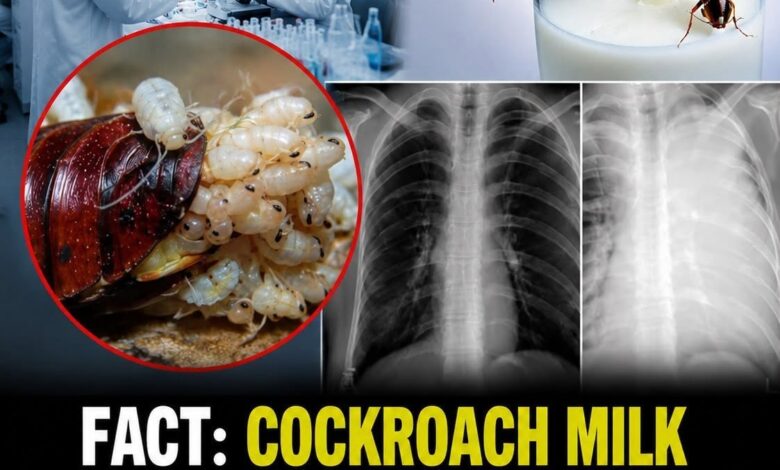
The phrase cockroach milk sounds like a joke, but it refers to a real form of nourishment produced by one unusual insect. Diploptera punctata, commonly called the Pacific beetle cockroach, gives birth to live young. During development, its embryos receive a nutrient-rich secretion from the mother’s brood sac.
This substance is not milk collected from mammary glands, and scientists are not milking adult cockroaches into containers. The developing embryos drink the secretion. Inside their midguts, milk proteins become concentrated and form crystals that store nutrition for gradual use.
Researchers have studied the secretion and crystals because they contain a striking combination of protein, carbohydrate, fat, and amino acids. Earlier chemical analysis found dried secretion rich in protein, with substantial carbohydrate and lipid content. Later structural research showed that the crystals contain glycosylated proteins that bind fats and pack tightly together.
The system is well suited to the embryos. A crystal provides concentrated food while releasing nutrients as they are needed. The proteins supply essential amino acids, while attached sugars and bound fatty acids contribute carbohydrate and lipid. For a developing insect, it is an efficient complete nutrient.
One widely repeated comparison says a crystal contains more than three times the energy of an equivalent mass of dairy milk. That statement concerns energy density by weight, not a recommendation that people replace a glass of milk with cockroach crystals. Energy-dense does not automatically mean healthier, more balanced, or appropriate for every human diet.
The discovery attracted interest because a compact source containing protein, fats, and carbohydrates might inspire future nutritional ingredients. Scientists can study how the proteins assemble, how the crystals release nutrients, and whether similar molecules could be produced safely by biotechnology.
Production is the immediate obstacle. Each insect makes only enough secretion for its offspring. Extracting tiny crystals from large numbers of embryos would be slow, expensive, and impractical. A consumer product could not realistically depend on manually collecting material from cockroaches.
Researchers have therefore discussed producing similar proteins through fermentation or another engineered system. Microorganisms such as yeast can sometimes be programmed to make a target protein. Even if that approach works technically, manufacturers would still need to reproduce the useful nutritional properties at scale.
Safety is an equally important barrier. The crystals evolved as food for cockroach embryos, not humans. Researchers would need to determine whether the proteins trigger allergies, contain harmful contaminants, remain stable during processing, and can be digested safely. Long-term effects, dosage, purity, and manufacturing controls would all require study.
Regulatory approval would come only after evidence supports human use. No ordinary supermarket product currently offers genuine cockroach milk as a proven superfood. Viral posts that describe it as four times better than cow’s milk move far beyond what the research establishes.
Cow’s milk also provides water, minerals, vitamins, protein, fat, and carbohydrates in proportions shaped by the product and diet. Comparing one isolated energy measurement cannot decide which food is “better.” A concentrated ingredient might be useful in a supplement but unsuitable as a beverage or everyday replacement.
The most realistic near-term value may be scientific rather than culinary. These crystals are a rare example of proteins growing in a living organism in a highly organized form. Understanding their structure can teach researchers about nutrient storage, controlled release, insect reproduction, and protein crystallization.
Recent reviews continue to examine whether the milk proteins could inspire an insect-derived nutritional ingredient. The concept remains experimental. There is a large gap between identifying an energy-dense biological material and producing an affordable, safe, acceptable food.
Cockroach milk may never appear beside dairy and plant drinks. It could instead contribute an idea that leads to a laboratory-made protein or another specialized product. Either outcome would make the discovery valuable without requiring people to drink liquid collected from insects.
For now, curiosity is justified and supermarket hype is not. Diploptera punctata produces a remarkable secretion for its live young, and the resulting crystals contain concentrated, complete nutrients for those embryos. Whether biotechnology can turn that biological trick into safe human nutrition is a question researchers still have to answer.