Which Way Is the Correct Way to Hang Toilet Paper? (The Answer Might Surprise You)
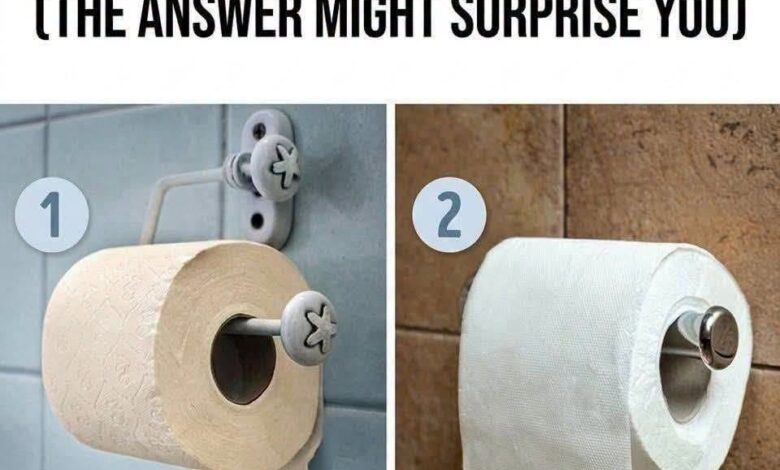
The fight starts in the smallest room of the house. A flipped toilet paper roll, a muttered complaint, a quiet, stubborn correction. Over or under is not just a quirk. It can feel like a challenge, a judgment, even a tiny betrayal. Lovers, roommates, and families draw invisible battle lines over a cardboard tube.
Inside this ordinary ritual hides a map of how people move through the world. Those who place the roll under often crave predictability and control, wanting to avoid chaos, spills, or curious pets. It’s not just about the paper; it’s about building a sense of safety in the tiniest details of daily life. Meanwhile, the over camp reaches for visibility and ease. They want what they need right where they can see it, no fumbling, no searching, no delay.
But the real story unfolds between people, not on the wall. A partner who quietly flips the roll back, a roommate who laughs instead of snapping, a family that turns it into a running joke—these are the moments where preference collides with patience. In the end, the roll becomes a test of grace: choosing connection over being right, and harmony over the need to win.
If the argument is judged by history, the over position has the strongest claim. Illustrations connected with the original roll holder patent show the paper hanging over the front. That design makes the loose end easier to see and reach, especially when the roll is mounted close to a wall. It also gives a person more control when tearing off a sheet.
The over method can have a practical hygiene advantage as well. Reaching for paper at the front may reduce how often fingers brush the wall behind the holder. In a frequently used bathroom, that small separation can make the area easier to keep clean. Hotels often choose the same orientation because the visible edge can be folded neatly and replaced quickly.
The under position still has reasons of its own. It can make the loose end less tempting to cats, toddlers, or anyone who enjoys spinning the roll into a pile on the floor. In a narrow bathroom, some people also prefer the flatter appearance. For them, the arrangement feels contained and orderly, even if it does not match the familiar patent drawing.
So the practical answer is over, but the household answer may be whatever prevents a nightly argument. The roll is replaced in seconds, while resentment can remain much longer. A person who notices a partner’s preference and leaves it that way is not surrendering an important principle. They are deciding that a tiny routine matters less than mutual consideration.
The debate survives because it is rarely only about paper. It is about habit, territory, and the feeling that another person has noticed or ignored the way we do things. The correct direction may be over according to design history, but kindness is still the better rule when two people share the same bathroom.
In the end, the best arrangement is the one everyone can live with.