Important Correction! This Common Insect Is Not a Bedbug
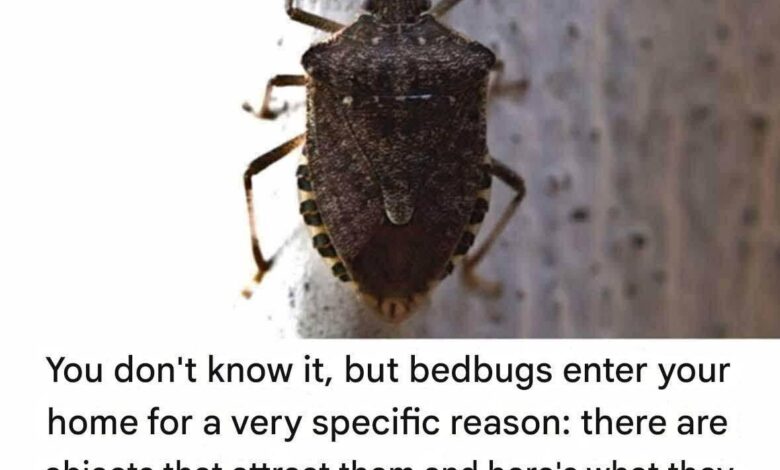
In the age of rapid information sharing, a single misidentification can trigger a cascade of unnecessary anxiety and logistical chaos. Recently, a surge of reports and social media discussions has surfaced regarding an alleged “bedbug” problem that, upon closer inspection, reveals a significant misunderstanding of basic entomology. A factual correction is not merely a matter of academic pedantry; it is a vital public service. When an insect is described as a bedbug but displays characteristics entirely foreign to the species, it leads homeowners to invest in expensive, chemically intensive treatments that are wholly ineffective for the actual visitor in their home. To respond with clarity rather than fear, one must understand the profound biological and behavioral gulf between the dreaded bedbug and its harmless, green look-alike.
To understand why this correction is so critical, one must first look at the actual nature of the bedbug, scientifically classified as $Cimex$ $lectularius$. These insects are specialized parasites that have evolved to live in intimate proximity to human beings. Their biology is dictated by a singular focus: the consumption of human blood. Because of this specialized diet, true bedbugs are almost exclusively indoor dwellers. They are nocturnal architects of concealment, spending their daylight hours squeezed into the tightest crevices of our domestic lives. You will find them in the piped seams of mattresses, the intricate joints of bed frames, behind baseboards, or within the dark voids of electrical outlets.
Physically, a bedbug bears no resemblance to the “green insects” frequently mentioned in recent panicked reports. A mature bedbug is flat, oval-shaped, and reddish-brown, often compared to the size and shape of an apple seed. They lack wings and are incapable of flight. Most importantly, bedbugs are never green. They do not dwell in gardens, they do not feed on foliage, and they do not congregate on sunlit window sills or walls during the day. If an insect is visible, active in the light, and possesses a vibrant green hue, it is a biological certainty that it is not a bedbug.
The insect that is actually at the heart of this recent confusion is far more likely to be a member of the $Palomena$ group, commonly known as the green stink bug. While the discovery of any uninvited insect inside a home can be startling, the green stink bug is a fundamentally different creature in every conceivable way. These insects are herbivorous, meaning their “infestations” are actually directed at gardens, orchards, and fields rather than human bedrooms. They spend the vast majority of their lives outdoors, utilizing their specialized mouthparts to suck juices from fruits, vegetables, and ornamental plants.
The reason green stink bugs are currently appearing inside homes is a matter of seasonal migration rather than parasitic intent. As the outdoor temperatures drop and the lush greenery of summer begins to fade, these insects seek “overwintering” sites—warm, protected areas where they can enter a state of diapause, a biological dormant period similar to hibernation. To a stink bug, a human house is not a buffet; it is merely a giant, heated rock. They enter through small gaps in window screens, under door sweeps, or through attic vents. Once inside, they are naturally drawn to sources of heat and light. This is why homeowners find them near radiators, buzzing around lamps, or crawling sluggishly along window glass.
The distinction between these two insects is a matter of profound practical importance. A bedbug infestation is a serious, complex problem that requires professional intervention. It involves deep heat treatments, specialized pesticides, and rigorous laundry protocols to eradicate a population that is actively breeding and feeding within the home. Because bedbugs are masters of hiding, a homeowner might see the bites long before they ever see the bug itself. Confusing a stink bug for a bedbug can lead a person to dismantle their bedroom, discard expensive furniture, and suffer immense psychological stress for a “problem” that could actually be solved with a vacuum cleaner or a simple hand-removal.
Stink bugs do not infest beds. They do not lay eggs in your clothing, and they have absolutely no interest in your blood. Their presence is a temporary, seasonal nuisance—a byproduct of the changing weather. They do not carry diseases, and they do not bite humans. Their primary defense mechanism, for which they are named, is the release of a pungent chemical spray when they feel threatened or crushed. While the odor is unpleasant, it is harmless. Accurate identification allows a homeowner to transition from a state of “maximum alert” to one of “routine maintenance.” If you find a green insect on your curtain, you are not dealing with a parasitic invasion; you are simply hosting a wayward traveler looking for a warm place to sleep through the winter.
Promoting clear facts over sensationalism helps to deconstruct the “infestation” myth that often surrounds common household visitors. In a world where digital misinformation can travel faster than a swarm, the ability to pause and identify a specimen accurately is an essential skill. By understanding that green stink bugs are outdoor herbivores and bedbugs are indoor parasites, we can respond to the natural world with intelligence rather than panic. This correction serves as a reminder that nature often follows a predictable logic. In nearly every instance of a “green bedbug” sighting, the reality is far more benign.
Clear identification is the cornerstone of effective pest management. It prevents the over-application of unnecessary chemicals in our living spaces and saves families from the significant financial and emotional toll of a misdiagnosed infestation. As the seasons change and the boundaries between our homes and the outdoors become porous, it is helpful to remember that not every six-legged guest is an enemy. Most are simply trying to survive the cold, and a bit of entomological knowledge is the best tool we have to maintain our peace of mind.