I Was Digging in the Forest When I Hit a Nest
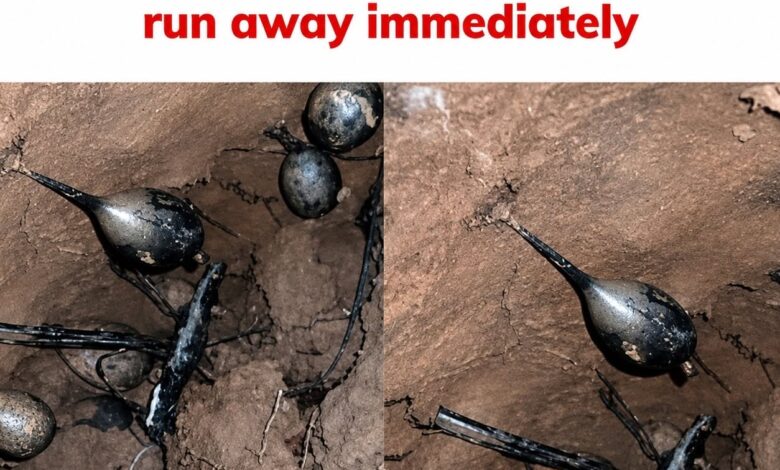
A dark, finger-like growth discovered while digging in a forest can look like a strange nest, a burned root or something from another world. One possible explanation is Xylaria nigripes, a fungus known in parts of traditional Chinese medicine as Wulingshen or O Linh ginseng.
The fungus belongs to the Xylariaceae family. Its fruiting bodies may appear black, rough and clustered, which explains why someone encountering it beneath leaves or soil might not recognize it as a fungus. Unlike familiar mushrooms with broad caps, species in this family can form narrow, hardened structures that resemble charred fingers or roots.
Xylaria nigripes has attracted attention because of its long history of traditional use and the range of compounds researchers have identified in it. Scientific reviews describe polysaccharides and other chemical constituents with potential antioxidant, anti-inflammatory and neuroprotective activity. Researchers have also studied extracts of the fungus in relation to sleep, mood and neurological function.
One randomized, double-blind clinical trial examined a Wuling capsule prepared from Xylaria nigripes mycelia in people with insomnia. Both the treatment and placebo groups improved over four weeks, so the result needs careful interpretation. Other published work has investigated possible calming or sleep-related effects, but the evidence does not turn a wild fungus into a treatment that people should collect and use on their own.
Laboratory research has also explored how the fungus may affect cells exposed to oxidative stress. An animal study involving rapid-eye-movement sleep deprivation found that an extract was associated with better performance in a spatial-memory task and changes involving CREB, a protein connected with learning and memory. Those findings are interesting, but research in rats or cells cannot by itself establish the same benefit in people.
The unusual growth pattern is part of what makes the discovery so memorable. Fungi often hide extensive networks in wood or soil while only their reproductive structures become visible. A cluster emerging from decaying material can therefore appear suddenly even though the organism has been present for much longer.
Correct identification matters because many dark forest fungi can look similar to an untrained observer. A photograph or a nickname is not enough to confirm the species. Location, substrate, microscopic features and expert examination may all be needed. Wild specimens can also be contaminated or confused with unrelated organisms.
The most fascinating part of the find is the contrast between appearance and history. What looks like a mysterious black nest may be a fungus that has been recorded in traditional practice for generations and is still being investigated by modern laboratories.
That does not mean every historical claim has been proven. It means Xylaria nigripes sits at an interesting meeting point between folklore, traditional medicine, ecology and developing research. The strange object under the forest floor is not merely debris. It may be a living clue to a much larger fungal world that usually remains out of sight.
For a forest visitor, the safest response is curiosity rather than experimentation. Photographing the specimen in place and consulting a knowledgeable mycologist can preserve both the find and its habitat while allowing a more reliable identification.