Silent Invaders: Are These Creepy “Dust Mummies” Colonizing Your Home Right Now?
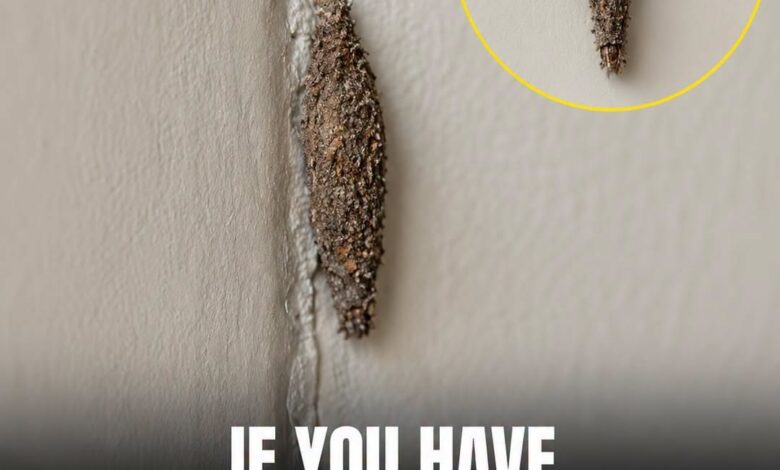
You think your home is clean, but you are likely sharing your bedroom with a silent, camouflaged nightmare that is hiding in plain sight. They aren’t ghosts, and they aren’t just dust bunnies—they are master architects of your own debris. These tiny, moth-larvae invaders, known as bagworms, are constructing elaborate, terrifying fortresses out of your hair, carpet fibers, and household dust, and they are doing it directly over your head while you sleep. If you have been ignoring those small, tube-shaped specks clinging to your walls, you are making a grave mistake. The silent infestation has already begun, and your home is the target.
While the term “bagworm” is most commonly associated with outdoor pests that defoliate evergreen trees, a specific variety of case-bearing moth larvae has successfully transitioned into the domestic sphere, turning our homes into their own private nurseries. These insects are essentially nature’s ultimate camouflage artists. By binding together dust, textile fibers, and various bits of household debris with a sturdy, silk-like secretion, they create small, protective cases that allow them to blend seamlessly into their surroundings. To the untrained eye, these cases look exactly like a harmless piece of lint or a stray thread snagged on a surface. Because they mimic the appearance of common household dirt, they can persist in a home for months or even years without the homeowner ever suspecting a biological presence.
The reason these creatures are so difficult to eradicate is that they thrive in the exact areas we habitually ignore during our weekly cleaning routines. The primary hiding spots for these “dust mummies” are the forgotten frontiers of your living space: the high corners of ceilings, the uppermost reaches of crown molding, and the narrow crevices where walls meet the floor. Because these areas are elevated or obstructed, they collect a thin layer of dust and spiderwebs that provide the perfect raw materials for a bagworm to reinforce its home. If you notice tiny, stationary specks that appear to be made of gray or brown debris in these locations, you are likely looking at an occupied bag.
Bedrooms are, perhaps unsurprisingly, the most frequent sites of colonization. A bedroom is a goldmine for a larva looking for building materials. Between the shedding of skin cells, the accumulation of hair, and the constant friction of bedding and clothing that releases micro-fibers into the air, the bedroom environment offers a limitless supply of construction materials. Furthermore, bedrooms are quiet, low-traffic areas where disturbances are minimal, providing the bagworm with the stability it needs to undergo its life cycle undisturbed.
If you are concerned about an infestation, you should focus your inspection on the “shadow zones” of your house. Inspect the areas behind your bed frame and the back of your headboard. Examine the space underneath heavy dressers or nightstands that haven’t been moved in months. Run your eyes along the baseboards, particularly in corners where carpet fibers tend to trap dust. Because these insects are extremely small and intentionally designed by evolution to look like detritus, you must be hyper-vigilant. A quick glance is not enough; you need to look for consistency in the shape of the debris. If you see multiple specks that share the same tube-like or conical structure, you are almost certainly dealing with a thriving population of larvae rather than just random dust.
Closets and storage rooms represent the second wave of potential infestation. These spaces are often dark, stagnant, and rarely vacuumed, creating a perfect sanctuary for larvae that feed on organic fibers. If you have a closet filled with natural-fiber garments—such as wool, silk, or cotton—you are providing a buffet for these creatures. Over time, as these insects grow, their cases become larger and more visible, and the damage to your textiles can become more pronounced as they graze on the fibers to maintain their homes.
Fortunately, while these insects can be an unsettling discovery, they are not aggressive, nor are they a direct threat to human health in the way that roaches or bedbugs might be. They do not bite, they do not carry pathogens that typically afflict humans, and they are not known to destroy structural wood. However, their presence is a clear indicator of a deeper domestic issue: a lack of proper airflow, elevated indoor humidity, and an accumulation of dust that suggests your cleaning schedule may need an overhaul.
To evict these silent tenants, you must wage a war of attrition on the dust they rely on. A high-powered vacuum with a HEPA filter is your most effective weapon. It is not enough to simply sweep the center of the room; you must utilize crevice tools to reach the deep corners of your ceilings and the baseboards where these creatures build their anchors. Every time you remove the dust, you are removing their primary building material and their food source.
Beyond physical removal, you must address the climate of your home. Bagworms thrive in environments where the air is still and the humidity is high. If your home feels stuffy, you are creating an ideal incubation chamber. Consider using a dehumidifier in areas like walk-in closets or basements to lower the moisture content of the air. Ensure that furniture is pulled a few inches away from the walls to allow for proper air circulation, which disrupts the pockets of still air that these insects prefer. Regularly washing your linens and rotating your stored clothing will also prevent them from establishing a permanent foothold.
Ultimately, the best way to keep your home free of these strange, dust-covered hitchhikers is to maintain a state of constant, thorough cleanliness. By eliminating the accumulation of fibers and debris, you effectively starve them out. It requires diligence, but once you clear the high corners and hidden gaps of your home, you will find that the “creepy” specks on your wall disappear as quickly as they arrived, leaving your home clear, sanitized, and free of these tiny, unwanted architects.